Join Our Wine Journey – Sign Up for the Newsletter 🍷
Les Grands Chais de France: Wine Tasting & Dinner in Belgium
Share
Deel op X (twitter)
LinkedIn
WhatsApp
Les Grands Chais de France: Wine Tasting & Dinner in Belgium.
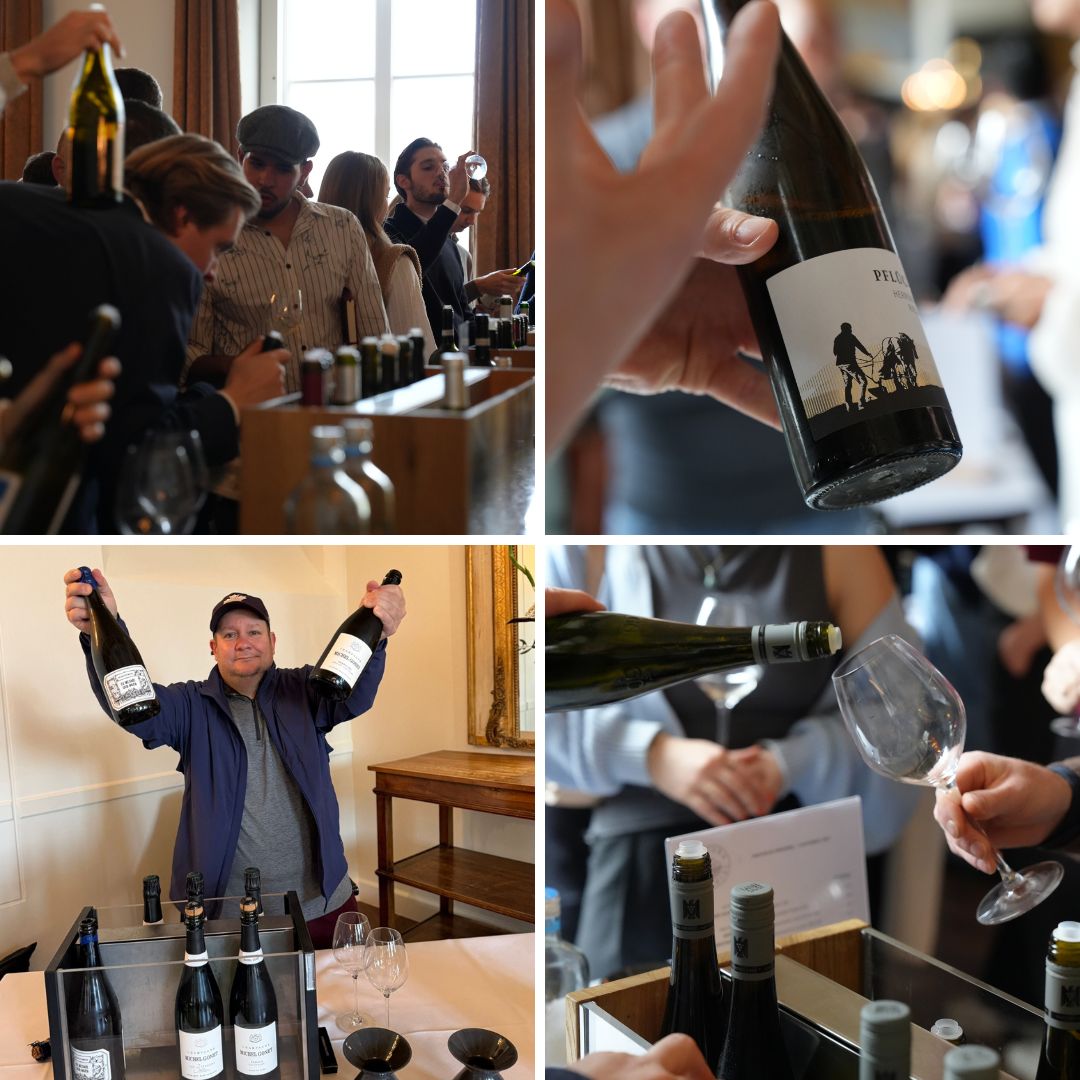
Les Grands Chais de France is one of France’s largest wine companies and a key player in the international wine market. On February 27, the Belgian representatives of the group hosted an event in Herentals (Belgium), showcasing a selection of wines from the Rhône, Provence, and southern France.
The walk-around tasting featured around 20 wines, followed by a dinner at Brasserie Link21, where two wines were paired with each course, offering a clear impression of their quality and gastronomic potential.
What follows is a report by our own Marc Roovers.
About Les Grands Chais de France
Founded in 1997 by Joseph Helfrich in Alsace, the company has grown into a multinational group with over 3,200 employees and an annual turnover exceeding one billion euros. Today, 80% of its wines are exported to 187 countries.
Through strategic acquisitions, the group serves a broad spectrum of wine consumers. A substantial part of its portfolio consists of accessible, price-conscious wines distributed via supermarkets and wholesale channels. These offerings often feature well-known appellations or generic labels tailored to a mass market. Among its most recognized brands are J.P. Chenet, Calvet, and Arthur Metz.
At the same time, GCF has heavily invested in premium wines through its Domaines and châteaux in prestigious regions such as Bordeaux, Burgundy, and Alsace. These wines are primarily aimed at professionals, including sommeliers and restaurateurs. In Bordeaux, the portfolio includes notable estates such as Château Bastor-Lamontagne (Sauternes), Clos Beauregard (Pomerol), and Château La Fortune (Margaux).
In Burgundy, GCF is represented by the Maison François Martenot group, which encompasses 13 estates with vineyards in Premiers Crus and Grands Crus appellations.
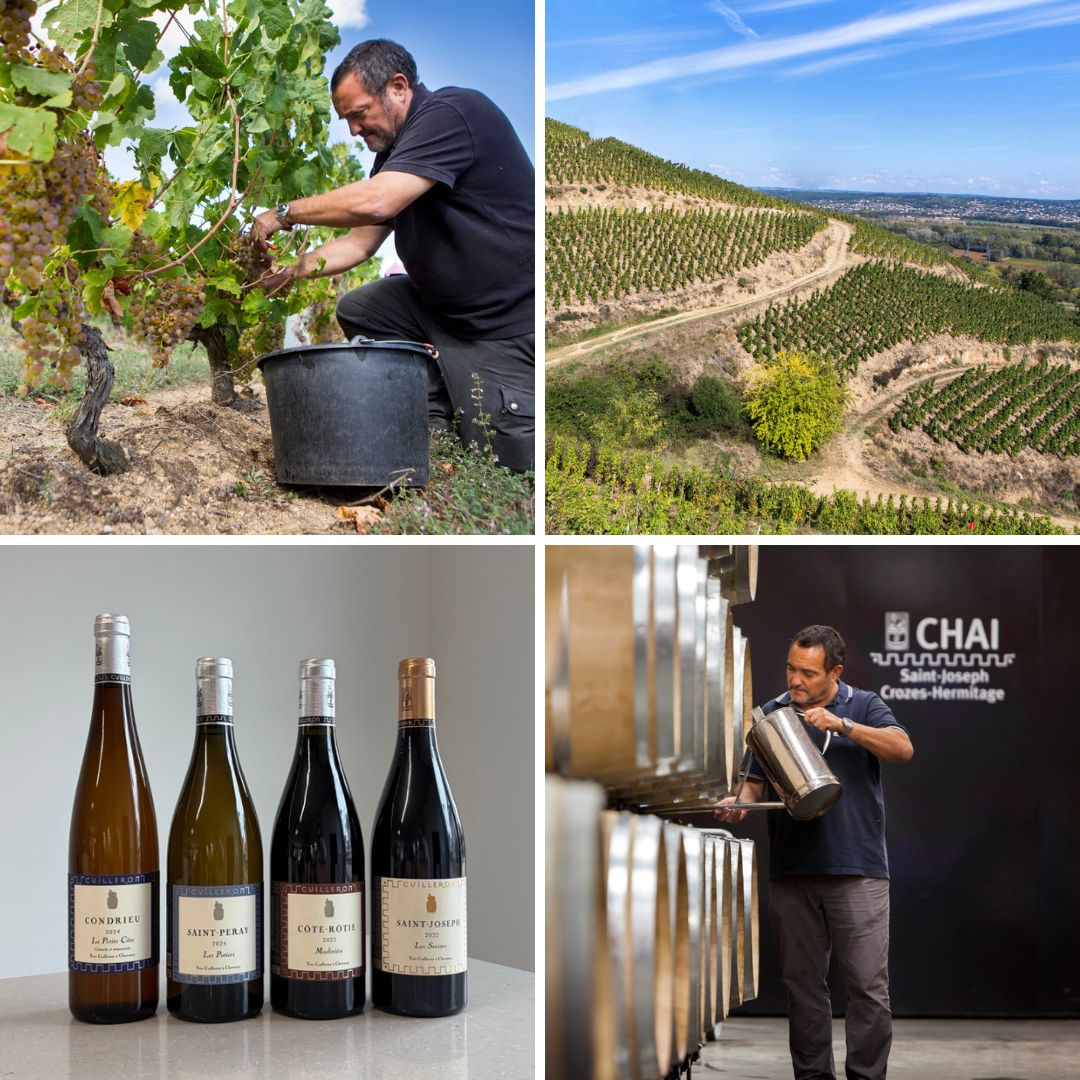
The company also owns 1,049 hectares of vineyards in Languedoc and Sud-Ouest, with 400 hectares cultivated organically. Additionally, GCF holds 158 hectares in the Rhône/Diois region and 291 hectares in Provence.
Tasting Highlights
We started the event with a tasting that featured a selection of the GCF portfolio. Below some of our most interesting findings.
Domaine de la Baume
Although Domaine de la Baume (located in the village of Servian, between Pézenas and Béziers in Languedoc-Roussillon) is one of the flagship estates in GCF’s portfolio, only one of its wines was presented. A rather unconventional choice, but a successful one: the deep-colored rosé Garance (IGP Pays d’Oc), marketed as a “picnic wine.”
It’s easy-to-open and resealable swing-top bottle is a major advantage, but don’t be misled. Served slightly chilled, the wine itself is highly appealing. With aromas of wild strawberries, raspberries, and melon, it is an ideal spring and summer wine. Its refreshing juiciness, with a citrus zest touch, makes it irresistibly drinkable.
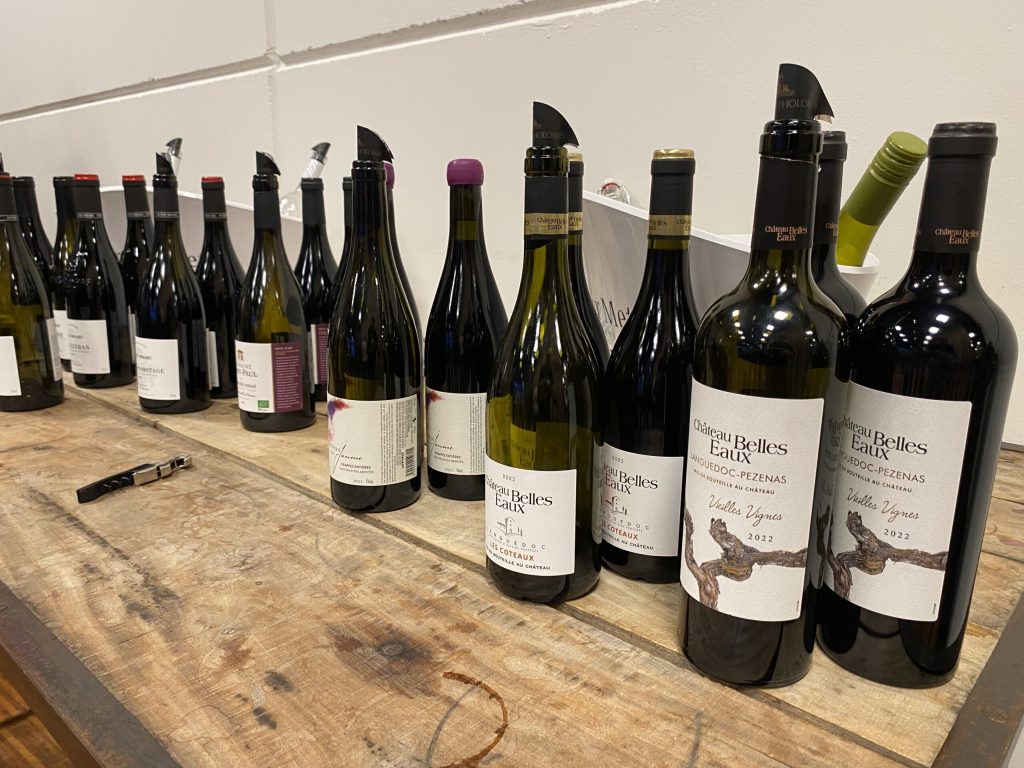
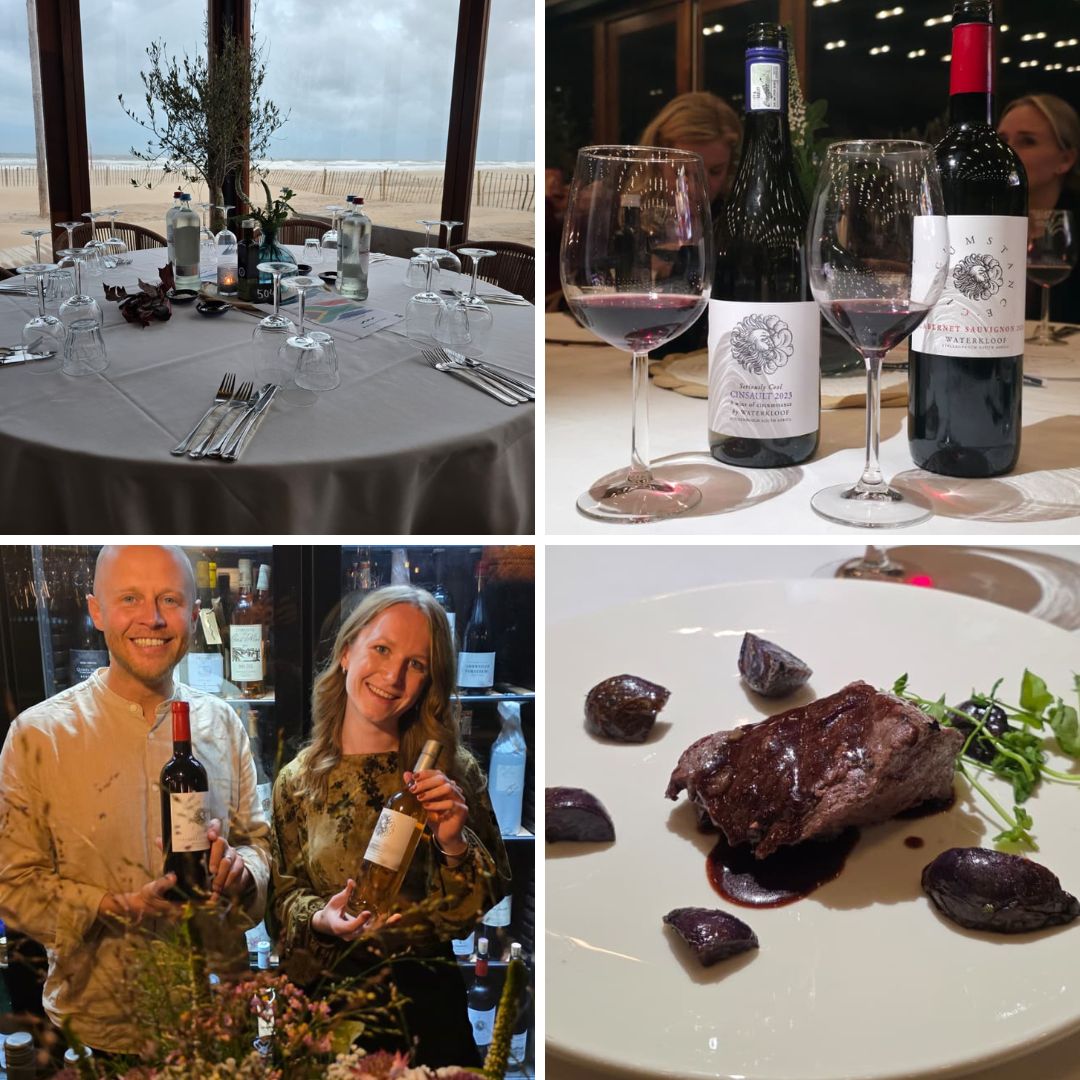
The Tasting Table.
Château Belles Eaux
For more “serious” wines, Château Belles Eaux, situated in the heart of the Languedoc-Pézenas appellation, stood out.
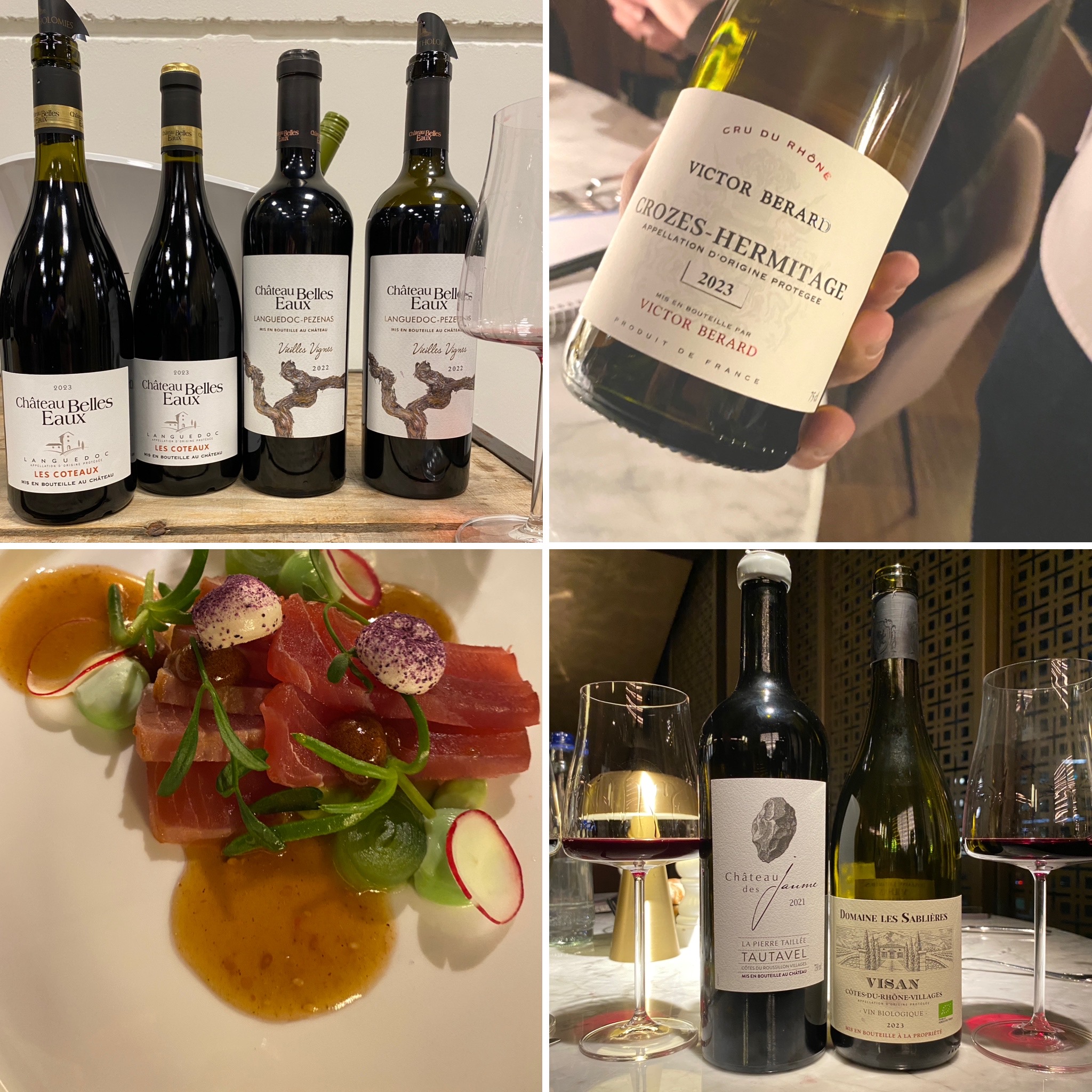
The 2022 Château Belles Eaux Vieilles Vignes (AOP Languedoc-Pézenas) | 60% Grenache, 40% Syrah, aged 12 months in barrique. A wine that offers a spicy and berry-driven profile, with an attractive freshness complemented by well-integrated oak influences such as caramel and mocha.
Victor Bérard
The Victor Bérard brand is part of the Caves Carod group, which owns estates in the Rhône Valley. Three of its village wines were presented, all noteworthy for their price-to-quality ratio.
2023 Victor Bérard Vinsobres (50% Grenache, 50% Syrah) is cool and restrained, with violet aromas and a distinct minerality. Elegant and fruit-driven, it has an ample body and soft yet assertive tannins in the finish.
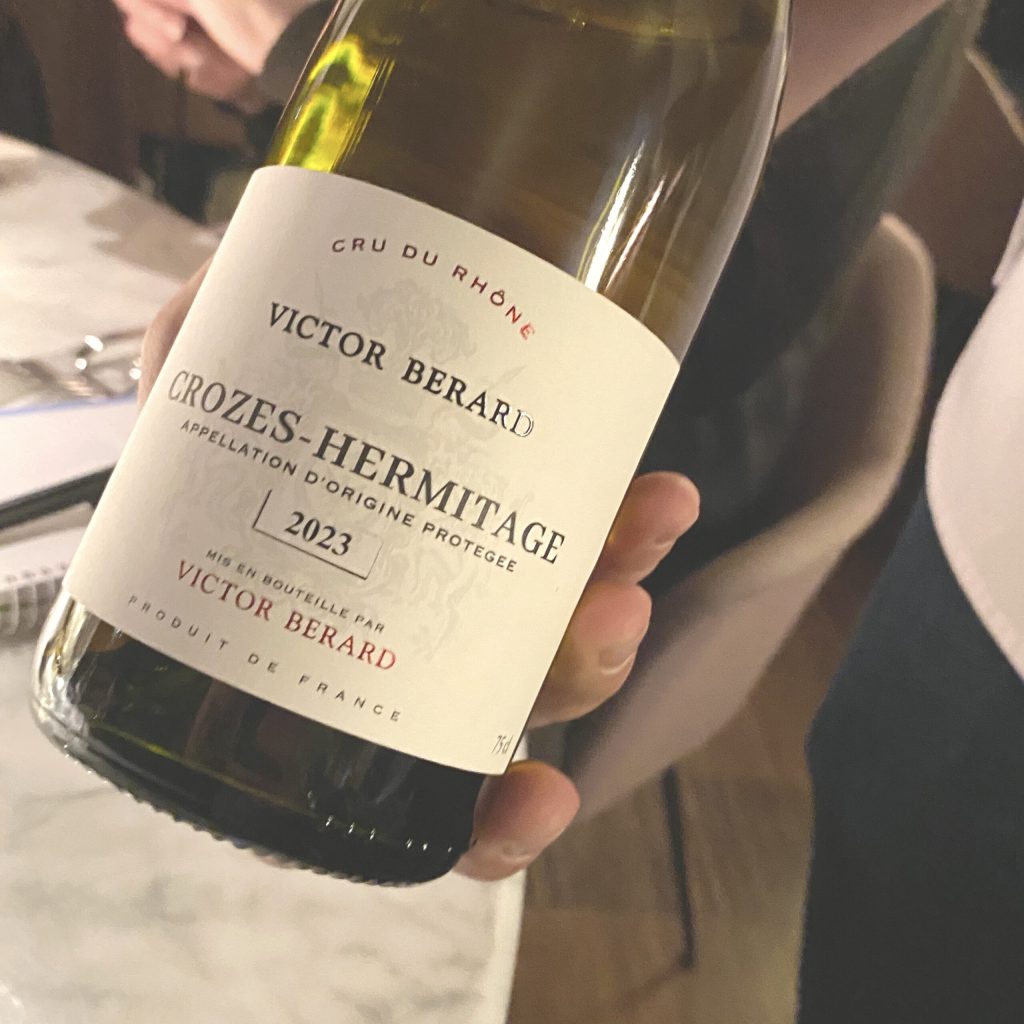
2023 Victor Bérard Crozes-Hermitage (Syrah) features a nose of cranberry and red cherry, with fresh acidity supported by refined fruit and a hint of pepper. The oak maturation is present but not dominant.
2023 Victor Bérard Crozes-Hermitage.
2023 Victor Bérard Vacqueyras is richer and warmer, with ripe dark cherry and vanilla on the nose and palate. The finish is ripe and full-bodied, with noticeable alcohol warmth.
Dinner at Link21
You wouldn’t’t guess it when driving along the E313 between Antwerp and Maastricht, passing the industrial complex near Herentals, but hidden within one of these buildings lies Link21, a bar-brasserie run with the utmost care.
The restaurant offers a cosmopolitan cuisine with a focus on locally sourced ingredients, a product-driven approach, and a wine list as thick as a midsized Bible, featuring the kind of names that make a wine lover’s heart beat faster.
Fortunately, we did not have to make our own selections that evening, as the wines were chosen from the extensive portfolio of Les Grands Chais de France.
With the starter, three preparations of tuna, two white wines with contrasting profiles were served.
2023 Château Belles Eaux ‘Les Coteaux’(AOP Languedoc) | Grenache Blanc, Bourboulenc, Clairette, Chardonnay. An aromatic and mineral-driven wine, with notes of gooseberry and white stone fruit. Linear and precise, it offered bright acidity and a touch of salinity.
2021 Victor Bérard Crozes-Hermitage | 100% Marsanne. Aged for nine months in large oak vats with bâtonnage this wine was richer and spicier, showing clear oak influences and the creamy texture of lees aging. Ripe stone fruit, vanilla, and a bouquet of spices stood out.
The interplay between these two wines and the sashimi, tataki, and tartare of tuna was a fascinating experiment. The contrast between the taut, mineral Languedoc and the ripe, textured Marsanne proved particularly engaging.
For the main course, a substantial Iberico pork dish was served, accompanied by variations of celeriac and truffle. The pairing featured two red wines.
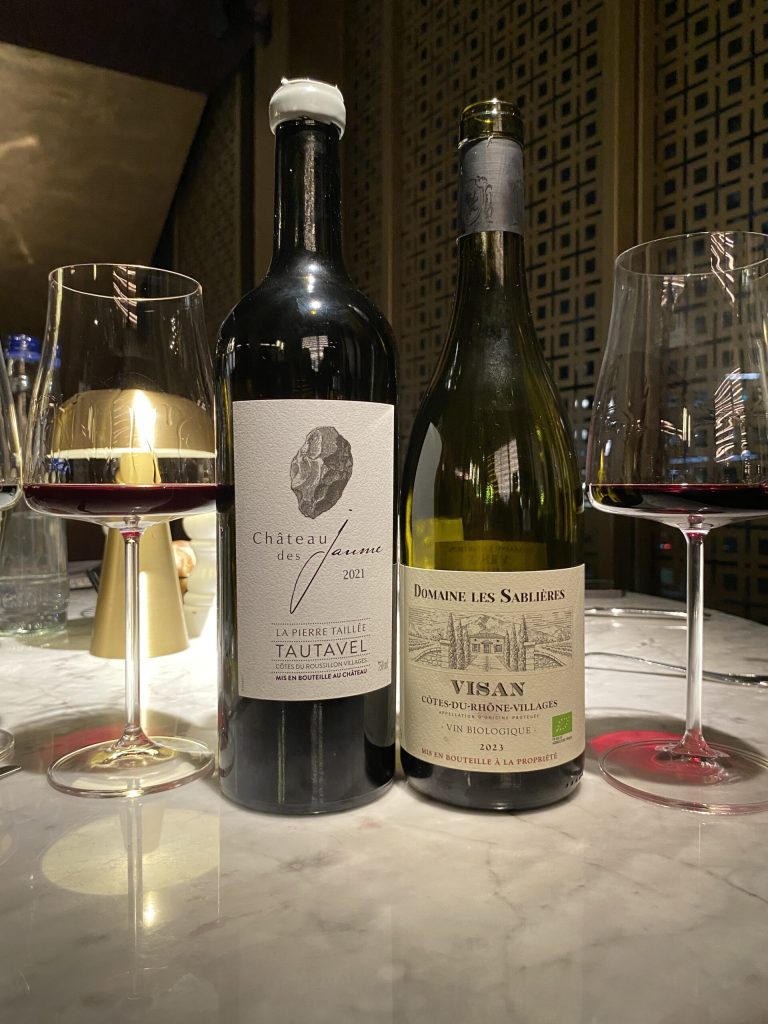
2023 Domaine Les Sablières Visan (AOP Côtes-du-Rhône-Villages) | 50% Grenache, 50% Syrah. This red was aged in stainless steel and displayed classic Rhône characteristics: red cherry, ripe blackberry, floral nuances, and juicy red fruit. Soft tannins and well-balanced acidity led to a finish of cassis, blackcurrant, and dried fruits. A fresh, vibrant, and aromatic wine.
2021 Château des Jaume ‘La Pierre Taillée’ (AOP Côtes du Roussillon Villages Tautavel) | Syrah, Grenache, Carignan. Aged for 12 months in barrique this wine reflected its schist terroir, with aromas of spicy red fruit, juniper, and blackberry. A complex wine with dark fruit, black cherry, and garrigue herbs. The acidity was well integrated, but the tannins remained slightly firm, lending a subtle dryness to the finish. This structured wine proved an excellent match for the dish.
The Reds for the Main Course.
With the cheese selection from renowned affineur Van Tricht, two bold red wines were served. An unusual choice, given the increasing consensus that white wines tend to pair better with most cheeses. Additionally, no explanation was given regarding the cheeses themselves. Our table received a soft, bloomy-rind cheese, a hard cheese reminiscent of Comté, and a blue cheese. While both the cheeses and the wines were of high quality, the interplay between these cheeses and red wine proved somewhat challenging.
2022 Château Belles Eaux Carmin (AOP Languedoc-Pézenas) | 80% Syrah, 20% Grenache. Grown on gravel soils (“gravettes”) and aged for 18 months in barrique. Deep purple-red in color, it displayed aromas of dark forest fruits such as blackberry and ripe raspberry, along with ethereal spices. A touch of vanilla and caramel revealed the oak aging. On the palate, the wood influence was also apparent, alongside notes of chocolate and mocha, interwoven with ripe black cherry, fig, and date. The tannins were firm yet refined and well-integrated.
2023 Domaine Plan de l’Homme ‘Sapiens’ (AOP Terrasses du Larzac) | 70% Syrah, with Grenache and Mourvèdre). A red that was introduced as having been aged in terracotta eggs, although the label clearly stated “Élevé en fût de chêne” (aged in oak barrels). Light ruby in color, it offered a pure and complex nose with mineral-smoky aromas, dark fruit such as blackberry and black cherry, stony minerality, and aromatic herbs. On the palate, it was juicy, rich, and dense, with a subtle creaminess, well-integrated acidity and tannins, and herbal freshness.
Final Thoughts
We must admit that we initially did not know what to expect from Les Grands Chais de France. A corporate giant, a global player, large-scale production… The invitation we received raised more questions than answers.
But our skepticism proved unfounded. These are well-crafted, flavorful wines that clearly express their sense of origin. And when considering the price – the most expensive bottle of the evening retails for around €20 – it becomes evident that these wines have plenty to offer for wine lovers. We can safely say this was an evening well spent!
This article is written by our own Marc Roovers. We would like to thank An Baes, Wim Vanderweyen, Camille de Vergeron, Gilles Descamps and Muriel Lombaerts of Les Grands Chais de France for the invitation and their support.
In addition, a shoutout to our table of fellow wine writers: Angelique Meulendijks, Marc Gillis, and Michael Kardienaal for an evening of discussions about wine, food and life. What more could one ask for?
Join our insiders’ list and get exclusive early access to new articles, expert tips, and fresh reviews delivered straight to your inbox. Subscribe now and be the first to discover!