Join Our Wine Journey – Sign Up for the Newsletter 🍷
Introducing Tasting Essentials by the Rioja Wine Academy
Share
Deel op X (twitter)
LinkedIn
WhatsApp
Introducing Tasting Essentials by the Rioja Wine Academy.
Recently, our own Barbora Peterikova had the chance to explore Tasting Essentials—an online course developed by the Rioja Wine Academy. Intrigued by its format and content, she dove into the program, which combines digital learning with a hands-on tasting experience. Participants can choose to order a curated wine package, to be delivered at home, allowing them to apply their knowledge with real Rioja wines.
In this article, Barbora shares a breakdown of the course—and her verdict on whether it lives up to expectations.
Rioja’s Tasting Essentials Course
The Tasting Essentials Course is a flagship offering from the Rioja Wine Academy, the official digital education platform of the DOCa Rioja Control Board. It is designed as a self-paced, multimedia-rich online learning experience to give participants a firm foundation in wine tasting, with a unique focus on the diversity of styles that Rioja offers. Aimed at both newcomers and the wine-curious, it marries structured theory with hands-on tasting, delivering a genuinely immersive experience.
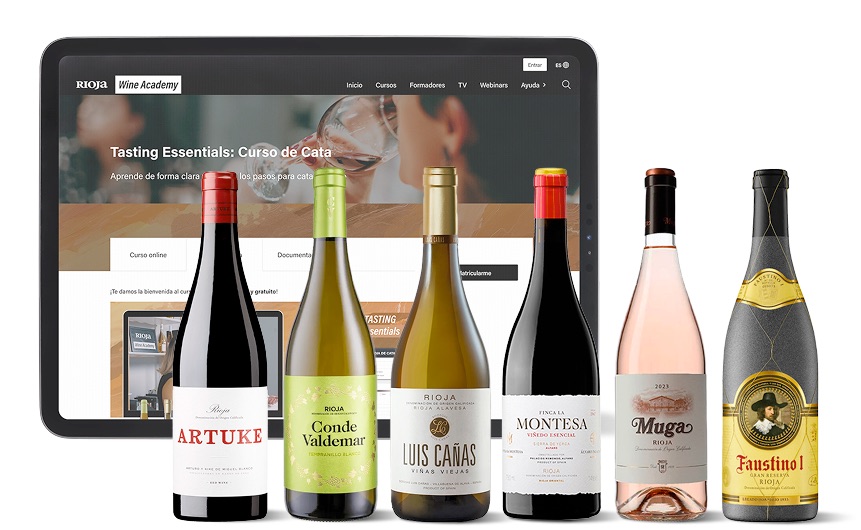
Spanning approximately six hours, the course leads learners through six distinct modules, each accompanied by a carefully selected Rioja wine. These six wines, available as a dedicated tasting pack via Decántalo, aren’t just supplementary—they are the cornerstone of the program. Learners are guided through each style by expert video commentary, self-assessment tools, and downloadable resources. Rather than a passive viewing experience, the course is interactive and tactile, placing real wines in front of the learner to bring each lesson vividly to life.
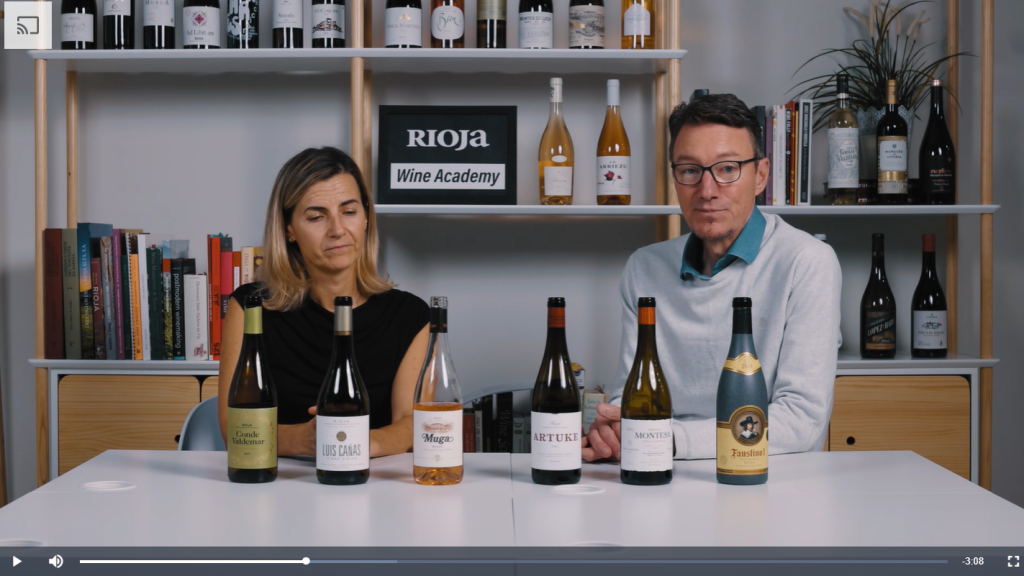
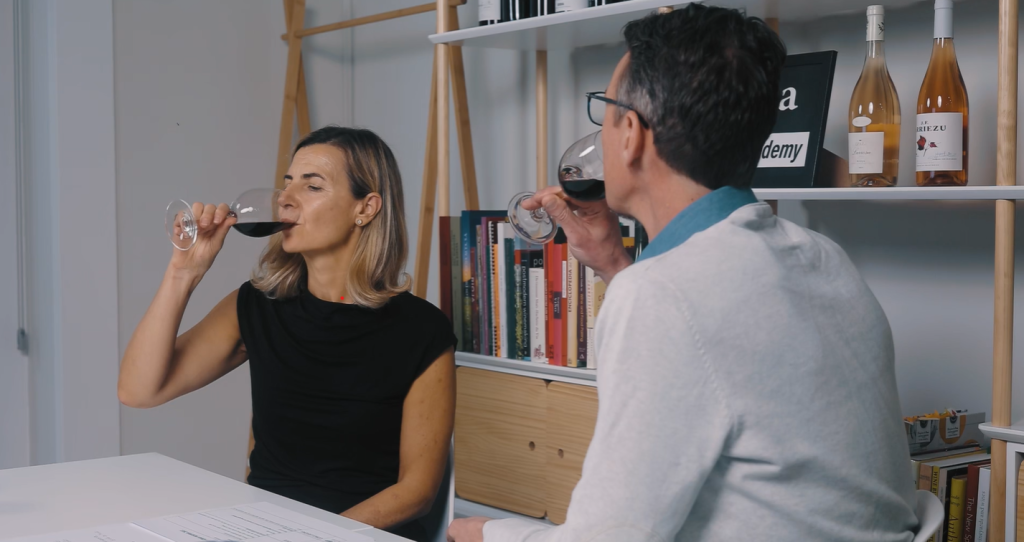
The Online (video) Environment of the Rioja Wine Academy.
Who It’s For?
Whether you’re new to the world of wine or seeking to deepen your understanding of Rioja, the course has something to offer. It is particularly well-suited for:
Wine newcomers wanting a structured, friendly introduction to tasting
Hospitality or retail professionals aiming to refine their sensory vocabulary
Students preparing for certifications like WSET or the Rioja Wine Diploma
Graduates of the Rioja Enthusiast or Diploma courses who want to connect theory to palate
Accessible and entirely free (with the exception of the wine pack), Tasting Essentials offers flexible, high-quality education to anyone with a curiosity about Rioja and a willingness to explore.
Course Structure: Levels & Chapters
The course begins with an introductory session, “Basics of Wine Tasting,” where learners become familiar with key tasting concepts—appearance, aroma, flavour, structure, finish, and how to evaluate quality. A downloadable tasting sheet helps structure thoughts and observations, providing a roadmap for every wine that follows.
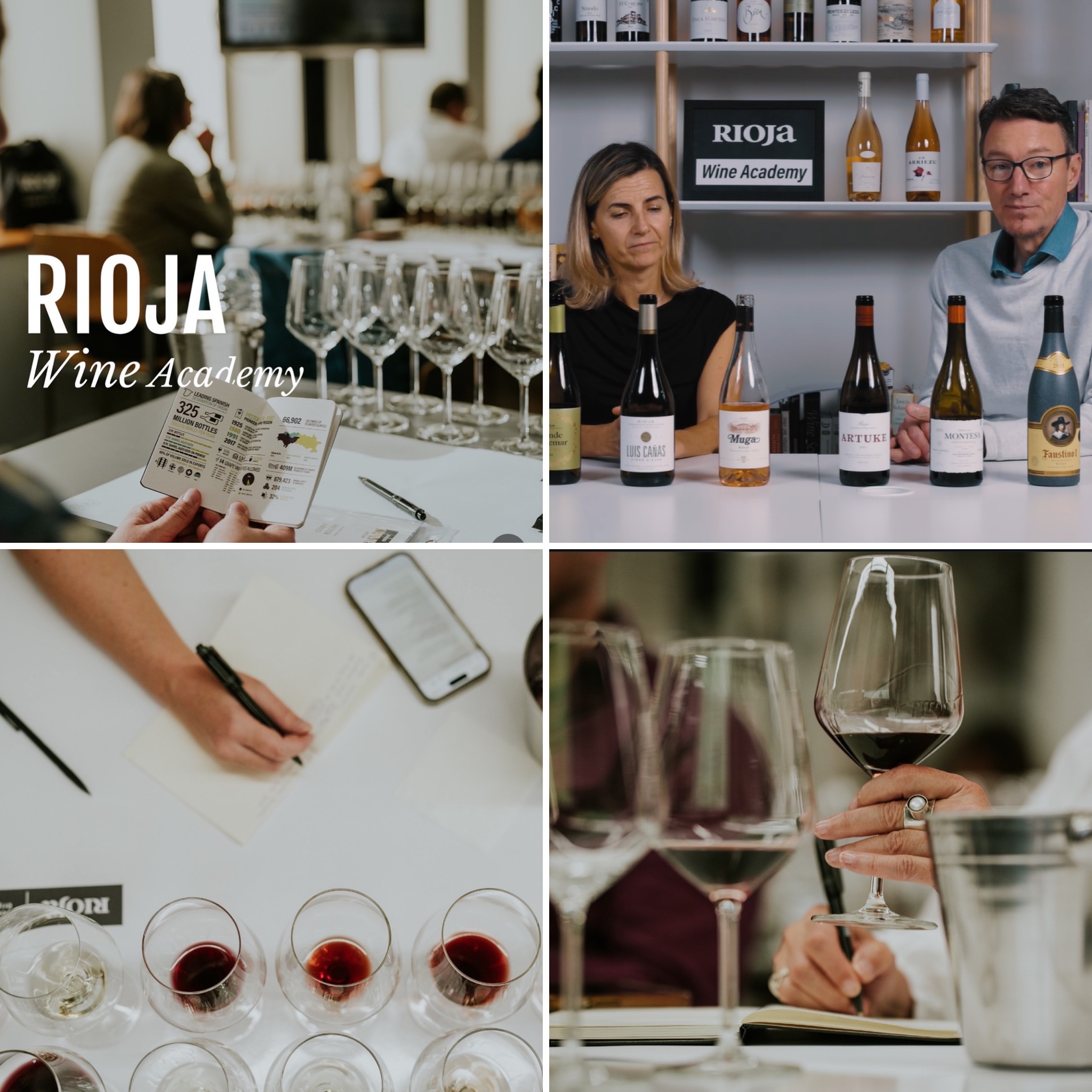
Tasting alongside Studying.
The remaining six chapters each explore a specific Rioja wine style through one representative bottle:
1. Young White Wine. Tempranillo Blanco Rioja surprises immediately with a white wine made from Tempranillo Blanco. This grape may be unfamiliar—even to many seasoned wine lovers—but it’s a fascinating example of Rioja’s capacity for innovation. Tempranillo Blanco is a natural colour mutation of red Tempranillo, first discovered in 1988 in Rioja Oriental. What began as a one-vine anomaly was researched extensively, and in 2008, it became an officially recognized variety in Rioja’s DOCa regulations. Today, it represents about 13% of white grapes planted in the region, making it the second most widely planted white variety. The wine itself bursts with fresh, primary aromas and serves as a compelling introduction to the course’s depth.
2. Viura Fermented & Aged in Oak. Chapter two introduces Viura, Rioja’s flagship white grape, in a more layered, oxidative style. Fermentation and ageing in oak barrels add texture, depth, and spice to the wine’s profile. This module teaches how to discern oak impact and appreciate more structured white wines.
3. Garnacha-based Rosé. In chapter three, learners explore the pink spectrum of Rioja through a rosado made primarily from Garnacha. Students gain insight into rosé winemaking techniques, the role of skin contact, and the factors influencing the colour and aroma profiles of rosé wines.
4. Tempranillo with Carbonic Maceration. Chapter four shifts to reds, starting with a juicy, vibrant Tempranillo made via carbonic maceration. Often associated with Beaujolais, this method creates light-bodied, fruit-forward wines. The chapter covers how winemaking techniques can shape the sensory experience.
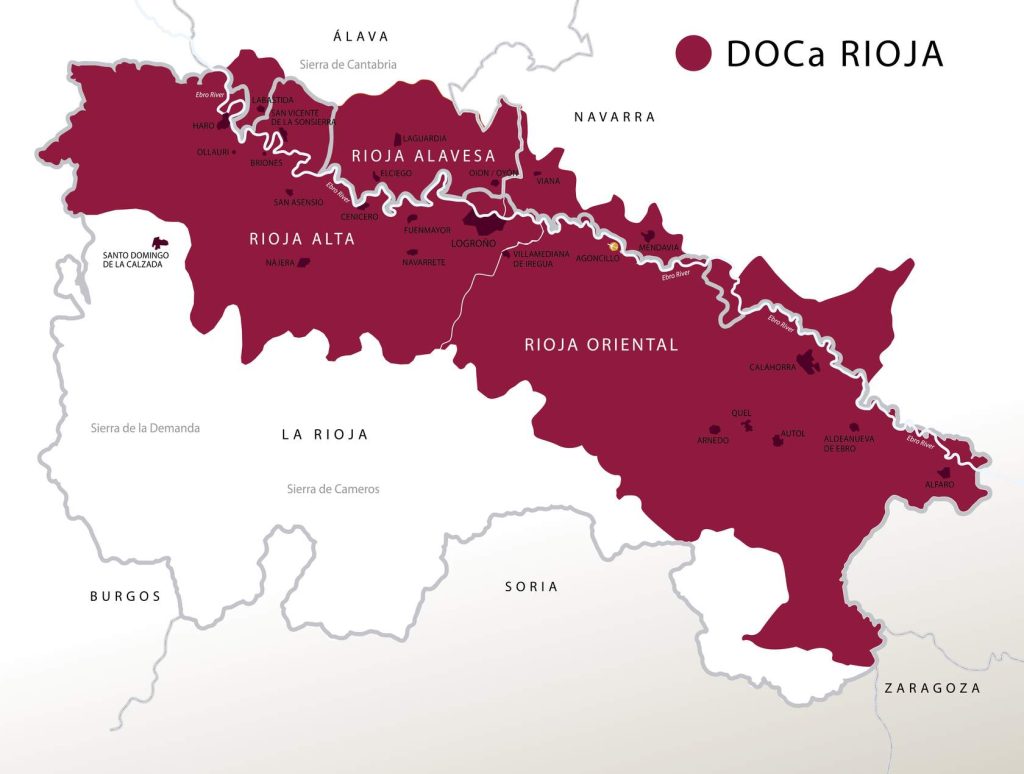
5. Garnacha from Rioja Oriental. The fifth chapter zooms in on Rioja Oriental (formerly Rioja Baja), showcasing a Garnacha that reflects the region’s warmer climate and different soil structure. The wine offers ripe red fruit and supple texture, underlining the diversity across Rioja’s sub-zones.
6. Gran Reserva Red – Traditional Blend. The final chapter concludes with a classic Rioja Gran Reserva, made primarily from Tempranillo with Graciano and Mazuelo playing supporting roles. Learners analyse how extended barrel and bottle ageing influence colour, nose, palate, and mouthfeel. The elegance, tertiary complexity, and balance of this wine encapsulate the traditional heart of Rioja.
Nerdy Highlights for Enthusiasts
While the course is accessible, it doesn’t shy away from deeper knowledge. For instance, Tempranillo Blanco’s inclusion isn’t just a gimmick—it’s a showcase of Rioja’s commitment to innovation and diversity. Understanding the mutation process, its approval in 2008, and how it’s become Rioja’s second most planted white grape offers a real “a-ha” moment even for seasoned drinkers.
Participants are also guided to consider complex aspects of tasting such as:
The effect of oxidative vs. reductive winemaking
Oak impact and ageing markers (e.g., vanilla, toast, nutty notes)
Acidity vs. tannin balance
Primary vs. tertiary aromas
Influence of geography and climate on structure and alcohol
Self-evaluation checkpoints, where learners compare their tasting notes to aggregated responses from others—a clever way to demonstrate wine’s subjectivity.
Downloadable tasting sheets that support note-taking and reflection.
No final exam, removing pressure while maintaining engagement.
Each module is brief and modular, allowing learners to pause and return at their convenience—ideal for those balancing study with professional or personal commitments.
The Wine Pack Experience
The course’s accompanying six-wine pack is essential to the program:
Each wine is carefully chosen to reflect the chapter’s key themes.
Priced at €78.70 via Decántalo, it includes a QR code granting free course access.
The wines collectively express Rioja’s diversity of grape varieties, winemaking approaches, and ageing philosophies.
More than just a set of samples, the wine pack is an experiential toolkit—an opportunity to taste Rioja’s story firsthand.
The Tasting Package Provides for Top Quality Wines by Leading Producers.
Why It Matters
From Theory to Sensory Clarity Many wine courses describe tasting techniques, but few offer real-time application. With this course, tasting is not theoretical—it’s intuitive. Participants learn how to connect tasting descriptors to structure, variety, winemaking style, and terroir.
Official & Credible Built and hosted by the DOCa Rioja Control Board, the course reflects the region’s educational vision and wine identity. It’s not a third-party interpretation—it’s straight from the source.
Democratized Wine Education The course is globally accessible, free in content, and user-friendly. The only cost is the wine pack, making it an affordable entry point into structured wine learning. The Rioja Wine Academy has welcomed over 21,000 students from more than 140 countries.
Foundation for Further Study It sets learners up for more advanced pursuits like the Rioja Wine Diploma or WSET certifications. Throughout the course, there are references to other Rioja Wine Academy modules, encouraging a lifelong learning journey.
Credited by the Official Rioja Control Board the Course Covers every corner of the DOCa.
Impact on Rioja’s Branding & Market Presence
The course strengthens Rioja’s global reputation by:
Promoting terroir literacy—teaching how vineyard location and climate affect taste
Encouraging appreciation of premium categories like Gran Reserva
Creating international brand ambassadors through hospitality and retail education
Conclusion
The Tasting Essentials course offers more than just a learning module—it’s an invitation to experience Rioja with deeper awareness and sharpened senses. Guided by expert voices and brought to life through a curated tasting pack, it turns abstract theory into vivid, glass-in-hand discovery.
For newcomers, it’s a structured and approachable first step into wine appreciation. For seasoned drinkers or professionals, it’s a reminder of Rioja’s depth, diversity, and ongoing evolution—from ancient vineyards to modern expressions like Tempranillo Blanco.
In an industry often shrouded in jargon and prestige, Tasting Essentials is refreshingly democratic: free, flexible, globally accessible, and focused on taste above all. It’s not just about Rioja—it’s about learning to listen to what a wine is really telling you. Because ultimately, every great bottle tells a story. And this course hands you the tools to read it.
You can create a free account on Rioja Wine Academy to sign up for the course here.
This article is written by our own Barbora Peterikova, we thank the Rioja DOCa and Rioja Wine Academy. In particular we thank Peter Arijs, representing the Rioja Control Board, and Alice Bown PR Agency for providing access to the course and the tasting package.
Join our insiders’ list and get exclusive early access to new articles, expert tips, and fresh reviews delivered straight to your inbox. Subscribe now and be the first to discover!