Join Our Wine Journey – Sign Up for the Newsletter 🍷
El Hombre Bala – Garnacha with Altitude and Attitude
Share
Deel op X (twitter)
LinkedIn
WhatsApp
El Hombre Bala – Garnacha with Altitude and Attitude.
Spanish precision from the Sierra de Gredos.
Some wine dinners offer exactly what you expect – comfort, familiarity, a well-matched glass with every course. Others go a step further: they surprise, challenge, and leave a lasting impression. Reporting for Dutch Wine Apprentice, Onno Deumer attended a recent winemakers dinner hosted by Best of Wines at Restaurant De Buren in Bussum. The evening was seamless in execution, but quietly provocative in the glass.
What we encountered was not simply Garnacha. It was altitude. Precision. Restraint. And above all, personality. Through three wines from El Hombre Bala (Uvas Felices) – a project rooted in the rugged Sierra de Gredos west of Madrid – the dinner became a window into a new style of Spanish red: lighter in extraction, higher in altitude, and richer in intent.
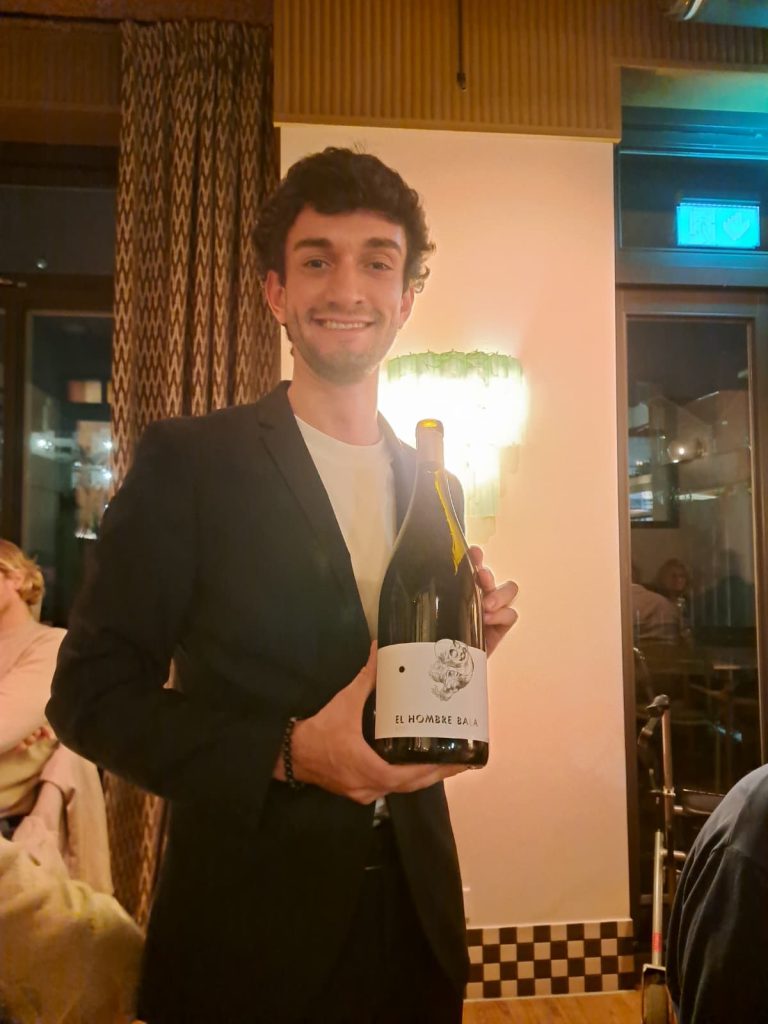
Export manager Robin Bially introducing El Hombre Bala.
From Comando G to an independent signature
El Hombre Bala was born out of a shared ambition: to revive some of Spain’s most overlooked Garnacha vineyards – high, wild, and forgotten. The project began in 2010 as a collaboration between Spanish fine wine distributor Vila Viniteca and two of the most influential winemakers in modern Spanish viticulture: Daniel Gómez Jiménez-Landi and Fernando García. Together, the duo are best known as the driving force behind Comando G, a cult label that helped redefine the reputation of Garnacha in Spain.
Comando G was never about volume or mainstream appeal. From its inception, it focused on micro-plots in the Sierra de Gredos – some barely accessible, many planted with vines over 70 years old – and championed a style of Garnacha that was radically different from the norm. Where much of the world associated the grape with ripeness and density, Comando G showed it could also be fresh, lifted, and terroir-transparent. Their approach drew comparisons not to Châteauneuf-du-Pape, but to Burgundy: gentle extractions, whole bunch fermentation, spontaneous yeast, and little to no new oak.
El Hombre Bala emerged in parallel to that revolution – not as a second label, but as a complementary path. It shared the same vineyard zones, similar vine age (often 60 to 90 years), and the same granitic, sandy soils that define Gredos. But where Comando G increasingly pursued extreme altitude and micro-vinifications, El Hombre Bala focused on building a consistent identity through a small range of expressive, high-altitude Garnacha.
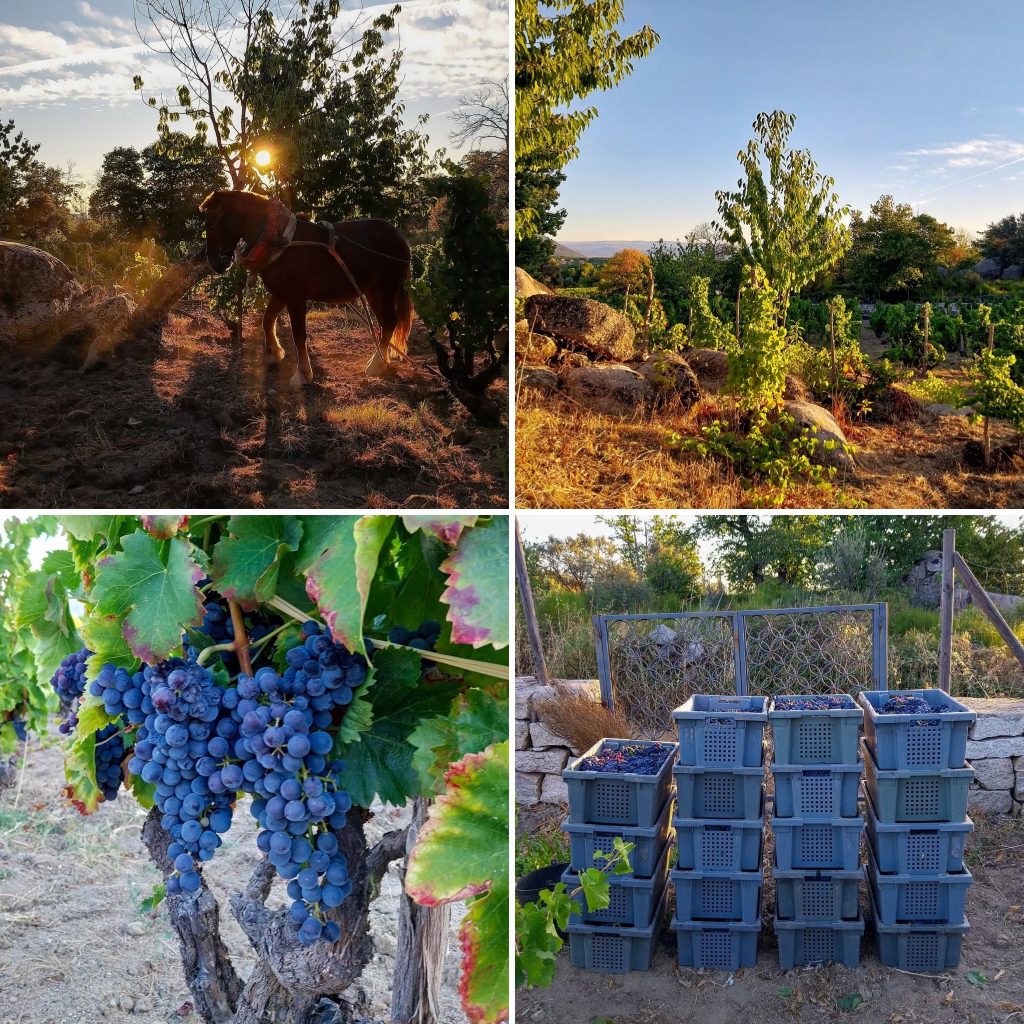
Garnacha vineyards at harvest – compact and ripe grapes, shaped by altitude and granite.
Today, winemaker Ramón Es – previously part of the Comando G cellar team – leads production at El Hombre Bala. Under his stewardship, the project has developed its own voice: less esoteric than its cult cousin, but no less precise. The ethos remains grounded in minimal intervention, old vines, and purity of expression – yet the wines feel more approachable in their youth, and perhaps more confident in walking their own path.
Altitude as amplifier – the Gredos difference
If Garnacha is a grape that reflects its environment, then the Sierra de Gredos acts like an acoustic chamber – amplifying nuance, stripping away excess, and letting the vineyard speak. Stretching across the provinces of Madrid, Ávila and Toledo, this mountain range rises steeply and abruptly, creating a complex mosaic of slopes, altitudes and exposures. The vineyards that feed into El Hombre Bala lie between 800 and 1,100 metres above sea level, rooted in poor, sandy granite soils laced with quartz and silica.
These are not gentle sites. The terrain is rugged and irregular, with many plots accessible only on foot. Yields are naturally low – often just 2,500 to 4,000 kilograms per hectare – and the average vine age ranges from 50 to 90 years. Farming here demands labour, patience, and intent.
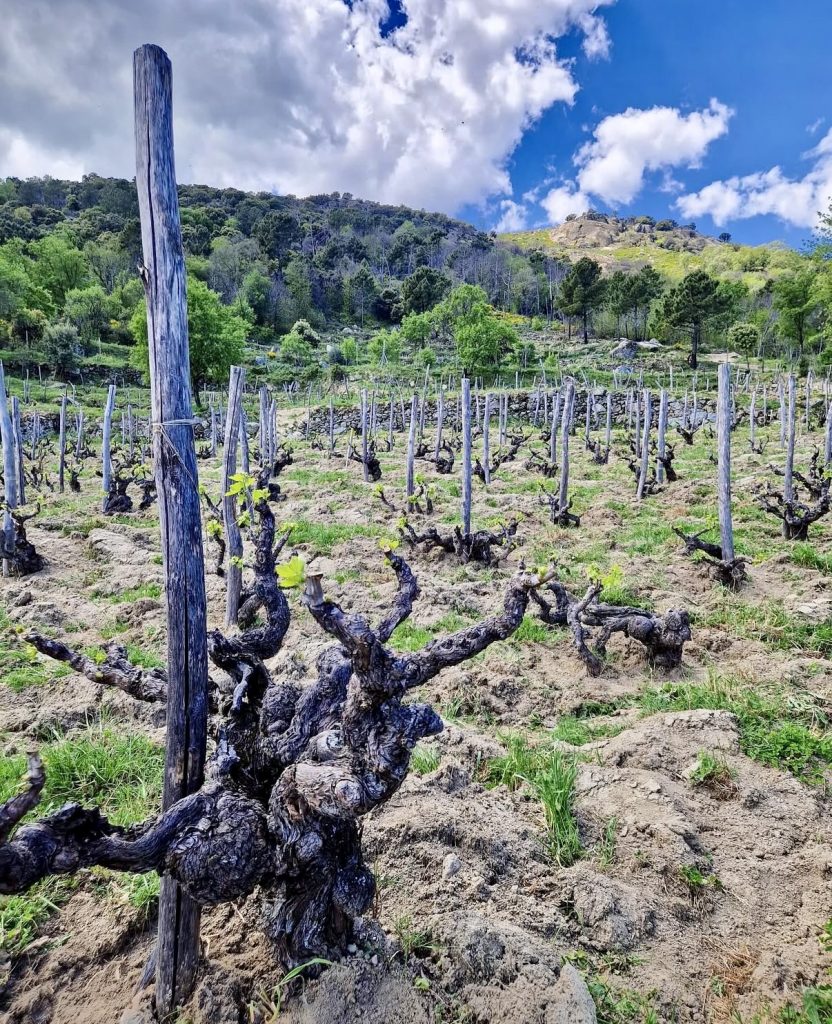
Old bush vines on poor granite soils, widely spaced and individually staked to survive the extremes of Gredos.
But the rewards are unmistakable. Cool nights at these altitudes preserve acidity and slow down ripening, while the sandy granite soils offer excellent drainage and force vines to dig deep. The resulting wines are strikingly aromatic and precise – often paler in colour than expected, but loaded with internal energy and texture. Tannins are fine, acidity is vivid, and alcohol levels, though not shy (typically around 14.5%), feel integrated and structural rather than warming.
It would be easy – and tempting – to look for comparisons based solely on grape variety. In that framework, names like Château Rayas in Châteauneuf-du-Pape often come up. Rayas shares the Grenache base, the pale colour, the use of old vines, and a clear aversion to new oak. But while these surface similarities are striking, the underlying conditions are markedly different.
Rayas is grown in a significantly warmer and drier climate, with less diurnal shift and lower elevation. Its wines, while elegant and haunting in their own right, tend to show more warmth, glycerol weight, and often lack the sharp vertical line of acidity that defines Garnacha from Gredos. El Hombre Bala, by contrast, is shaped by altitude. The cool nights, granitic soils, and long growing season result in wines that are firmer, fresher, and more linear – less perfumed seduction, more structured intent.
The more revealing comparisons, then, are not intra-varietal, but inter-regional. Think of Oregon Pinot Noir, with its brightness and sense of restraint. Or Etna Rosso, where volcanic soils and elevation create nervy, expressive reds. Or Barolo, with its combination of lifted aromatics and serious tannic architecture. These are wines that, like El Hombre Bala, speak not just of grape, but of place – and of a philosophy that values transparency over impact.
That, ultimately, is what sets this project apart. El Hombre Bala is not trying to redefine Garnacha by mimicking other Grenaches. It is showing what the grape is capable of when it climbs higher, digs deeper, and is allowed to express itself without excess. This is Garnacha recontextualised – still generous in flavour, but sharper in silhouette. And all the more compelling for it.
Three wines, one philosophy
At the dinner, three wines were presented – each a pure expression of Garnacha, and each offering a different window into the Sierra de Gredos. While they share soil, altitude and philosophy, they speak in distinct voices. What follows are our unedited tasting impressions of the 2021 and 2023 vintages, tasted during the event.
El Hombre Bala 2021 – An expressive Garnacha from granitic soils, showing ripe red fruit – cherry, strawberry and a touch of red currant – wrapped in subtle oak tones of vanilla and spice. After a few minutes, faint earthy and tertiary notes emerge, adding depth without heaviness. The palate feels round and layered, with gentle acidity and polished tannins shaping an elegant mid-section. Warm but balanced, it flows into a long, refined finish with a hint of sediment reminding you it’s unfiltered. Harmonious, authentic and captivating.
DWA-Score: 91/100
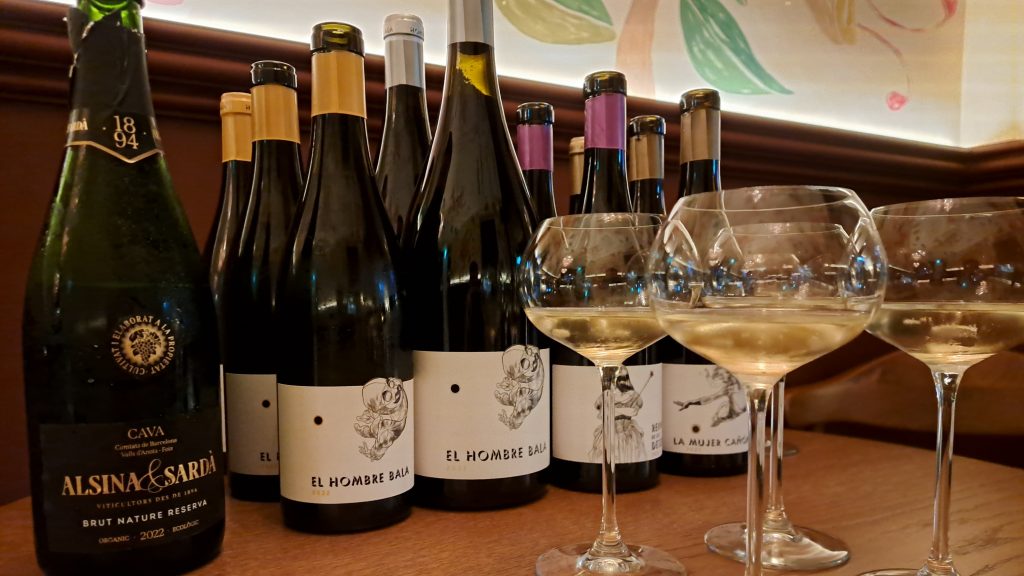
The line-up: a focused selection from El Hombre Bala, including three distinct Garnacha expressions – plus a refreshing Cava to start.
This wine serves as the entry point to El Hombre Bala’s identity – generous but focused, approachable yet quietly complex. The next two wines take that foundation and explore deeper terrain.
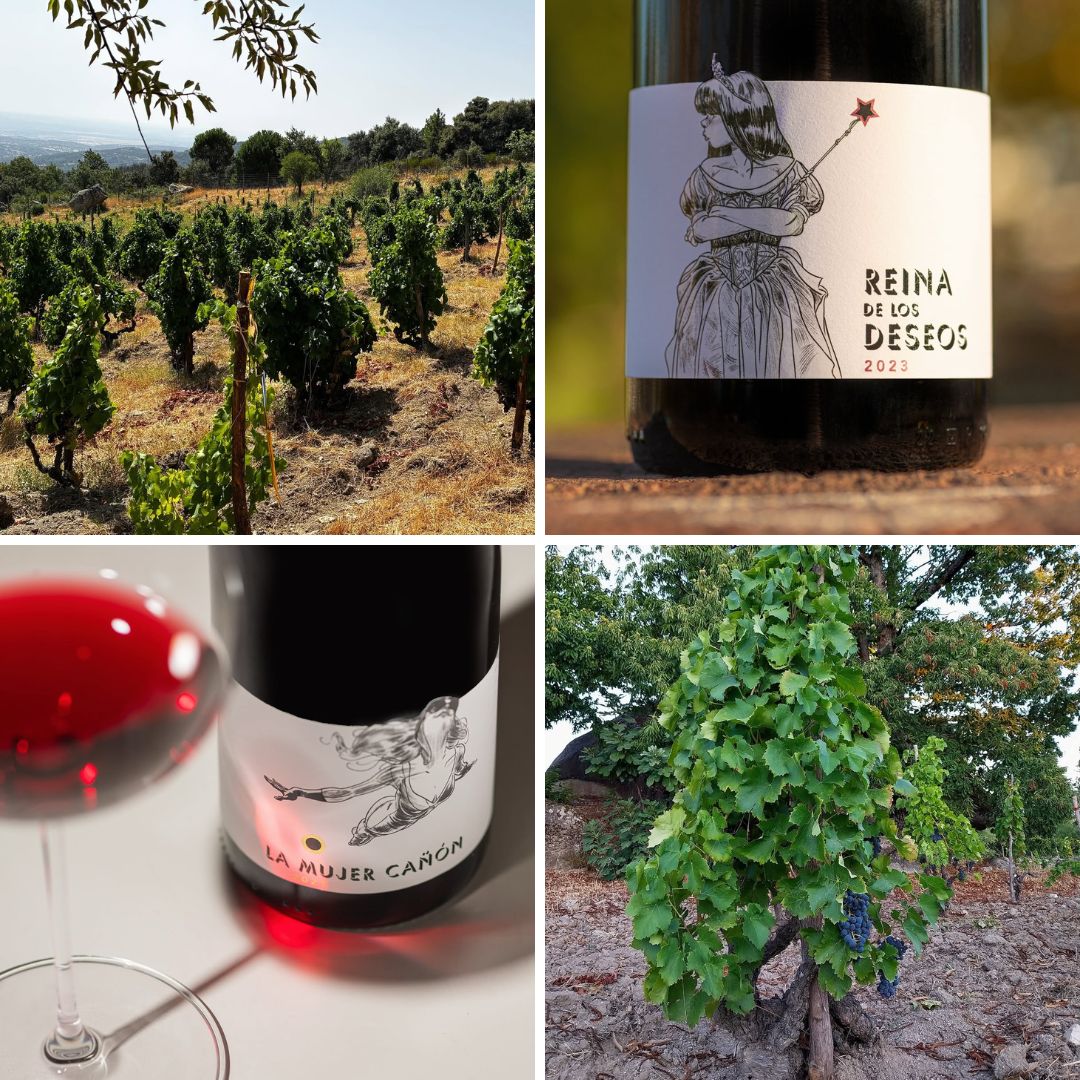
Reina de los Deseos 2023 – A graceful and sensual Garnacha from ancient vines rooted in granite. The nose unfolds slowly with red berries, dried flowers and a faint herbal warmth that recalls Mediterranean hillsides. On the palate it’s both delicate and deep – soft tannins, fine acidity and a touch of heat seamlessly woven into its silken texture. Layers of fruit and spice build with quiet confidence, revealing the concentration only old vines can give. Elegant, balanced and emotionally resonant – a poised and beautifully composed wine.
DWA-Score: 94/100
Where Reina whispers, La Mujer Cañón declares – not louder, but with firmer lines and a more architectural presence.
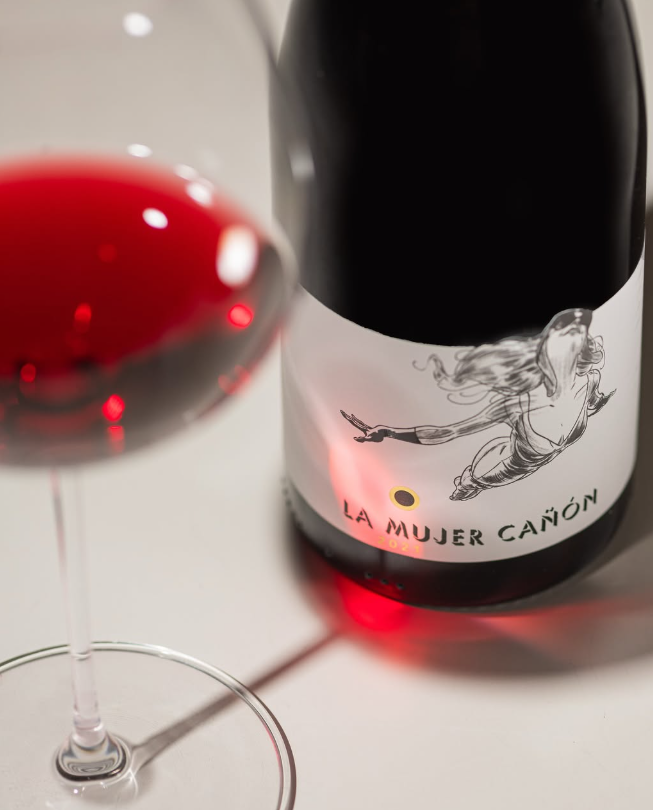
La Mujer Cañón 2021 – An expressive Garnacha that bridges power and grace. The nose opens with roasted notes, balsamic hints and earthy spice – clove, dried flowers and a trace of forest floor. On the palate, it feels airy yet substantial, its 14.5% alcohol absorbed into a supple, velvety texture. Fine-grained tannins and lively acidity lend both freshness and structure, carrying flavors of red fruit, salt and smoke. Complex, poised and well-composed, it shows the depth of whole-bunch fermentation and the promise of a decade ahead.
DWA-Score: 93/100
Together, these three wines articulate a singular idea through different tones: Garnacha, shaped not by sun or cellar, but by elevation, restraint, and intent.
Rethinking Garnacha
What El Hombre Bala proves – quietly but convincingly – is that Garnacha doesn’t need to shout to be heard. For too long, the grape has been typecast: ripe, rich, exuberant, often over-extracted. But here, in the heights of the Sierra de Gredos, it finds a different voice – one that values definition over density, structure over sweetness, and place over power.
These are not “alternative” wines. They are not natural for the sake of fashion, nor minimalist to the point of austerity. Rather, they are precise, expressive, and rooted – in both geography and intent. The hands-off approach in the cellar amplifies rather than erases the vineyard’s voice, and the results are wines that feel modern not because they chase trends, but because they rethink tradition.
La Mujer Cañón – bold in name, graceful in the glass: a Garnacha that redefines strength through precision.
In doing so, El Hombre Bala joins a growing group of producers – in Spain and beyond – who are helping redefine what Mediterranean reds can be. Transparent, age-worthy, nuanced. Wines that don’t just taste good, but also say something.
For Garnacha, long used and often misunderstood, this feels like a long-overdue moment. And for those of us lucky enough to taste it in context – altitude, clarity, conversation – it’s a reminder that some of the most exciting revolutions in wine begin not with noise, but with silence, granite, and a quietly persuasive glass.
That context, in this case, was thoughtfully created. Best of Wines, known for its deep portfolio of fine wine classics and sharp eye for emerging talent, curated a line-up that highlighted the intellectual and emotional range of this producer. And De Buren, in its growing role as a host for community-minded wine events, provided the right tone: welcoming, engaged, and open to dialogue. Together, they brought El Hombre Bala’s message not just to the table – but into focus.
This article is written by our own Onno Deumer.Our sincere thanks go to Robin Bially, export manager for Uvas Felices, for his generous insights and engaging presentation throughout the evening. We also extend our appreciation to the winemaking teams behind El Hombre Bala and Comando G – whose vision and dedication continue to reshape what Garnacha can be.
A warm thank-you as well to Bas van Middendorp of Best of Wines, for curating a thoughtful and characterful selection, and to Roel Frissen and the team at Restaurant De Buren, for providing the setting, spirit, and hospitality that made the evening resonate far beyond the final glass.
Join our insiders’ list and get exclusive early access to new articles, expert tips, and fresh reviews delivered straight to your inbox. Subscribe now and be the first to discover!