Join Our Wine Journey – Sign Up for the Newsletter 🍷
Domaine des Tuileries: the Whirlwind of Venteuil
Share
Deel op X (twitter)
LinkedIn
WhatsApp
Domaine des Tuileries: the Whirlwind of Venteuil.
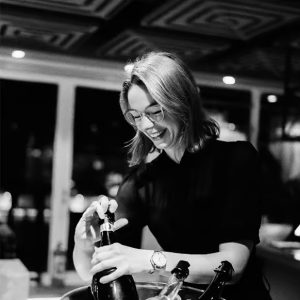
In the spring of 2024, we returned from the Bordeaux trip, organized by the Wine Academy with the Vinologenopleiding. On our way back to the Netherlands, we decided to stay the night in Reims. In the evening, we went to the famous Winebar by Le Vintage and met up with Emma Venables, who is currently being prepared to take the helm at Domaine Fabrice Bertemes in Trepail. The wonderful host served us a champagne blind, and we could deduct that this was a Chardonnay-based wine, yet the subregion had us surprised: Vallée de la Marne, 100% Chardonnay from Domaine des Tuileries. We were stunned by the quality and knew that we had to visit this winery in the near future.
Flash forward a year, and we met with Hinke de Jong: a joyous spirit with an incredible track record and portfolio: CEO of Brouzje, one of the Netherlands’ few Champagne Ambassadors and Dame Chevalier de L’Ordre des Coteaux de Champagne. We discussed our visit for the Bicentennial of Joseph Perrier (read our article on this here), during which we decided to visit some other producers in the portfolio of Brouzje as well. When in Reims… Happily surprised, we recognized the label of Domaine des Tuileries and knew the time was ripe, so we embarked on a mission to Venteuil.
Venteuil, the Windy Village
Right across the border from Montagne de Reims, one will find Venteuil just a few kilometers west of Hautvillers. The beautiful scenery is unmatched: the undulating landscape switches to steeper hillsides with a southern exposition, right by the Marne River that glimmered so brightly during this sunny day. It took us a second to find the gate in this small village, as it was tucked away in a little corner of the street.
The vineyards are located both beneath and above the village. Venteuil owes its name to the strong westerly winds with their cooling effects on the vineyards. The subsoil is the last big chunk of chalk one will find before the soils gradually transition into clay and marl towards the western part of the Vallée de la Marne. In the topsoil of the vineyards, clay is mostly present.
We were kindly welcomed by Bryan Marx’ mother and the family dogs. Bryan was still in the vineyards but would be there shortly. Bryan marched in after a few minutes, as he had forgotten the time in the vineyards. With a view so beautiful, we could definitely understand the tardiness and surely forgive it. We sat down in that same shed and talked through the establishment of Domaine des Tuileries, besides the history of the family domain (Marx-Coutelas) and running both businesses side by side.
The History of Marx-Coutelas
Marx-Coutelas is a family winery that can find its roots in a period not too long ago in the sixties of the last century, when grandfather Jacques switched from being a mixed agricultural farmer to working as a pressoir for large maisons. When Jacques Marx married a woman named Claudine Coutelas, viticulture was included as Claudine owned a vineyard and Domaine Marx-Coutelas was born. The winery passed onto Bryan’s father, Patrick, who bought more land during his time, seeing to it that the total hectares the family owned amounted to five towards the end of his career in 2018.
By this time, Bryan, who lived in Paris and had studied Strategic Marketing in Bordeaux, was asked to return to Champagne and to take over at Marx-Coutelas. Having no experience, nor any technical background in wine, except for being a winemaker’s son, Bryan seemed somewhat doubtful initially, but decided to roll the dice anyways.
The Birth of Domaine des Tuileries
Bryan came back to Venteuil in 2018 and decided he did not only want to run the company his parents ran with so much passion: he wanted to make a name for himself and really put Venteuil on the map. In line with his vision, he decided the conventional viticulture had to switch to organic, as all the great wines he had tasted were from organic farmers. His ideas were met with critique from both his father and winemakers in the village, but Bryan was certain this would pave the way to greatness – and seven years later, we wholeheartedly agree.
Thus in 2019, Bryan created Domaine des Tuileries, which immediately started out as an organic winery. From the 1.5 hectares that were acquired upon his arrival in 2018, Bryan rented 80 ares to his father for Marx-Coutelas and used 70 ares for his own wines. In the meantime, 10 more ares have been acquired and the size of the domain now stands at 1.6 hectares.
Having spent some years experiencing the hard labor of a winemaker and gaining insights and inspiration from other winemakers in Champagne, Bryan and Patrick made the decision to let Bryan take over in 2021.
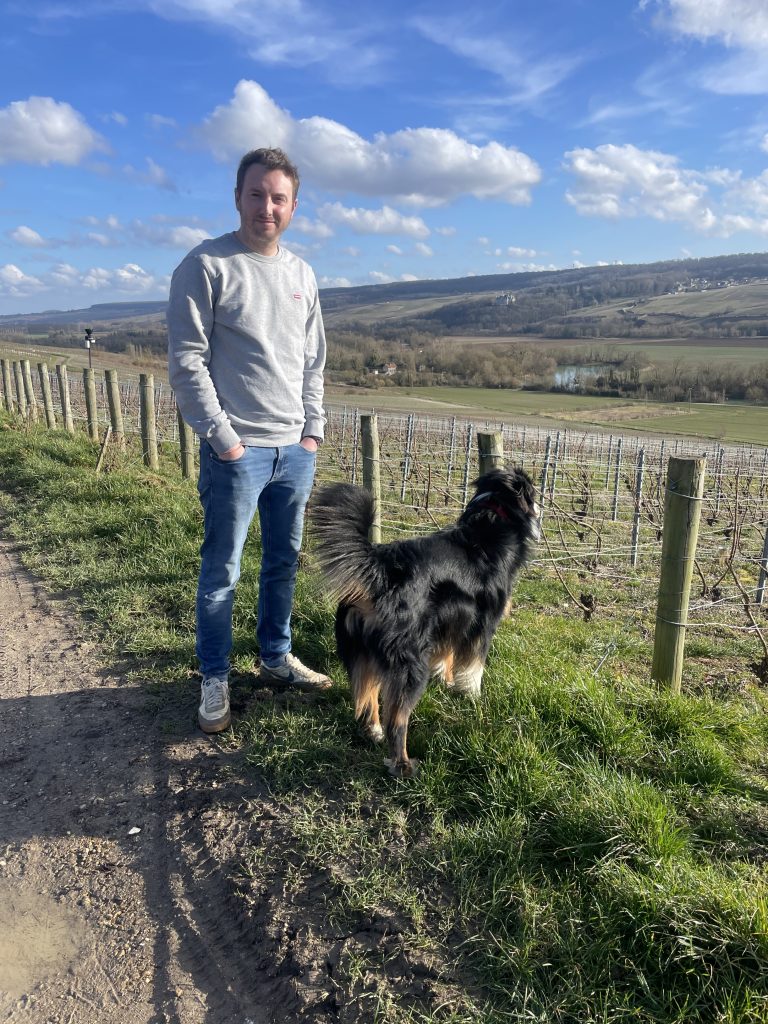
Bryan and his dog in the Vineyards.
Running Two Wineries Side by Side
Nowadays, 6.6 hectares are Bryan’s alone to direct. With the vision to let terroir make the wine, Bryan passionately works the vineyards. About 4 hectares are reserved for Marx-Coutelas, 1.6 hectares for Domaine des Tuileries and 1 hectare is farmed for Bollinger, for whom he also does the pressing.
Annually, around 6 to 7 different cuvées are made for Marx-Coutelas, which depends on whether they decide to release a millesimé or not, and among these is a wonderful Coteaux Champenois Rouge. Approximately 30.000 bottles are made every year. For Domaine des Tuileries, this amounts to 10.000 bottles, spread out over 4 different cuvées. In the near future, a Coteaux Champenois Blanc has a high probability of being released. So far, Bryan has made his attempts at this for five years but has not been satisfied.
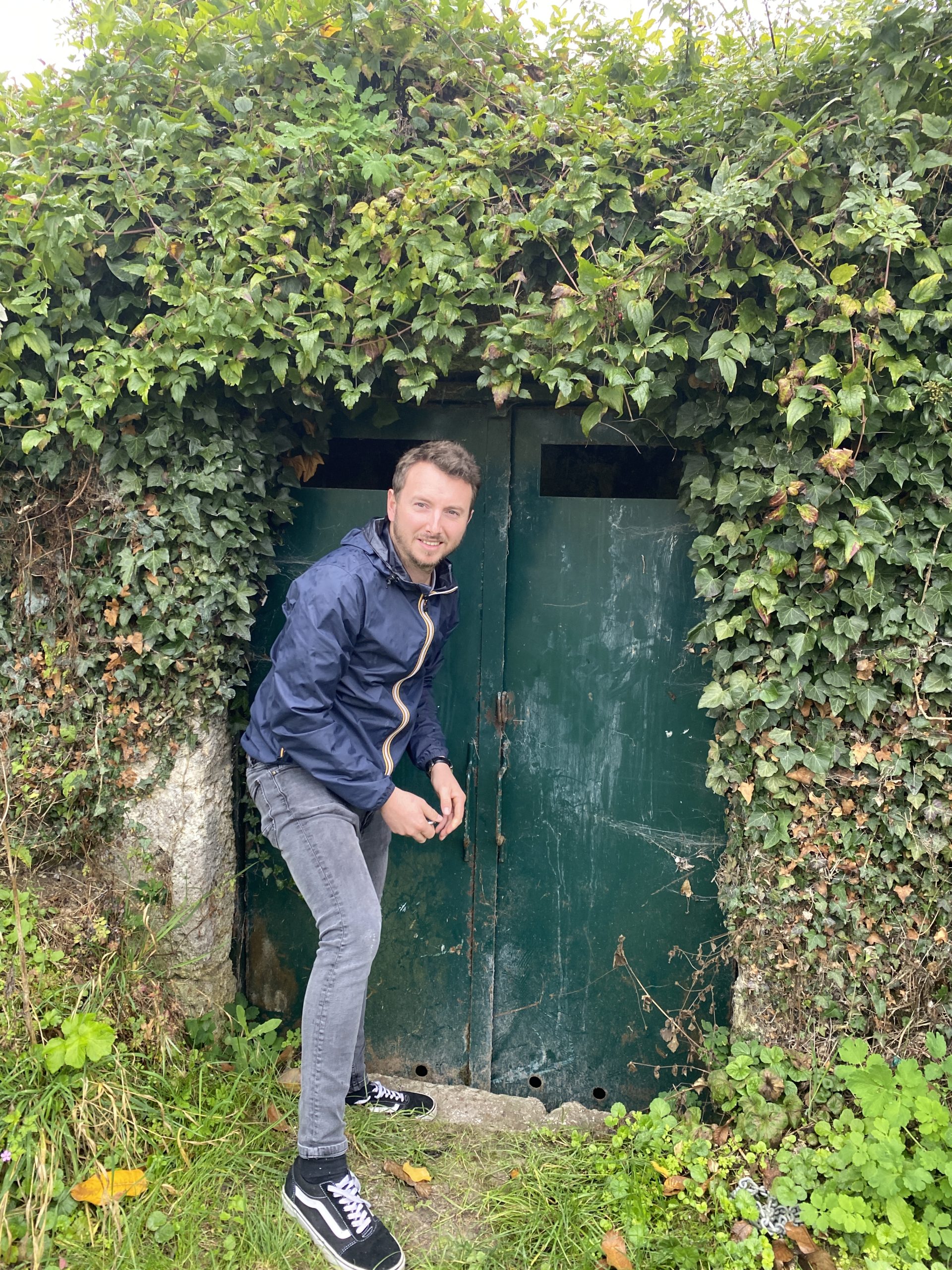
The cellar is located underneath a vineyard, with 95% humidity and a stable temperature year-round at 12 degrees Celsius. There is no running water and no electricity and the cellar had not been used for about half a century until 2019. The walls have been sprayed with yeast cultures from his own fermenting champagnes. Bryan remembers secretly playing in these cellars in his youth, and now he does so again by making his wines here.
The Wines of Domaine des Tuileries
Unfortunately for us (and luckily for Bryan), the wines were all sold out and not a single bottle – except for one – was left at the domain. Thus, we tasted Les Crayères at the domain and the rest of the cuvées were shared with us at home by Brouzje.
The vinification for every single cuvée is identical. Depending on the year, both the cuvee and the taille un et deux are used in the wines. In some years, the taille (or part of it) might be left out. The rebêche is always left out. After pressing at the pressoir, the juice is transported to the cellars and transferred into barrels, where spontaneous fermentation takes place at 12 degrees Celsius. The first fermentation takes about two to three months. No sulfur is added before pressing and a minimal amount is added once the alcoholic fermentation is finished. Malolactic conversion is not sought in the wine, but once it happens, Bryan lets it take place.
All the barrels that are not selected for the single vineyard wines, go into Les Crayères. Every year, Bryan buys two to three new barrels from Burgundian en Champenoise cooperages. Bryan does not necessarily look for prominent oaky notes in his wines. All the wines age in these 300L barrels and no bâtonnage is applied during the aging (except for the Meunier, which ages in Acacia barrels). After spending a year in barrel, the wines are transferred to bottles in which they age under corks instead of caps, to subtly increase the speed at which they age. All the wines are disgorged manually after a minimum of 36 months in the bottle. No liqueur d’expedition is added after disgorgement.
A medium yellow color with a beautiful nose filled with toast, cedar, butter, lemon curd, green apple, strawberry, and a hint of earthiness. A fine mousse enters the palate and is elegantly cut through by the racing acidity.
We reward this wine with a 91-point DWA score (MC)
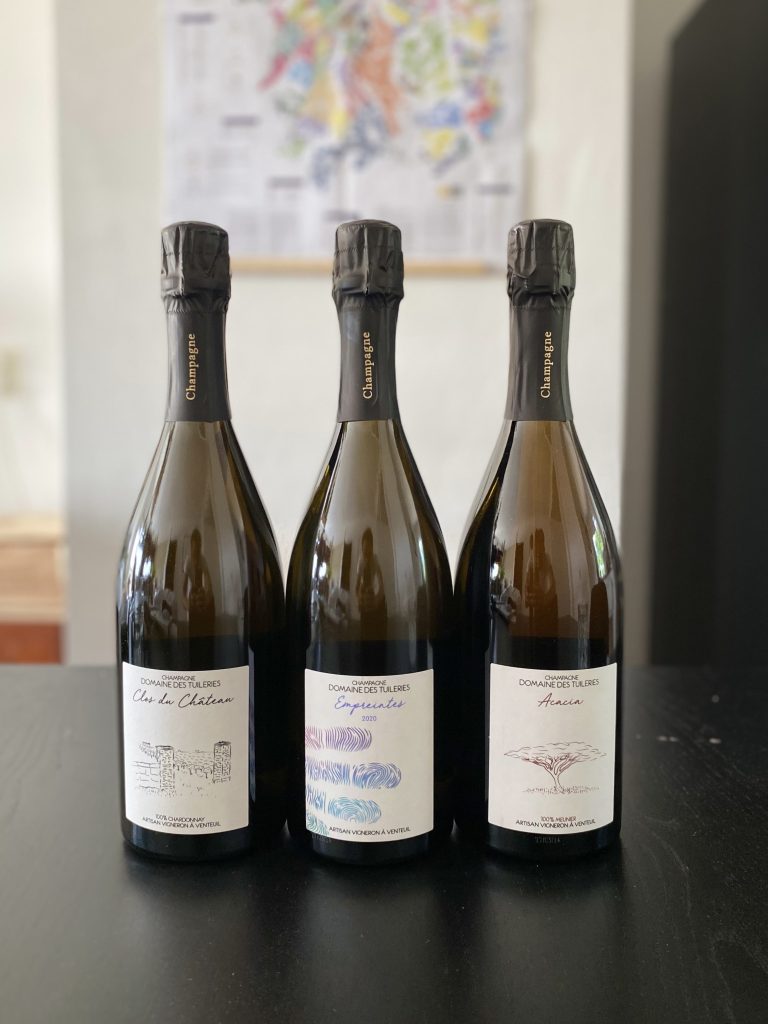
2020 Clos du Château Brut Nature
100% Chardonnay | Dégorgé 26/03/2024
Medium lemon color. Beautiful integration of secondary aromas of brioche, sourdough and butter into the fruity notes of white peach, ripe lemon and yellow apple. Extremely fine mousse texture and a typically horizontal chardonnay acidity structure. Nutty, slightly earthy aftertaste.
We reward this wine with a 94-point DWA score (MC)
2020 Acacia Brut Nature
100% Pinot Meunier | 100% vinified and aged in acacia barrels | Dégorgé 26/03/2024
Medium golden color. Initially, butter and brioche dominate the nose. After a while, it opens up to barely ripe apricot, yellow apple, cantaloupe, acacia, white cherries and lemon yoghurt. More body and weight on the mid palate, with aromas of baking spices and a hint of smokiness on the finish. Silky smooth bubble texture with zesty, moderate acidity.
We reward this wine with a 95-point DWA score (MC)
2020 Empreinte Brut Nature
100% Pinot Noir | Dégorgé 26/03/2024.
The nose is filled by ripe cherries and raspberries, a whiff of strawberry, followed by butter, sourdough and nutty notes of almond and backing spice. Moving towards the finish, the wine seems to ethereally lift up from the palate towards the oral cavity, exhibiting textbook pinot noir elegance and structure. Extremely well balanced with tons of intensity and complexity.
We reward this wine with a 96-point DWA score (MC)
Conclusion
The somewhat shy Bryan proves to be an excellent winemaker as much as he is an excellent marketeer with a great vision. The wines are beautifully precise and exhibit meticulous craftsmanship. Once challenged by the views of his peers in Venteuil and even his own father, Bryan should no longer be questioned for his ideas, as they have proven to work very well for both Marx-Coutelas and his precious Domaine des Tuileries.
We are certain that the wines of Domaine des Tuileries will soon take the spotlight in the world of wine and we will make sure to secure some bottles before the prices will eventually skyrocket. With large enthusiasm, we are looking forward to what Domaine des Tuileries, the whirlwind of Venteuil that blew us away, holds in store for us in the near future.
This article is written by our own Miquel Claase. We thank Bryan Marx of Domaine des Tuileries and Hinke de Jong of Brouzje, who distributes the wines of Domaine des Tuileries.
Join our insiders’ list and get exclusive early access to new articles, expert tips, and fresh reviews delivered straight to your inbox. Subscribe now and be the first to discover!