Join Our Wine Journey – Sign Up for the Newsletter 🍷
Château Phélan Ségur – Breaking the Glass Ceiling in Saint-Estèphe
Share
Deel op X (twitter)
LinkedIn
WhatsApp
Château Phélan Ségur – Breaking the Glass Ceiling in Saint-Estèphe.
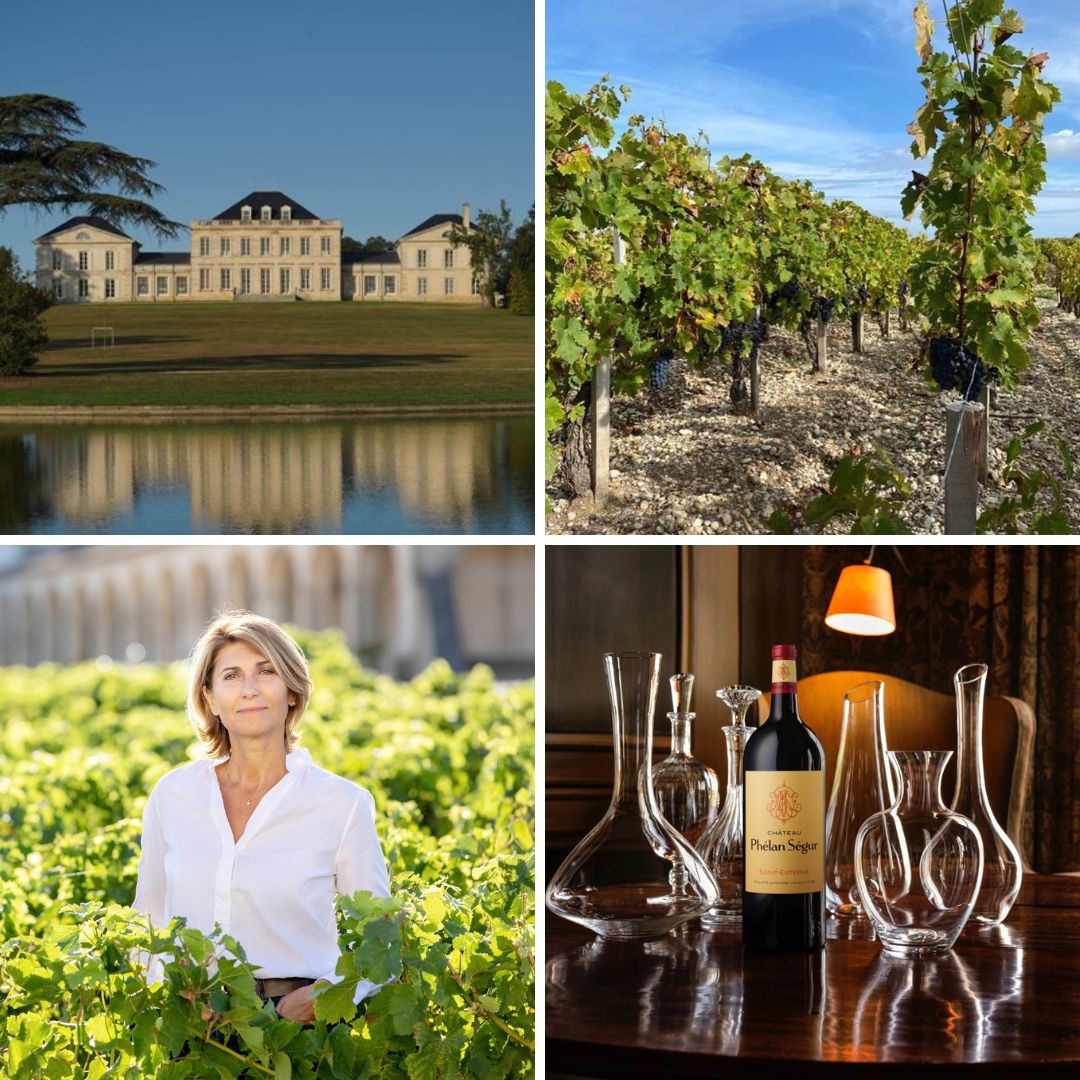
In Saint-Estèphe, where history weighs heavily and classifications still shape perception, Château Phélan Ségur has followed a different trajectory. Unclassified, yet increasingly mentioned alongside some of the Médoc’s most respected names, the estate has spent the past two decades quietly redefining its position.
An extended conversation with General Manager Véronique Dausse, followed by a detailed visit to the vineyards and cellars, reveals a château driven less by status and more by conviction, teamwork and a very clear understanding of terroir.
Saint-Estèphe at the Northern Edge
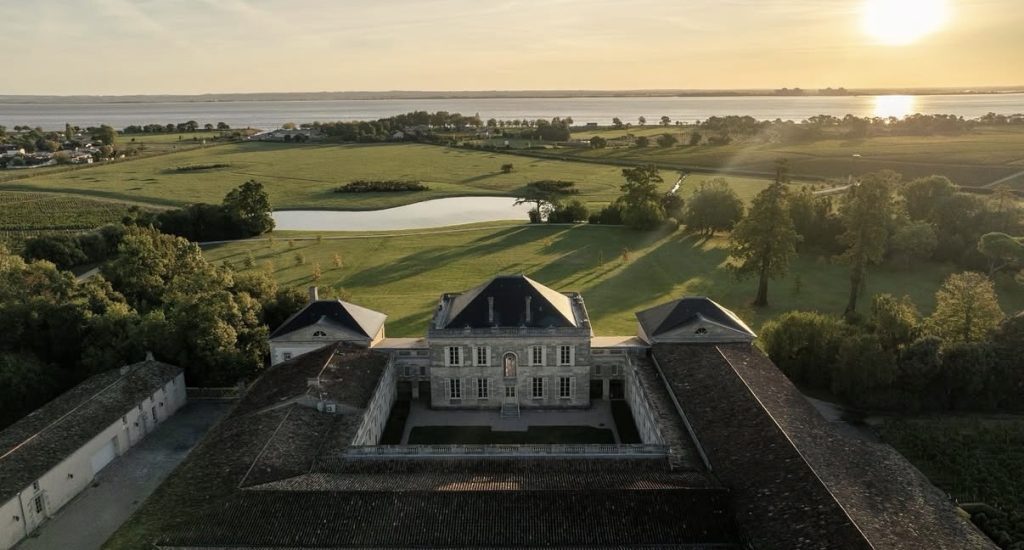
Phélan Ségur is located in the heart of Saint-Estèphe, the northernmost communal appellation of the Médoc. With roughly 1,200 hectares under vine, it is also one of the smaller Left Bank appellations, yet one with remarkable geological diversity. The estate itself covers 114 hectares, of which approximately 70 hectares are planted with vines, while the remainder is devoted to meadows, woodland and natural parkland. Dausse repeatedly stresses the importance of this environment: the vineyard does not exist in isolation, but as part of a broader ecosystem.
Château Phélan Ségur’s Close Proximity to the Gironde is Crucial.
The proximity of the Gironde estuary is a defining factor. At barely one kilometer from the river and around 50 kilometers from the Atlantic Ocean, Phélan Ségur benefits from a temperate, oceanic microclimate. The Gironde acts as a thermal regulator, cooling the vineyards during summer heat and mitigating frost risk in winter. According to Dausse, Saint-Estèphe — and Phélan Ségur in particular — has so far largely escaped the devastating spring frosts seen elsewhere in Bordeaux, an advantage that has become increasingly significant in recent vintages.
A Terroir of Contrast and Complementarity
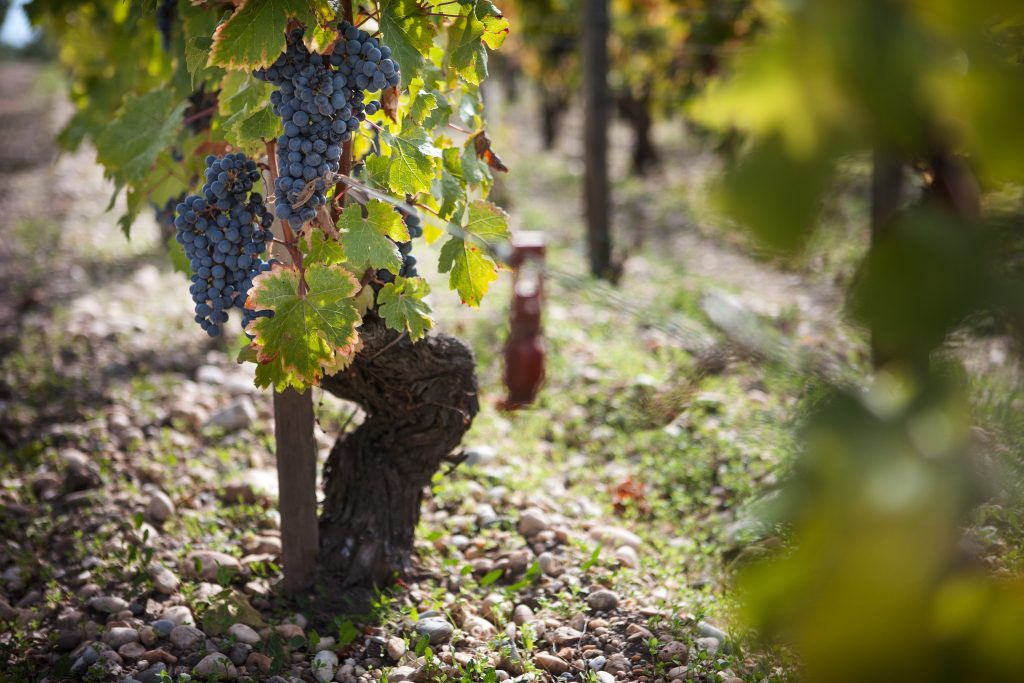
Saint-Estèphe is often described as the most ‘Cabernet’ of Médoc appellations, yet Dausse is keen to nuance that image. Deep gravels certainly dominate the higher parcels and hilltops, providing ideal conditions for Cabernet Sauvignon, but clay plays an equally important role. These clay-rich soils, sometimes mixed with sand or limestone, offer excellent water retention and are particularly well suited to Merlot.
Cabernet Sauvignon forms an important part of the DNA of Phélan Ségur.
At Phélan Ségur, Merlot is not a secondary player but a structural component of the blend. While Cabernet Sauvignon remains the backbone of the Grand Vin, Merlot contributes flesh, roundness and aromatic generosity — not in a soft or simplistic way, but with structure and power. Small parcels of Cabernet Franc and Petit Verdot, planted since 2013, add further nuance, rarely exceeding four percent of the final blend and used primarily to fine-tune balance and aromatic complexity rather than to chase intensity.
Four Blocks, One Vision
The vineyard is divided into four main blocks, each with its own identity. The historic ‘enclos’ surrounding the château is home to some of the estate’s oldest vines, many approaching 70 years of age. These parcels consistently form the core of the Grand Vin. Other plots, located closer to the river or on slightly lower terraces, bring freshness and aromatic lift.
The Four Main Blocks surrounding Saint-Estèphe.
Rather than pursuing uniformity, Phélan Ségur embraces this diversity. Dausse describes blending as one of the estate’s most creative and intellectually demanding moments: the challenge is not to assemble power, but to orchestrate tension, freshness and structure into a coherent whole.
Viticulture: A Quiet Revolution
One of the most striking themes of the interview is the transformation of vineyard practices over the past decade. Phélan Ségur is not certified organic or biodynamic, a position Dausse defends without hesitation. Certification, she argues, is not an objective in itself; the real goal is living soils and long-term vineyard health.
Phélan Ségur’s Vineyards with its Characteristic Gravel Soils and the Saint-Estèphe Church in the Background.
Where vineyards were once kept bare, grass now grows between and beneath the rows, either naturally or through cover crops adapted to specific soil types. This shift required a profound cultural change within the team. Vineyard workers trained for decades to see ‘clean’ soils as a sign of quality had to be convinced that biodiversity and competition could be assets rather than threats. Today, soil compaction is carefully avoided, tractor passes are adjusted to weather conditions, and every intervention is weighed against its long-term impact.
Precision in the Cellar
The same philosophy of restraint and precision continues in the cellar. Vinification takes place exclusively in stainless steel vats, chosen for their neutrality and ability to preserve fruit purity. Alcoholic fermentation and maceration are followed by malolactic fermentation in barrel, carried out spontaneously without inoculation. Lees are deliberately retained during this phase to buffer the wine from excessive oak influence and to protect aromatic freshness.
Since 2020, the estate has progressively transitioned to indigenous yeasts, a change that Dausse considers one of the most significant of recent years. By the 2024 vintage, nearly all fermentations relied on native populations. The result, she notes, is greater precision, improved tannin quality and a stronger sense of terroir expression.
Phélan Ségur’s Barrel Cellar.
Ageing typically lasts 16 to 18 months, using barrels from six different coopers. New oak is applied judiciously, while the second wine sees no new barrels at all, favoring fruit expression and approachability. Oak, here, is a frame — never the subject.
Team, Ownership and Trust
Dausse’s own journey to Phélan Ségur is unconventional. With experience spanning Languedoc, Champagne and even Napa Valley, she did not initially set out to run a Bordeaux estate. Yet what began as an unexpected opportunity has turned into a 15-year tenure defined by continuity and steady evolution.
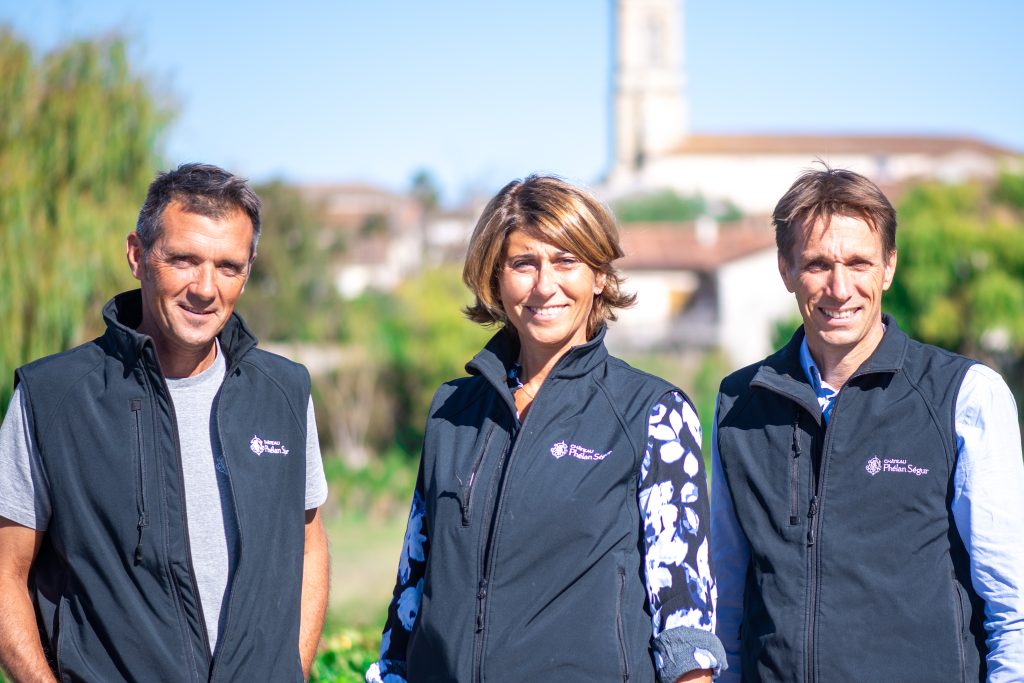
Véronique amidst the technical team in Phélan Ségur’s Vineyards.
A pivotal moment came with the change of ownership, when Belgian entrepreneur Philippe Van de Vyvere acquired the château. Rather than imposing a new vision, he chose to trust the existing team. His mandate, as Dausse recounts it, was disarmingly simple: protect the environment, strive for excellence, and remember that wine remains a business. That balance of ambition and restraint has proven decisive.
With fewer than 40 people on staff, Phélan Ségur operates with short decision lines and a strong sense of collective responsibility. Success is shared, visible and tangible — a factor Dausse considers essential to the estate’s momentum.
Recognition Beyond Classification
Phélan Ségur’s growing reputation has not gone unnoticed. Increasingly, the wines are tasted alongside classified growths and frequently rank among the top performers of Saint-Estèphe in comparative tastings. For Véronique Dausse, this recognition is less about scores than about validation: being assessed by the same standards, in the same context, and judged on consistency rather than reputation alone.
Breaking what she describes as a ‘glass ceiling’ has been a gradual process. It required not only investment and technical progress, but also patience, persistence and energy. The reward is not simply higher critical regard, but a market that increasingly accepts the château’s pricing and positioning on its own merits — something that would have been unthinkable two decades ago.
Tasting Phélan Ségur: Proof in the Glass
Tasting the wines alongside Véronique Dausse brings the estate’s philosophy into sharp focus. Across vintages, Château Phélan Ségur consistently expresses Saint-Estèphe structure without heaviness, favoring tension, precision and clarity over sheer mass. Power is present, but always disciplined.
During the interview itself, we tasted Château Phélan Ségur 2016, a vintage that today feels emblematic of the estate’s trajectory. At eight years of age, the wine showed a composed, confident profile: dark cassis and graphite on the nose, layered with cedar, subtle tobacco and a hint of saline freshness. On the palate, the tannins were fully integrated yet still assertive, framing the fruit rather than dominating it. The finish was long, fresh and distinctly estuarine. We gave it a 92/100 DWA score, not as a nostalgic benchmark, but as proof of how well the wines age when balance is respected.
Tasting four vintages of Phélan Ségur’s Grand Vin.
A comparative tasting following the vineyard and cellar visit highlighted the precision achieved in more recent years.
The 2017 Château Phélan Ségur, rated 93/100 DWA points by us, impressed with its restraint and finesse. Often overshadowed by more generous years, it showed purity of fruit, lifted aromatics and finely grained tannins. Built more on precision than power, it nevertheless retained the firm structural signature of Saint-Estèphe.
The 2018 vintage, received a 93+/100DWA score from us reflected the estate’s ability to navigate a challenging growing season. Ripe, dark fruit was balanced by freshness and control, avoiding the excess sometimes associated with the year. The clay-influenced Merlot brought generosity, while Cabernet Sauvignon provided direction and tension.
The standout of the flight was the 2020 Château Phélan Ségur, awarded a 94+/100 DWA score by us.Concentration came without weight, depth without heaviness. The tannins were abundant yet remarkably refined, the fruit pure and focused, and the finish long, saline and persistent. It felt like a wine fully at ease with its identity — confident, composed and unmistakably Phélan Ségur. The increased precision in this vintage also coincides with the estate’s decisive move toward indigenous yeasts, a shift that subtly sharpened both texture and aromatic clarity.
Taken together, these wines illustrate not a stylistic shift, but a steady refinement. Freshness, balance and precision form the common thread, mirroring the estate’s evolution in both vineyard and cellar.
A Style Anchored in Freshness
Rather than chasing immediacy or excess, Château Phélan Ségur produces wines that invite time and attention. They are built to age, yet increasingly accessible in youth — a reflection of careful viticulture, measured extraction and a deep respect for equilibrium.
This clarity of style has become one of the château’s defining strengths: recognisable, reliable and resistant to fashion, while still responsive to the realities of climate change and evolving expectations.
Looking Ahead
In a region often defined by its past, Château Phélan Ségur offers a compelling counterpoint. Saint-Estèphe’s reputation for power and rigidity is not denied here, but reinterpreted — shaped into wines that combine structure with freshness, authority with restraint. Climate change, shifting consumer expectations and market pressures are addressed not through ideology or spectacle, but through thoughtful adaptation and incremental improvement.
Château Phélan Ségur has a Bright and Healthy Future ahead of itself.
Phélan Ségur may stand outside the 1855 Classification, but it no longer stands apart from its peers. Judged increasingly alongside classified growths, and on equal terms, the estate has crossed the glass ceiling that once defined its perception. In Saint-Estèphe, where resilience and authenticity matter more than titles, that position feels less like an omission — and more like earned legitimacy.
Bordeaux and its Future in the World of Fine Wine- The Series
This article is written by our own Niels Aarts. It is based on our visit in December 2024, as part of our interview series ‘Bordeaux, and its future in the World of Fine Wine’. Stay tuned as we will publish more articles and interviews in this series, featuring leaders of the Bordeaux wine region.
We would like to thank Véronique Dausse, Lorène Babin and the Phélan Ségur team for their warm welcome, time and support in the creation of this article.
Join our insiders’ list and get exclusive early access to new articles, expert tips, and fresh reviews delivered straight to your inbox. Subscribe now and be the first to discover!