Join Our Wine Journey – Sign Up for the Newsletter 🍷
Château Palmer – A Legacy of Elegance and Evolution
Share
Deel op X (twitter)
LinkedIn
WhatsApp
Château Palmer – A Legacy of Elegance and Evolution.
At the intersection of Margaux’s timeless beauty and modern winemaking excellence stands Château Palmer—a name that has come to embody refinement, innovation, and harmony between man and nature. Recently, we joined the team of De Bruijn in Wijnen for a private tasting hosted by Château Palmer, led by Sébastien Menut, Export Director of the estate.
The tasting, organized exclusively for the team of De Bruijn, offered an in-depth exploration of Palmer’s identity and evolution. We attended as guests of De Bruijn in Wijnen, representing Dutch Wine Apprentice, to experience Palmer’s wines across generations and witness the dialogue between one of Bordeaux’s most admired châteaux and one of the Netherlands’ most respected importers.
All wines were supplied directly by Château Palmer, with one extraordinary exception—a bottle of the 1940 vintage drawn from the private collection of the De Bruijn family, opened as a tribute to history, friendship, and the enduring connection between estate and importer.
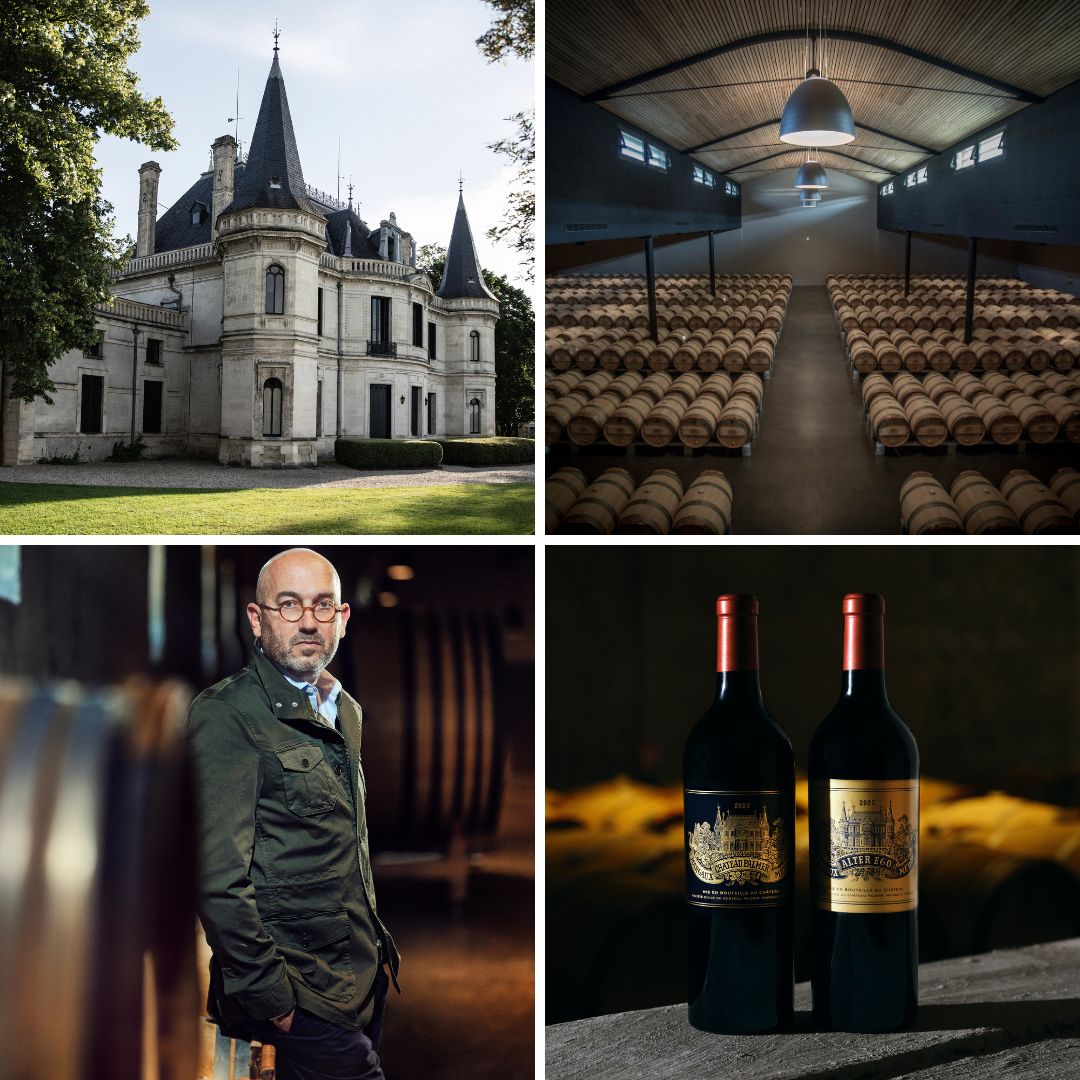
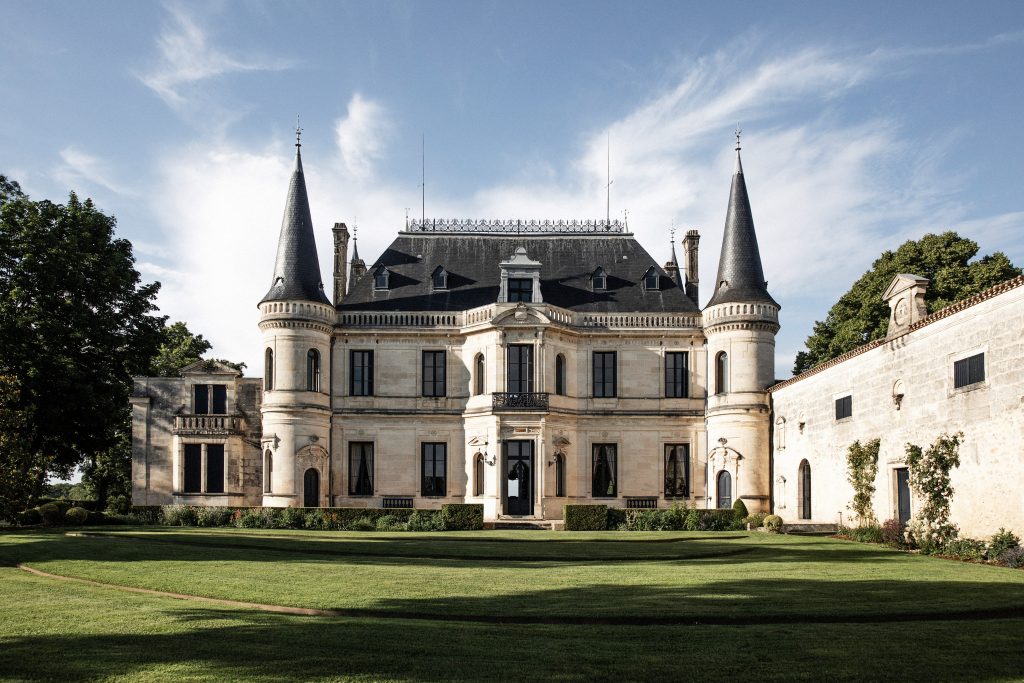
Château Palmer.
De Bruijn in Wijnen: Dutch Gatekeepers of Bordeaux
Few importers have built a Bordeaux portfolio as respected and comprehensive as that of De Bruijn in Wijnen. As we highlighted in our earlier article, “Bordeaux 2024: A Charming Vintage with Many Faces”, Eric and Marianne de Bruijn today lead the family company with passion and deep knowledge of the region.
Their expertise goes beyond selection; it is about relationships, trust, and precision. Over decades, they have cultivated close ties with Bordeaux’s top estates, including Château Palmer, aligning with producers who share their pursuit of excellence. For this tasting, those ties were evident in the direct collaboration with Sébastien Menut and the exceptional lineup of wines presented.
With the expertise of De Bruijn’s Laurent Richet MS, and the rest of the De Bruijn team at the table, the tasting became not just an exploration of vintages, but a masterclass in the art of understanding Bordeaux—each discussion diving into viticulture, terroir expression, and the nuances of Palmer’s evolution.
A Brief History of Château Palmer
The roots of Château Palmer stretch back to the early 19th century, when Charles Palmer, a future British major general and Member of Parliament, purchased the property from Madame de Gascq and gave it his name. Already esteemed within Margaux, the estate flourished under Palmer’s vision, expanding its vineyard holdings and reputation. In 1853, The Pereire brothers, entrepreneurs and bankers under Napoleon III, purchased the estate after him, building the present château and developing the vineyard, to the point that by the 1855 Classification, Château Palmer was ranked as a Third Growth (Troisième Cru Classé) —a status it has more than lived up to since.
In 1938, the estate came under the joint ownership of four families that included some of the wealthiest Bordeaux negociants, including the Sichel and Mähler-Besse families, a partnership that continues to this day. The Sichel family’s Anglo-Dutch background brought an international perspective that helped Palmer build its reputation in key global markets.
The Evolution of Palmer: From Classicism to Biodynamic Precision
The arrival of Thomas Duroux in 2004 marked the beginning of a new era for Château Palmer. A trained agronomist and former winemaker at Ornellaia in Tuscany, Duroux brought both technical rigor and philosophical depth. Under his direction, Palmer has experienced a remarkable rise in quality, becoming one of the benchmark producers not only of Margaux but of all Bordeaux.
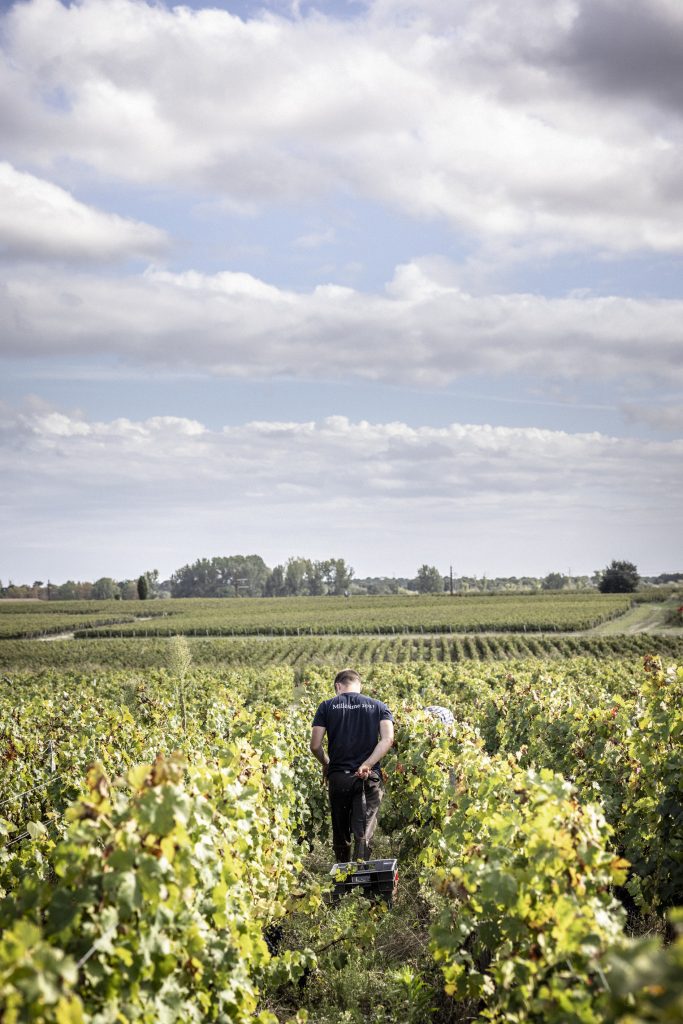
Duroux’s approach combined meticulous vineyard management with an embrace of organic and biodynamic farming. What began as an experiment in 2009 expanded across the entire estate –then 55-hectare– by 2014, achieving full certification in 2018. The Palmer ecosystem today includes trees, meadows, livestock, and gardens—elements that support soil health and biodiversity. As Sébastien Menut explained during the tasting, “We don’t promote it as a marketing story; we do it because it’s right for the vineyard and for the wine.”
Château Palmer’s certified organic vineyards.
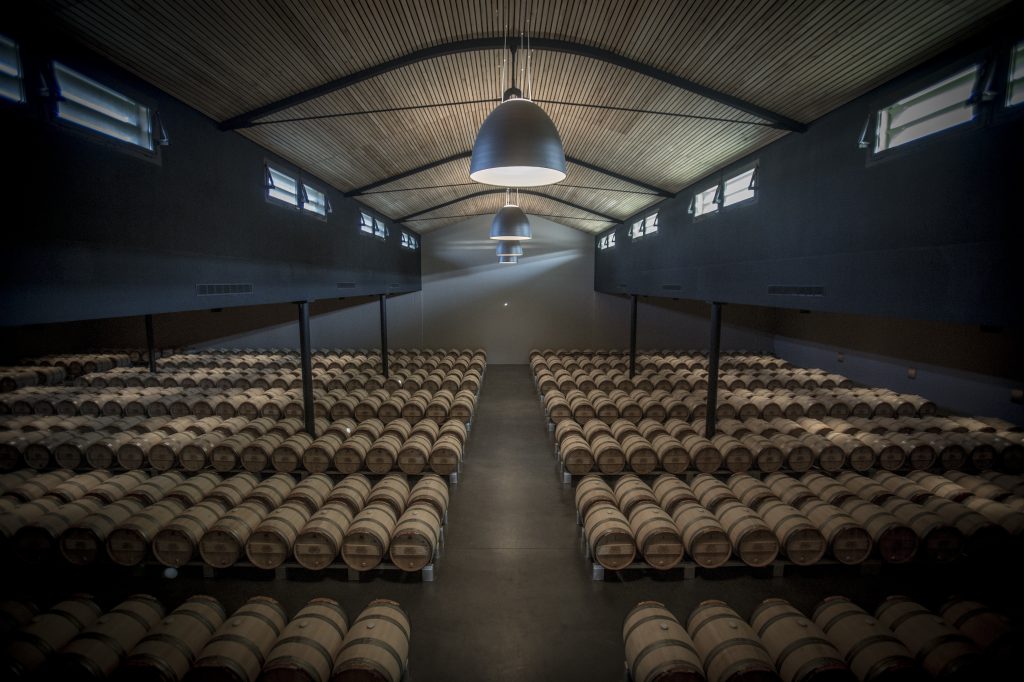
The cellar philosophy evolved alongside the vineyard. Palmer gradually reduced new-oak influence, introduced larger oak foudres, and refined parcel-by-parcel vinification across more than 100 individual plots. The result is wines of extraordinary textural finesse and aromatic clarity.
Château Palmer’s Barrel Cellar.
At the heart of these changes lies a profound respect for terroir. Palmer’s vineyards rest on a complex patchwork of gravel, clay, and sand—a geological mosaic that defines the personality of its wines. The sandier parcels, lighter and quicker-warming, give Alter Ego its supple texture and floral charm. The gravel-clay parcels, particularly those supporting old Merlot vines, yield structure, density, and longevity for the Grand Vin.
This distinction between sand and clay is not just academic—it is fundamental to Palmer’s style. The blending of these elements gives the wines their signature duality: silk and strength, perfume and persistence. Under Duroux, that expression has never been clearer.
The consistency of excellence since the mid-2000s is undeniable. Vintages such as 2009, 2015, 2018, and 2020 showcase Palmer at the height of its craft—each balancing purity, texture, and emotion in perfect harmony.
The Tasting
The tasting, guided by Sébastien Menut, unfolded as a vertical journey through time—five wines that together narrated the story of Palmer’s evolution.
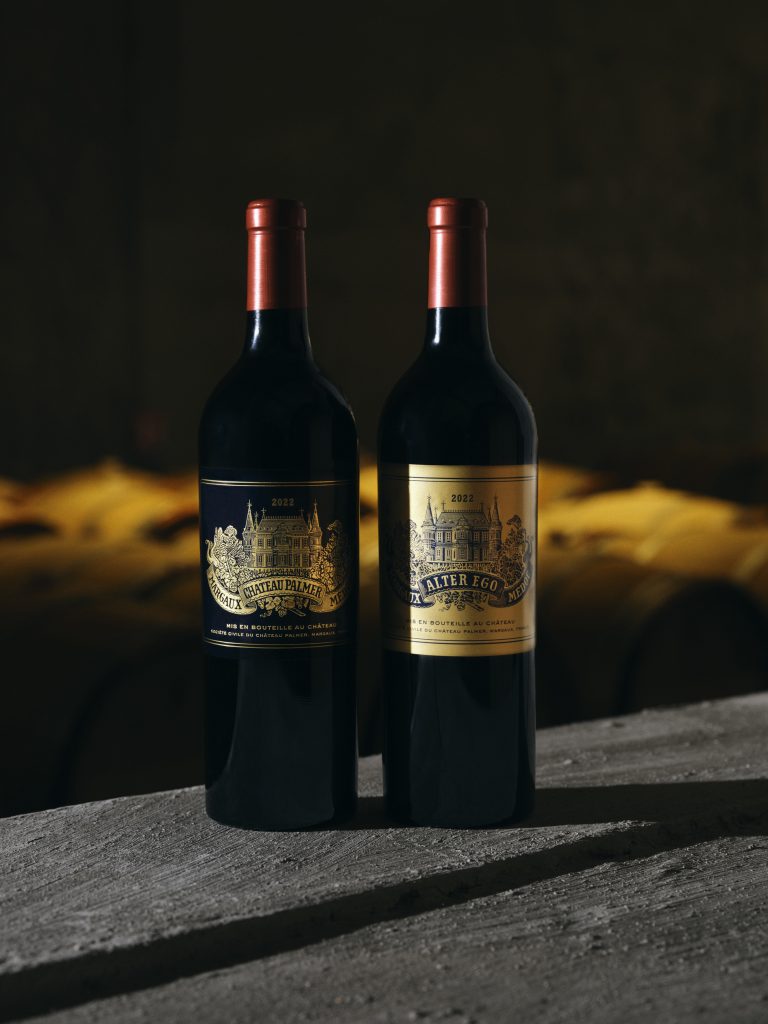
Château Palmer’s Grand Vin and its Alter Ego.
We began with Alter Ego 2020 (94/100 DWA), a wine that embodies the spirit of the vintage and the growing maturity of this label. It opened with a fragrance that filled the room—violets, rose petals, and ripe dark berries—before evolving into notes of chocolate shavings and roasted coffee bean. On the palate, it was supple and precise, carried by a bright core of fruit and powdery tannins that wrapped around the wine like silk. Despite the richness, its freshness stood out, with an acidity that gave rhythm and lift.
There was a quiet confidence to this Alter Ego—refined, perfumed, and utterly Margaux. A wine that will age gracefully, though already a joy to drink.
Next came Château Palmer 2007 (94/100 DWA), a vintage often underestimated but one that revealed the beauty of Palmer’s craftsmanship. In the glass, it glowed with ruby intensity and offered aromas of blackberry, violet, and cedar, followed by subtle touches of graphite, coffee bean, and tobacco leaf. The palate unfolded gently—medium-bodied, elegant, and balanced—with silky tannins that framed the wine’s core of sweet fruit. Its freshness and purity were remarkable for the vintage.
The 2007 may lack the grandeur of Palmer’s legendary years, but its refinement and drinkability make it a wine of grace rather than power, ready to enjoy now!
Then came the Château Palmer 2009 (98/100 DWA), a showstopper our personal highlight of the tasting. This is Palmer in its most opulent, sensual form—a wine of breathtaking depth and purity. The nose was a tapestry of cassis, blueberry, violet, graphite, and truffle, evolving toward incense, soy, and exotic spice. The palate was a seamless wave of texture—dense, plush, and endlessly layered, with tannins so fine they seemed woven into the wine itself. Each sip revealed new dimensions: black plum, cocoa, warm earth, and mineral undertones that lingered for minutes. It combined hedonism with precision, power with poetry.
As we tasted, conversation paused—the 2009 demanded silence. It is a wine of both strength and serenity, one of the truly great Palmers.
The Château Palmer 2015 (97/100 DWA) followed with striking contrast—where the 2009 spoke in velvet tones, the 2015 shone with clarity and grace. The perfume was intoxicating: blackcurrant, lavender, and burnt orange peel, mingled with rose oil, sandalwood, and a hint of crushed rock. On the palate, the wine was structured yet silken, its tannins polished and radiant. Every element felt deliberate—the fruit pure and crystalline, the oak perfectly judged, the finish long and luminous.
This is a wine of regal poise, balancing power and elegance in equal measure, embodying the biodynamic rhythm that defines Palmer today.
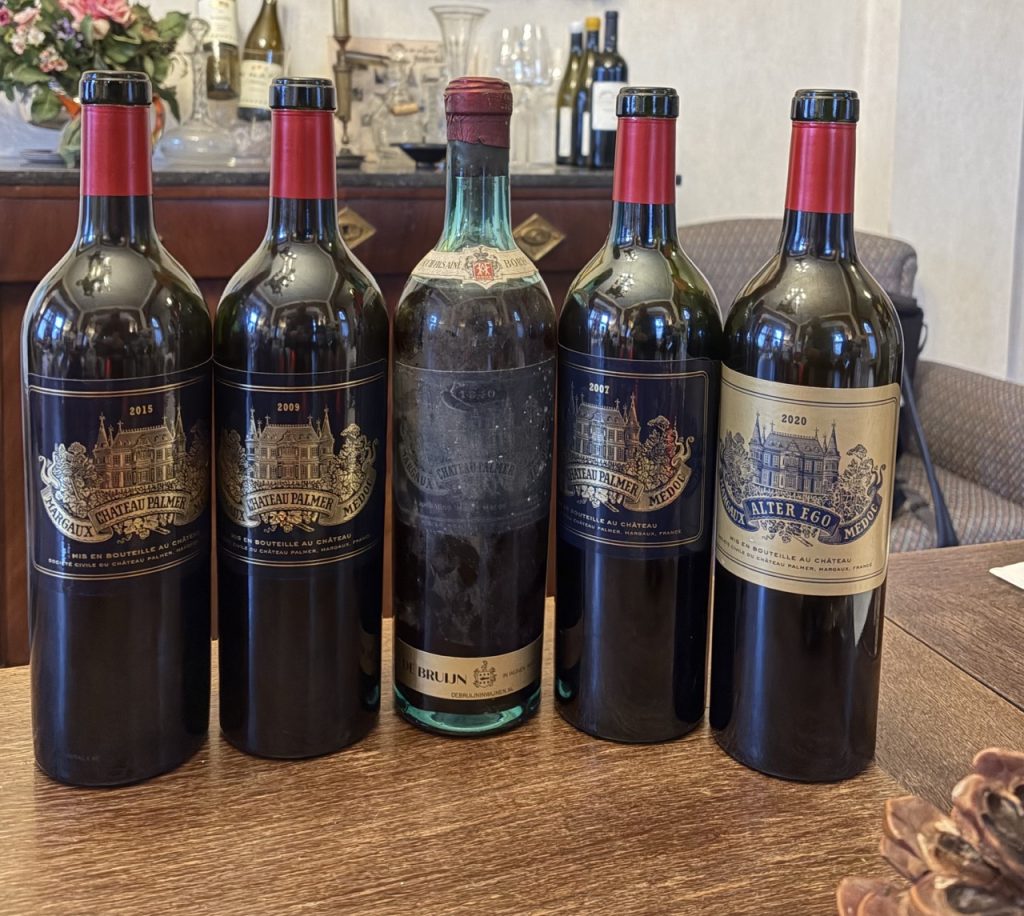
The wine-up for the tasting, including the 1940 war-time treasure.
Finally, from the private cellar of the De Bruijn family, came the Château Palmer 1940, a bottle unlike any other. More than a wine, it was wartime history in liquid form. This bottle had survived the ravages of the Second World War—kept safe in the cellars of De Bruijn, which themselves served as a shelter for the people of Nijmegen during those dark days—and then endured 85 years of ageing. In the glass, it gleamed amber and tawny, releasing delicate aromas of dried fig, leather, and forest floor.
Time had softened its edges but not its soul; the wine was alive, whispering stories of survival and grace. To taste it was to touch history itself—a piece of the past preserved perfectly, a moment of profound stillness in the room.
A Note on Consistency and Character
Throughout the tasting, one message became unmistakably clear: Château Palmer never loses its identity. Whether from a modest year like 2007 or a monumental one like 2009, the estate’s voice remains constant—silken texture, aromatic precision, and an elegance that speaks softly yet profoundly of Margaux.
As Sébastien Menut put it, “When collectors taste Palmer across a century, it’s the one that never disappoints.”
For further context, our earlier review of another exceptional vintage—the 2018 Château Palmer offers an additional glimpse into this estate’s recent brilliance.
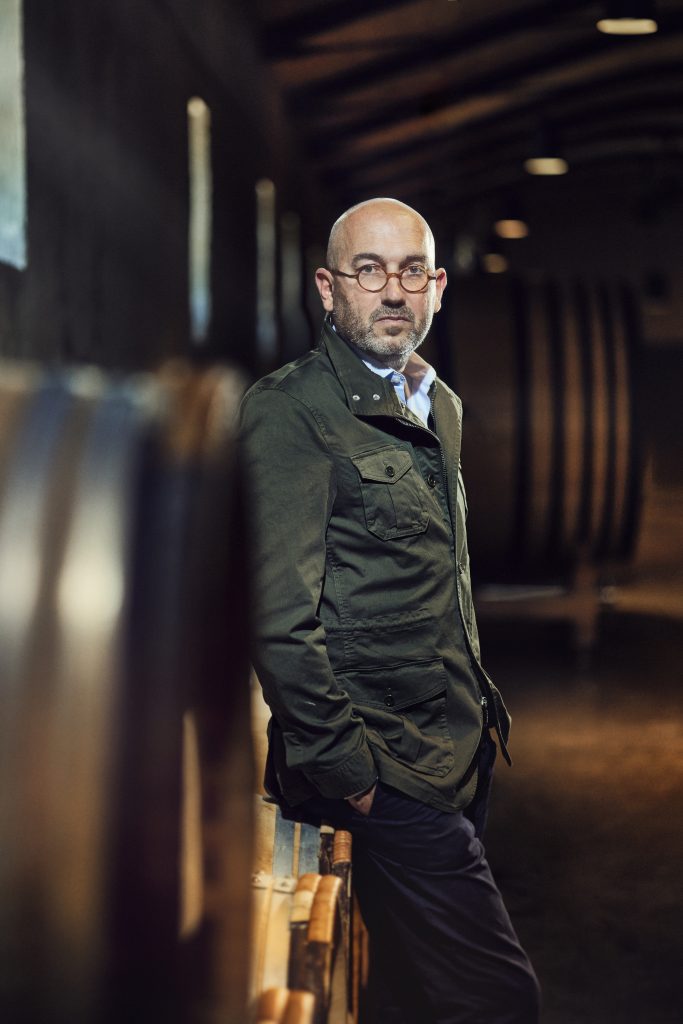
Thomas Duroux.
Conclusion
This private tasting with De Bruijn in Wijnen reaffirmed why Château Palmer stands among Bordeaux’s most captivating estates. Its journey—from 19th-century prestige to 21st-century biodynamic excellence—is one of vision, patience, and integrity.
Across the decades, Palmer continues to redefine what Margaux can be: expressive yet precise, timeless yet forward-looking. The collaboration between Palmer and De Bruijn in Wijnen underscores the value of enduring partnerships rooted in respect for terroir and craftsmanship.
In a region steeped in tradition, Palmer shows that progress need not mean compromise. Its wines unite grace and gravitas, history and future—proof that greatness, when nurtured, can evolve without end.
At Palmer, as this tasting reminded us, the future tastes every bit as promising as the past.
This article is written by our own Niels Aarts. We would like to thank Château Palmer, in particular Sébastien Menut, and the team of De Bruijn in Wijnen, in particular Eric and Marianne de Bruijn. If you would like to discover the wines of Chateau Palmer De Bruijn in Wijnen offers an excellent selection and yearly allocations.
Join our insiders’ list and get exclusive early access to new articles, expert tips, and fresh reviews delivered straight to your inbox. Subscribe now and be the first to discover!