Join Our Wine Journey – Sign Up for the Newsletter 🍷
Champagne’s Les Riceys, by Domaine Alexandre Bonnet
Share
Deel op X (twitter)
LinkedIn
WhatsApp
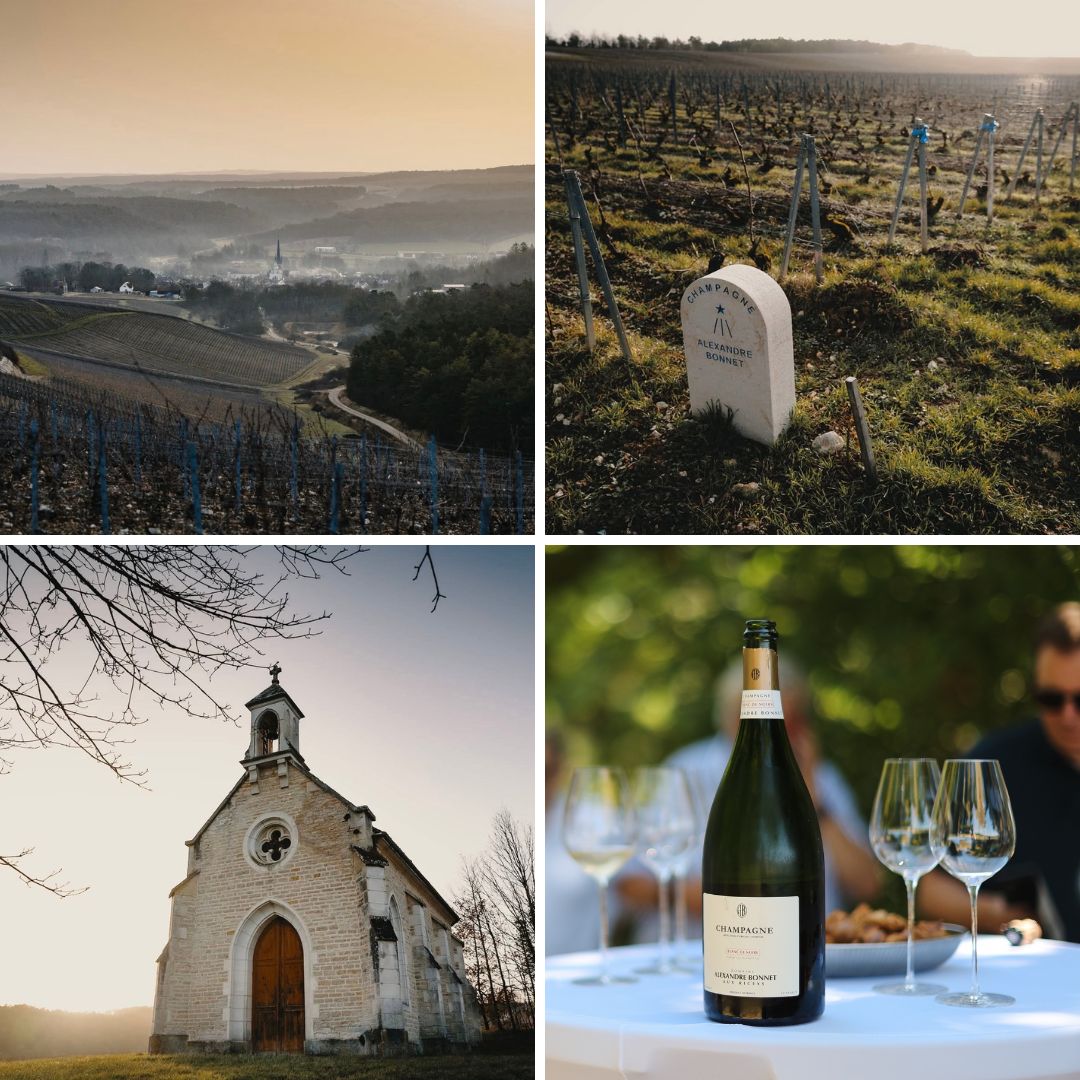
Champagne’s Les Riceys, by Domaine Alexandre Bonnet.
Exploring the village of three appellations and the domaine that defines its identity.
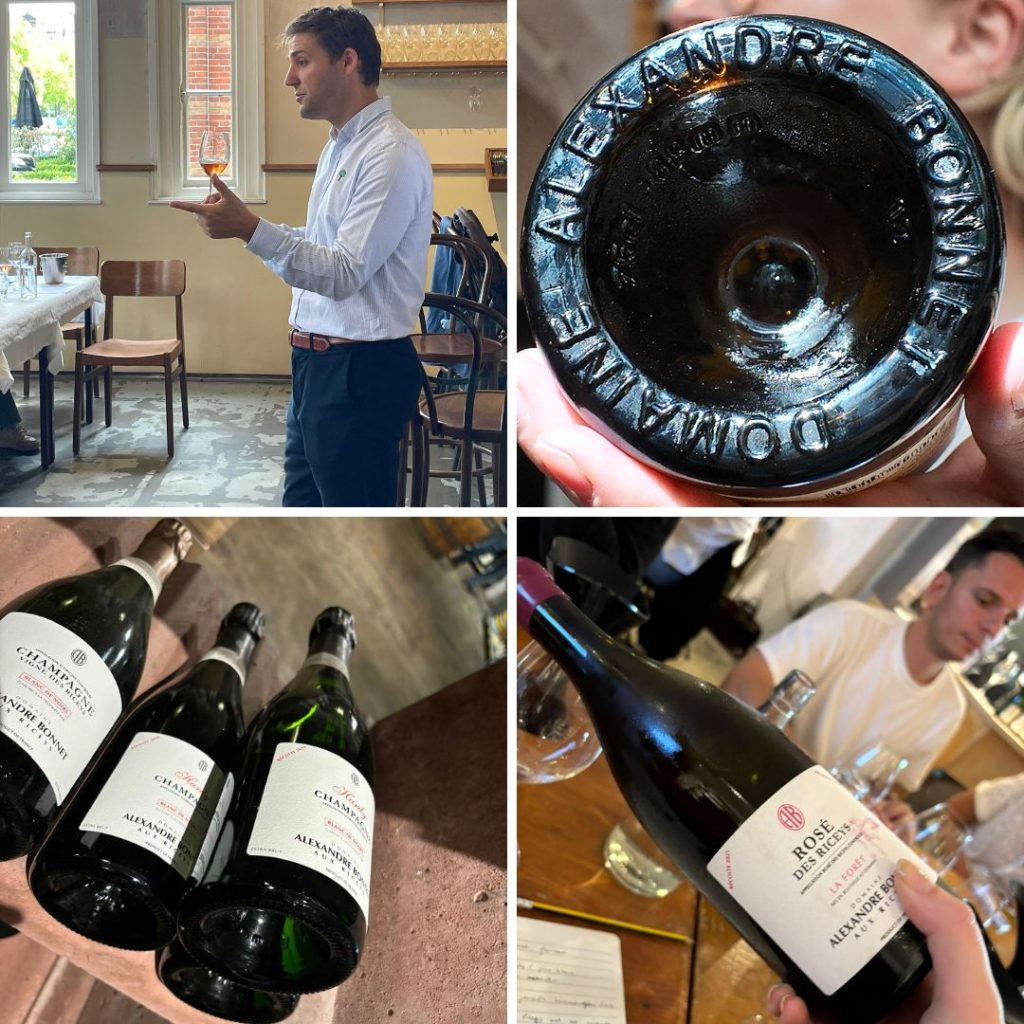
Earlier this year we joined a Champagne tasting in Amsterdam, hosted at D-Vine Wine Store and dedicated entirely to the wines of Alexandre Bonnet. Export manager Nicholas Dupuis guided us through the estate’s history and philosophy, followed by an impressive line-up of six Champagnes and two still wines. A perfect opportunity to explore the singular identity of Les Riceys — a village unlike any other in Champagne.
A Village with Three Appellations
Champagne remains synonymous with celebration and craftsmanship, yet within this celebrated region lies a place that stands apart: Les Riceys. Situated in the Aube, in Champagne’s deep south and geographically closer to Burgundy than Reims, it is the largest winegrowing commune in the region with over 850 hectares under vine. But size alone isn’t what makes it remarkable.
Les Riceys is the only village in France entitled to produce three appellations:
Champagne
Coteaux Champenois
Rosé des Riceys — a historic, age-worthy still rosé that has earned near-mythical status
Alexandre Bonnet is one of the few domaines that produces all three, and the tasting clearly demonstrated why these wines have such a devoted following.
Terroir: Burgundy Soul, Champagne Precision
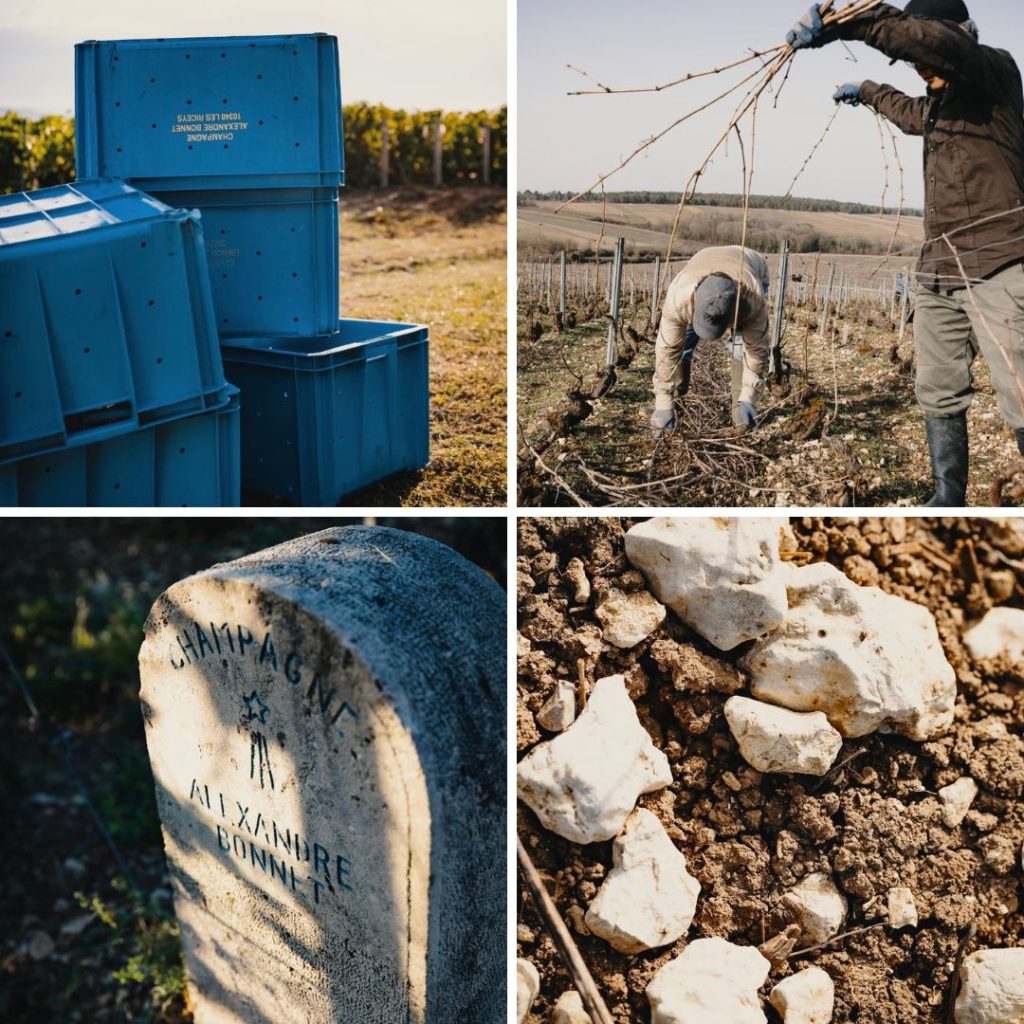
The steep slopes surrounding Les Riceys are some of the most dramatic in Champagne. Clay-limestone soils rich in Kimmeridgian limestone bring tension, minerality, and structure — a profile sometimes evoking shades of Sancerre or Chablis. The continental climate, with its cold winters and hot summers, contributes to highly concentrated fruit.
Viticultural rhythms have shifted in recent years: where pruning once started in late autumn, most growers now wait until *March* to reduce frost risk — a telling sign of the evolving climate in the Aube.
Pinot Noir dominates the landscape and forms the backbone of both the area’s Champagnes and its famed still rosé. At Alexandre Bonnet, the team also works with heritage varieties including Arbanne, Petit Meslier, Pinot Blanc, and Pinot Gris, adding nuance when blended.
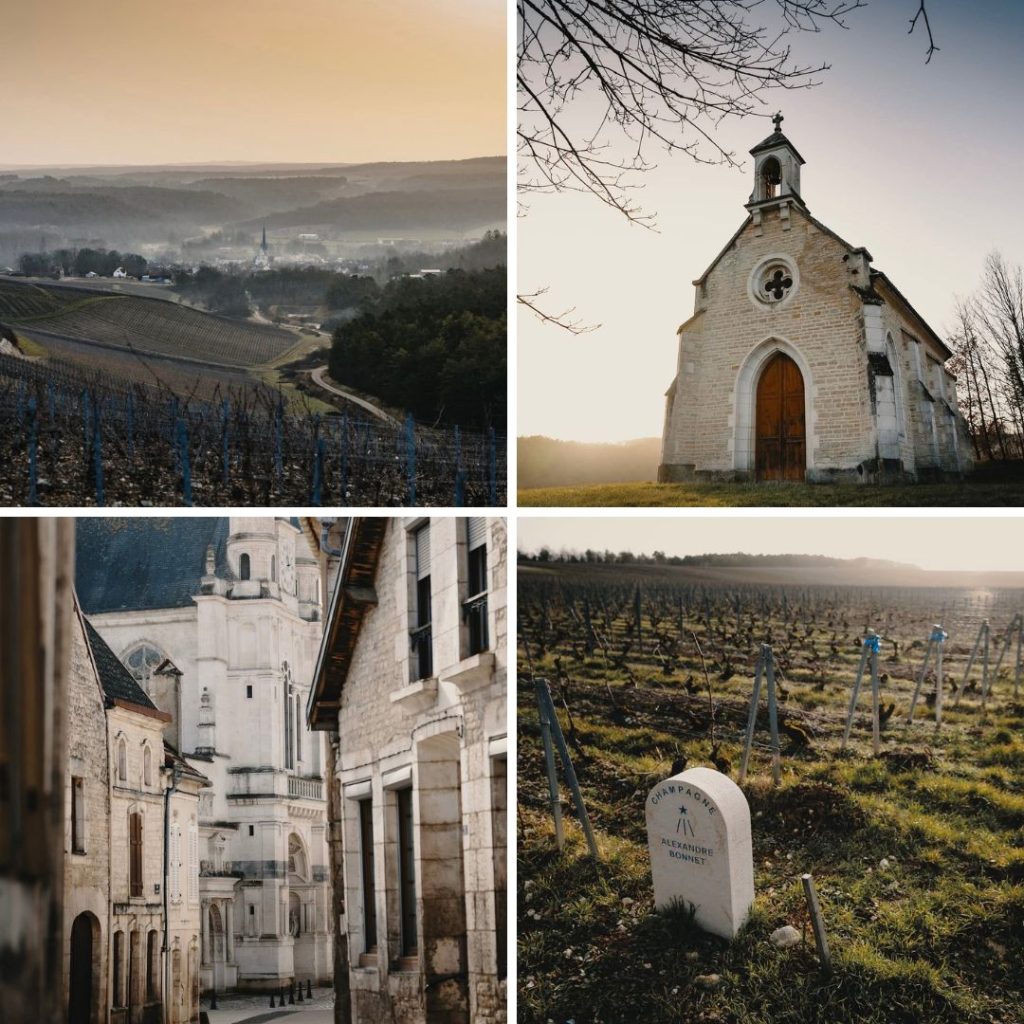
Champagne’s Les Riceys.
Domaine Alexandre Bonnet
Founded in 1970 by Serge Bonnet and his brothers, Domaine Alexandre Bonnet farms 47 hectares in and around Les Riceys, with some parcels dating back to 1934. The vineyards are managed to encourage biodiversity, using cover crops and grassing to reduce chemical input.
Vinification focuses on expressing terroir with precision rather than weight. Plots are vinified separately, and dosage is kept low across the range to allow the limestone signature of the Aube to shine. A small proportion of purchased grapes supplements their own holdings, always from trusted growers within the commune.
Domaine Alexandre Bonnet.
Tasting Highlights
Below the wines we tasted, with our impressions and DWA ratings.
Champagne Ferdinand Bonnet Brut Grand Réserve | 92/100 DWA score
A blend of 80% Pinot Noir, 20% Chardonnay, based on 2021 and disgorged after 36 months on lees. Golden in colour with pear, fresh apple, white blossom, peach, herbal notes and white pepper. The palate combines crisp orchard fruit with brioche depth and a fresh, precise finish.
Domaine Alexandre Bonnet Blanc de Noir Extra Brut | 93/100 DWA score
Representing half of the domaine’s production. 100% Pinot Noir, 4 g/L dosage, with reserve wines from 2016–2019 complementing the 2020 base. Aromas of citrus zest, red apple, melon and subtle brioche. Silky texture, ripe orchard fruit, mineral backbone and a long, lightly smoky finish.
Domaine Alexandre Bonnet Extra Brut Rosé “Les Riceys” | 94/100 DWA score
A blend of 94% Blanc de Noir base wine and 6% Pinot Noir. Generous red-fruit character with strawberry, raspberry, rose petals and spice. Earthy nuances — forest fruit, mushroom, beetroots — add real complexity. Full-bodied, with chalky grip and raw almonds on the finish.
Les Contrées Extra Brut “Les Hardys” (Single Vineyard) | 94/100 DWA score
From a north-facing, hard-to-work 4-hectare parcel. 100% Pinot Noir, 2019 vintage, 48 months on lees and just 1 g/L dosage. Citrus, floral tones, lemon blossom, grapefruit and white currant. Precise, vibrant and saline with beautiful tension.
Les Contrées Extra Brut “Les Vignes Blanches” (Single Vineyard) | 94/100 DWA score
South-facing sibling to Les Hardys, also Pinot Noir 2019. Exotic and spicy with ripe pear, melon, almond and a faint umami note. Powerful yet energetic, finishing saline and slightly smoky.
Les Contrées Brut Nature “Les Contrées” | 95/100 DWA score
A fascinating expression from all seven permitted grape varieties: Pinot Noir (30%), Chardonnay, Pinot Meunier, Pinot Blanc, Pinot Gris, Arbanne and Petit Meslier. Each variety harvested and vinified separately. Exotic fruits, dried flowers, quince and white pepper. Multiple layers unfold into a fresh, citrus-driven finish with brioche accents. A standout Champagne.
A Beautiful Selection of Wines, Showing the Diversity of Les Riceys.
The Treasure of Rosé des Riceys
If Champagne is the region’s global ambassador, Rosé des Riceys is its best-kept secret. A still rosé of 100% Pinot Noir, admired since the era of Louis XIV, it is produced only in suitable vintages and in genuinely limited quantities. The wine is known for depth of colour, structure, spice, and an impressive ability to age — a style worlds apart from the average Provençal rosé.
Coteaux Champenois Blanc 2022 | 92/100 DWA score
A still white made from 60% Pinot Noir and 40% Chardonnay, with 70% fermented in old Meursault barrels and weekly bâtonnage. Floral, citrus-driven, with pineapple, tea leaf and chalky salinity. Clean, precise and oyster-ready.
Rosé des Riceys “La Forêt” 2021 | 94/100 DWA score
Produced by the domaine since 1973. Grapes are harvested roughly ten days later than for Champagne, with lower yields. Whole-cluster pressing and partial carbonic maceration give a dark-coloured rosé brimming with strawberry, raspberry, redcurrant and cassis. Cherry, tea leaf and forest floor add depth, supported by fine tannins. A gastronomic rosé with real sommelier appeal.
Conclusion
Les Riceys is a place where history, terroir and craftsmanship intersect in a way found nowhere else in France. Its slopes, dominated by Pinot Noir, produce wines with clarity, structure and soul — from terroir-driven Champagnes to the rare Rosé des Riceys.
The Alexandre Bonnet tasting reaffirmed how expressive and distinctive this southern corner of Champagne can be.
This article is written by our own Martijn Coenen. Picture credits: D-Vine and Alexandre Bonnet. Many thanks to the team at Alexandre Bonnet and D-Vine for an excellent masterclass — and next time you’re tempted by a Provençal rosé, consider discovering the real depth a rosé can achieve.
Join our insiders’ list and get exclusive early access to new articles, expert tips, and fresh reviews delivered straight to your inbox. Subscribe now and be the first to discover!