Join Our Wine Journey – Sign Up for the Newsletter 🍷
Bodegas Salentein, at Great Heights
Share
Deel op X (twitter)
LinkedIn
WhatsApp
Bodegas Salentein, at Great Heights.
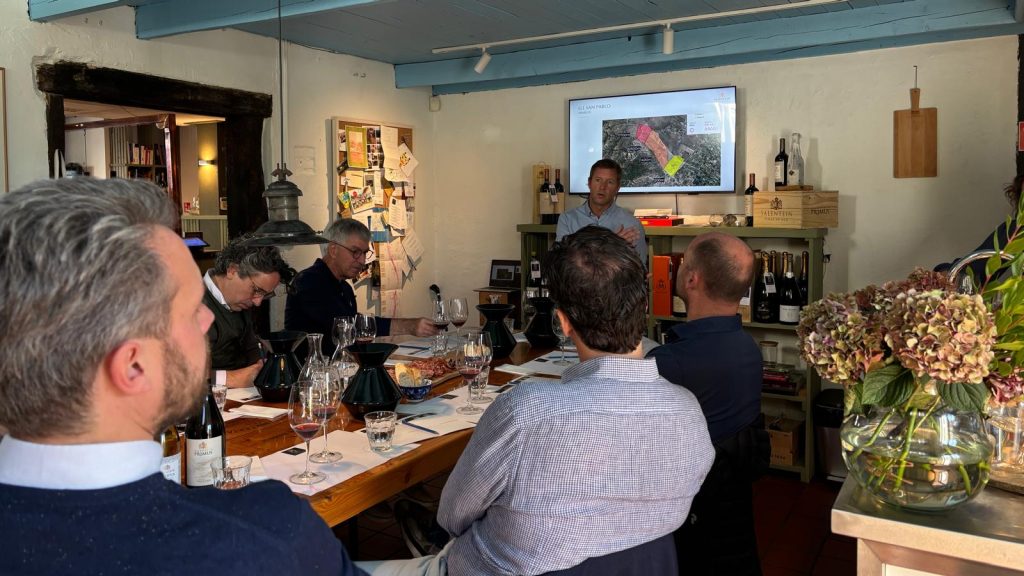
Around the central table at De Vughtse Wijnkoperij in Vught, a carefully selected group of sommeliers, wine enthusiasts, loyal clients and professionals gathered for an intimate tasting hosted by Peer van Iersel, owner of the venue. The session featured Jorge Cabeza, head winemaker at Argentina’s Bodegas Salentein, and Janine Smink, export manager at Salentein, who co-presented the wines and offered rich context on the estate’s philosophy. Organised in collaboration with importer Verbunt Verlinden, the tasting focused on the estate’s top tier: the Luxury Collection.
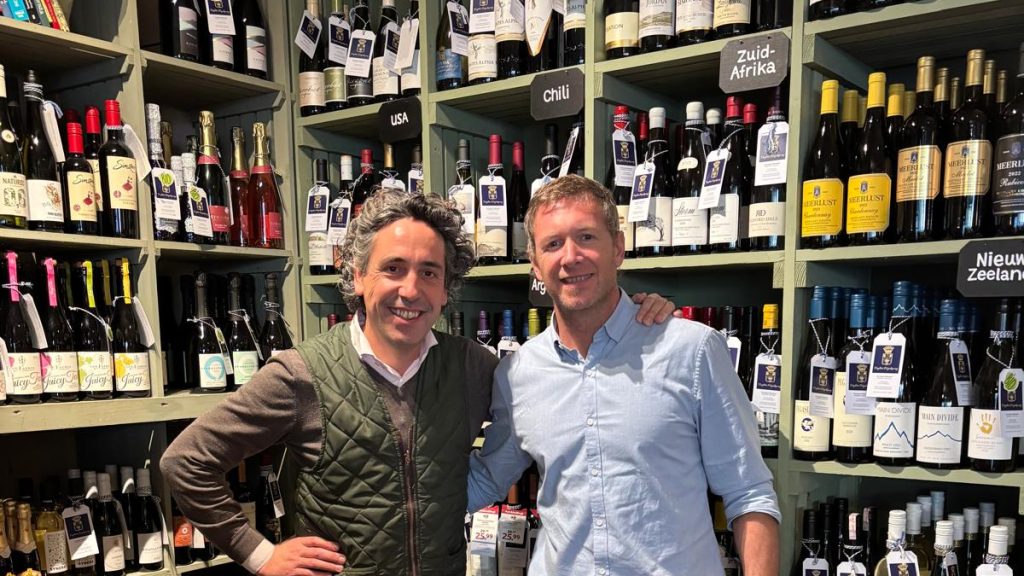
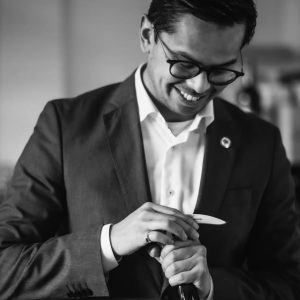
Peer van Iersel, owner of De Vughtse Wijnkoperij, and Jorge Cabeza, head winemaker at Bodegas Salentein, share a moment prior to the tasting – where Dutch hospitality met Argentine precision.
The setting felt both intimate and momentous. As the soft autumn light filtered through wooden beams and wine maps on the walls, Jorge shared stories of the landscape he knows intimately: the Uco Valley. What followed was more than a presentation of wines. It became an exploration of terroir, technique, and style – and, above all, a look at how Salentein is repositioning itself: as a benchmark for precision and origin in the realm of Argentine premium wine.
The Dutch Connection – A Strategic Home Ground
From the very beginning, Salentein has been more than just an Argentine wine estate – it is the result of Dutch ambition meeting Andean potential. The estate is part of the Pon Group – a family-owned conglomerate from the Netherlands with global interests in mobility, logistics, and long-term investments. In the 1990s, Pon developed a bold vision: to invest in Argentina not as a passive stakeholder, but as the creator of something new – a wine estate capable of meeting the highest international standards.
The story begins with Dutch entrepreneur Mijndert Pon, who had initially planned to sail around the world. After his yacht was struck by a tanker near Panama, he was forced to abandon the voyage and travel overland. During this unplanned detour, he spent two weeks visiting a friend in Argentina – and was captivated by the Andean landscape and its untapped viticultural potential. In the Uco Valley – particularly in San Pablo – he purchased a historic finca and began planting vineyards at high altitude, around 1,300 metres above sea level. His goal: to craft wines that combined freshness and depth, rooted in place but made with precision.
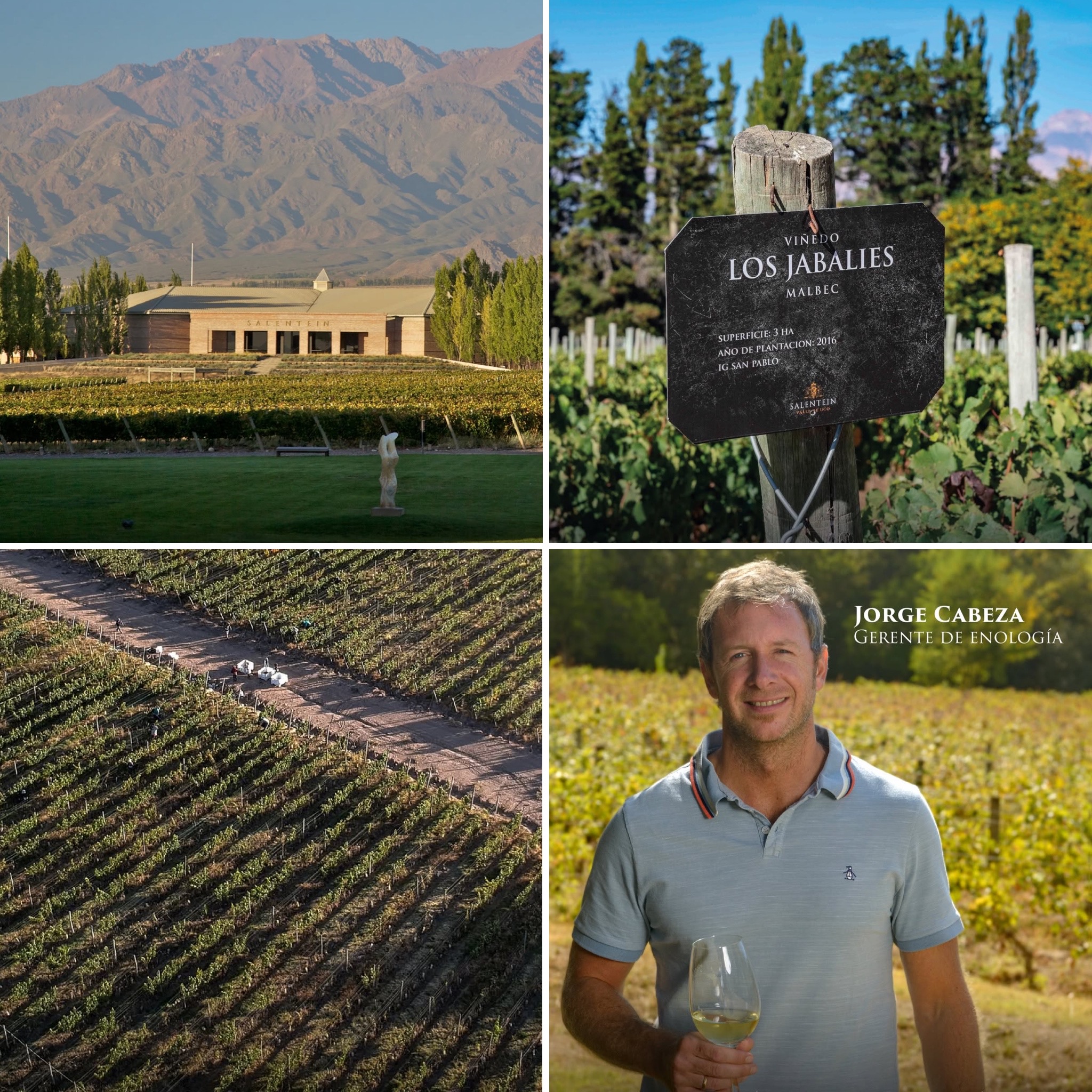
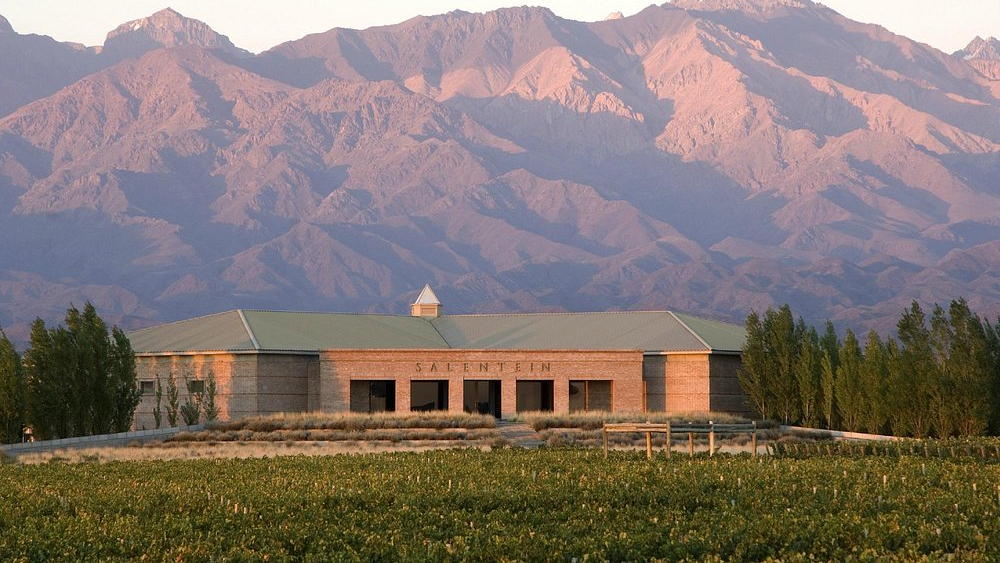
In 1996, the project was officially launched, and by 1997 the first Malbec vines had been planted – one of the earliest large-scale high-altitude initiatives in the region. Soon after, construction began on Salentein’s iconic cross-shaped winery, designed for gravity-flow vinification to minimise the use of pumps and preserve delicacy.
Salentein’s cross-shaped winery stands quietly among the vines, framed by the Andes – a bold architectural statement built to serve both gravity and grace.
What began as a visionary undertaking has since evolved into one of Argentina’s most recognisable and respected wine estates. And yet, the connection to the Netherlands has remained central. From the start, the Dutch market acted as an ambassador, a test bed, and a mirror. Through Pon’s influence and later importers like Verbunt Verlinden, Salentein gradually became embedded in Dutch wine culture – not just commercially, but as a partner in education, brand building, and narrative.
That dynamic remains intact. For Salentein, the Netherlands is more than a sales territory – it’s a space for recognition, reflection, and resonance: a proving ground for Argentine fine wine at its most ambitious.
Salentein: Altitude, Identity and International Ambition
To understand Salentein’s philosophy and place in the wine world, we must first understand where it operates. Mendoza is Argentina’s most important wine region – responsible for over 70% of the country’s production. Within Mendoza, the Uco Valley stands out as a cooler, more elevated subregion at the foot of the Andes. Known for its dramatic altitudes (up to 1,700 metres), poor alluvial soils, and large day–night temperature swings, the Uco Valley has become a focal point for quality-driven viticulture in Argentina.
This shift did not happen overnight. Over the past two decades, the Uco Valley has evolved from a promising frontier into a region of global interest – attracting investment, talent, and rigorous site exploration. Producers began to experiment with higher sites, limestone-rich soils, and minimalist winemaking to better express the character of place. Concepts like geographical indications (GIs), soil mapping, and single-vineyard bottlings entered the mainstream.
Salentein has been central to that transformation. As one of the earliest pioneers of high-altitude viticulture in the area, the estate helped define what Uco Valley could become: not just a new region, but a new standard for Argentine wine. Its vineyards stretch across key subzones like San Pablo, Gualtallary and Los Árboles – each with distinct profiles of altitude, soil, and climate. These natural differences underpin the house’s stylistic diversity, from structured Malbec to nervy Chardonnay.
But more than just adapting to these conditions, Salentein is also shaping the narrative. The estate’s ambition has long been to reposition Argentine wine on the world stage – not through imitation, but through elevation. Its top-tier wines are no longer about power or volume, but about identity, site and finesse. Origin has become the organising principle.
This shift is visible not just in the cellar, but in the vineyard philosophy: a move towards single parcels, micro-vinification, and ever greater precision. In this context, Salentein is not simply making wine in the Uco Valley – it is actively defining how that valley is understood.
Jorge Cabeza – From Cellar to Character
Jorge Cabeza has led Salentein’s winemaking team for several years. As chief winemaker, he plays a central role in shaping the estate’s stylistic direction and production philosophy. Known for his technical rigour and calm precision, Jorge is not only the guardian of house style but also a driving force behind its continued evolution.
His approach was shaped early in his career under the mentorship of José “Pepe” Galante – a legendary figure in Argentine winemaking. Working with Galante instilled a deep respect for structure, discipline, and long-term thinking. It also taught Jorge to view winemaking not just as chemistry, but as interpretation – a lesson that would prove essential as Salentein’s ambitions grew.
Today, that philosophy translates into a working method where observation, collaboration, and site-specificity take centre stage. Under Jorge’s leadership, Salentein has redefined the relationship between vineyard and winery. Decisions about fermentation, ageing, and harvest timing are no longer made in isolation, but in tandem with the viticultural team. The shift from cellar-driven winemaking to an integrated, vineyard-led approach is one of his most significant contributions. Micro-vinifications, the use of native yeasts, and separate batch processing for different exposures and soil types have become standard tools in his pursuit of clarity and typicity.
One particularly illustrative moment came during the application process for the San Pablo Geographical Indication (GI). To secure a legally recognised and contiguous GI boundary, Salentein collaborated with neighbouring producers – including Zuccardi and Susana Balbo – by trading small parcels of land. This strategic cooperation underscored Jorge’s belief that terroir doesn’t stop at property lines. For him, defining origin is not just a matter of geography, but of collective responsibility and mutual respect.
Jorge Cabeza explains how Salentein and peers helped establish the Uco Valley’s first official Geographical Indication – a milestone in defining terroir.
The Tasting – Altitude in the Glass
Although the tasting itself was not explicitly organised around pairs, a natural structure emerged as we reflected on the wines: three varietal duos, each revealing contrasting interpretations of site, winemaking and ambition. This framework not only offered clarity, but highlighted the strategic depth of Salentein’s portfolio. Each pair illustrated a key facet of the estate’s evolving identity – from stylistic restraint to site-specific nuance, and from precision blending to pure expression.
Numina Chardonnay vs Pr1mus Chardonnay
This first pair framed Chardonnay through two very different lenses: one driven by accessibility and flow, the other by structure and definition. It’s a study in elevation and intent. While Numina offers a broader stroke of the grape’s potential in Uco, Pr1mus narrows the focus – anchoring its identity in San Pablo’s limestone soils and higher altitude parcels.
Numina Chardonnay 2024 – Golden pour, nose full of vanilla, toast and buttery charm. A modern, glossy take that doesn’t hold back. There’s apple crunch, blossom lift, even a cheeky whiff of clove. High acidity gives it bite, pushing against the softer oak notes. Fruit feels clean and lightly tropical, just brushing orchard tones. Medium complexity but lively enough to keep the glass interesting. It’s a crowd-pleaser with energy, style and a hint of sass, the kind of white that makes you pour a second glass before you’ve finished the first.
DWA-Score: 90/100
Pr1mus Chardonnay 2019 – Rich and heady from the first sniff, this Chardonnay comes on strong with oak and buttery malo, then slides into almond and marzipan like a pastry shop in liquid form. There’s a certain swagger to the way it fills the mouth, big and structured, yet not clumsy. The secondary and tertiary tones bring depth without losing charm, making it a wine that clearly wants to sit at the dinner table rather than be sipped idly. Bold, full, gastronomic – less a casual drink, more an experience dressed up for the occasion.
DWA-Score: 93/100
Numina Pinot Noir vs Pr1mus Pinot Noir
With the Pinot Noirs, Salentein revealed its sensitivity to one of the most demanding grapes in the world. This duo moved the conversation from expression to precision – from the broader appeal of Numina to the nuanced layering and structure of Pr1mus. Here, the estate’s vineyard work and Jorge’s restrained hand in the cellar were both on full display.
Numina Pinot Noir 2022 – Light and playful yet with surprising depth, this PN opens with ripe fruit, a hint of earth and a whiff of spice. Tannins feel polished, gently woven into the soft body, never distracting. Despite its supple flow it doesn’t lack backbone; the structure gives it lift and keeps the sip from drifting away. At 13% it feels balanced, easy to pour a second glass without fatigue. An elegant red that manages to be both approachable and refined, offering comfort now but with enough shape to hold attention throughout.
DWA-Score: 91/100
Pr1mus Pinot Noir 2020 – From the first swirl, earthy tones leap out, laced with herbs, dried leaves and that vegetal edge that makes it intriguing rather than obvious. Then waves of red cherry and ripe strawberry, with spice, tobacco and a touch of oak softening into vanilla. The palate is medium-bodied yet feels bigger, silky tannins carrying impressive complexity and a lively flow. Alcohol gives a warm push, but instead of dragging it lifts the finish into something bold and glowing. Wine with personality: elegant, vibrant and memorable.
DWA-Score: 94/100
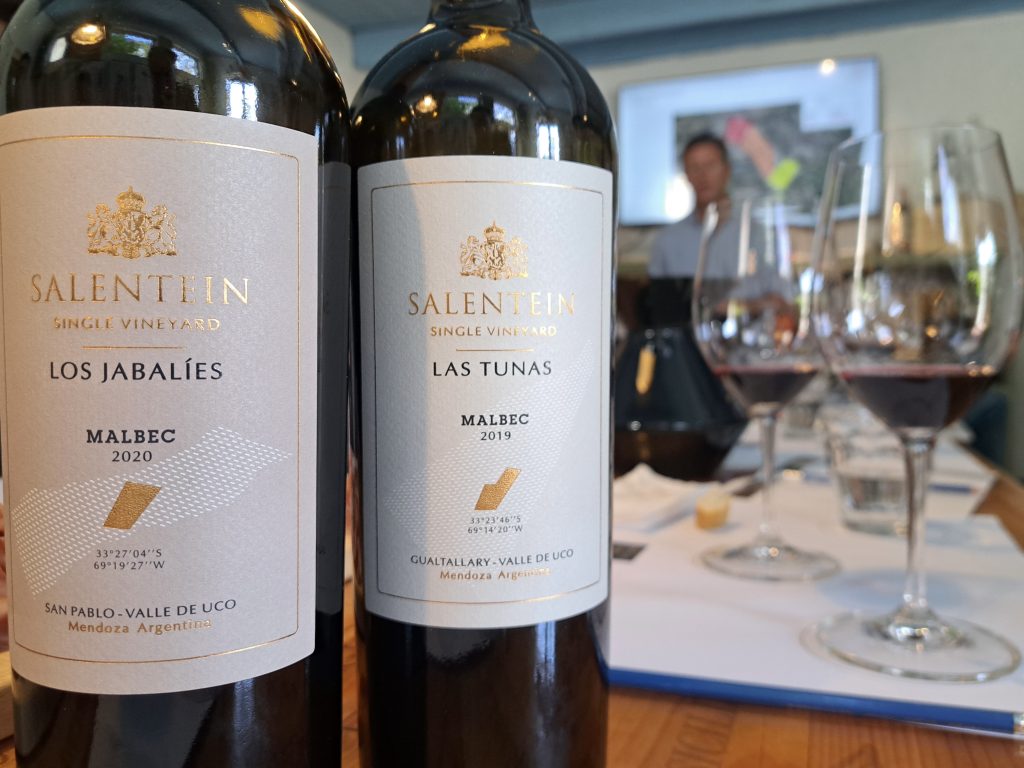
Los Jabalies vs Las Tunas (Single Vineyard Malbec)
The tasting concluded with two single-vineyard Malbecs – each the product of rigorous site selection and minimal intervention. While both wines fall under the Luxury Collection, their personalities could not be more different. Las Tunas, from a cooler, more exposed site, showed restraint and focus. Los Jabalíes, warmer and rounder, leaned into opulence and comfort.
Single Vineyard showdown: Los Jabalíes and Las Tunas – two Malbecs from distinct plots, tasted side by side to explore altitude, soil and style within Salentein’s top tier.
The name ‘Los Jabalíes’ – meaning wild boars – stems from a detail shared by Jorge: for years, these animals had instinctively gravitated to that specific block, as if sensing optimal ripeness before any analysis could confirm it. It became both a nickname and a symbolic endorsement of place.
Las Tunas Single Vineyard Malbec 2019 – Big altitude, big character. This Malbec doesn’t hide its alcohol, but it works in the mix. Juicy dark fruit sits next to graphite edges, all dressed in a textured coat that lingers. There’s a tug-of-war between youthful primary tones and the start of something more layered, and that tension is where the fun lies. Strange how a cooler vintage can still feel this generous, yet it keeps its balance. A bottle that feels like driving the winding road past Las Tunas: a little wild, a little high, but worth the ride.
DWA-Score: 92/100
Los Jabalíes Single Vineyard Malbec 2020 – Dark fruit jumps out first, earthy and peppery like a fireside snack with wild boar in the background. Full-bodied and structured, with grippy tannins that don’t entirely find their rhythm yet. Still, there’s a lift: floral elegance, a hint of red fruit shining through, giving balance to the richness of this warm 2020 harvest. The 14.5% ABV is no shy companion, but it wears its weight better than expected thanks to the higher altitude. Feels premium, confident, a single vineyard wine with both muscle and charm.
DWA-Score: 93/100
Final Thoughts – Argentina in Transition, Salentein on Track
This tasting demonstrated that luxury in wine is not about prestige, but about precision. Salentein is evolving – from established name to nuanced interpreter of terroir, with Jorge Cabeza as its architect and the land as its guide.
Argentine fine wine is moving toward definition, identity, and restraint. Not to imitate Europe, but to better understand itself. Where Malbec once signalled power, this new generation speaks of balance, tension, and site.
In Vught, we didn’t taste a facsimile of Burgundy or Bordeaux. We tasted a compelling expression of Argentine elegance. Elevation, vision, and collaboration were the keys. Sometimes a single glass says more about a region than a brochure ever could.
Special thanks to Jorge Cabeza and Janine Smink for their generosity and for guiding us through the philosophy of Bodegas Salentein, to Peer van Iersel for hosting us in the warm and thoughtful setting of De Vughtse Wijnkoperij, and to Verbunt Verlinden for bringing Salentein’s vision to the Dutch table. The conversation continues – in the vineyard, in the glass, and across continents.
Join our insiders’ list and get exclusive early access to new articles, expert tips, and fresh reviews delivered straight to your inbox. Subscribe now and be the first to discover!