Join Our Wine Journey – Sign Up for the Newsletter 🍷
Beyond Chardonnay & Charcuterie: A 5-Year Toast to Clos
Share
Deel op X (twitter)
LinkedIn
WhatsApp
Beyond Chardonnay & Charcuterie: A 5-Year Toast to Clos.
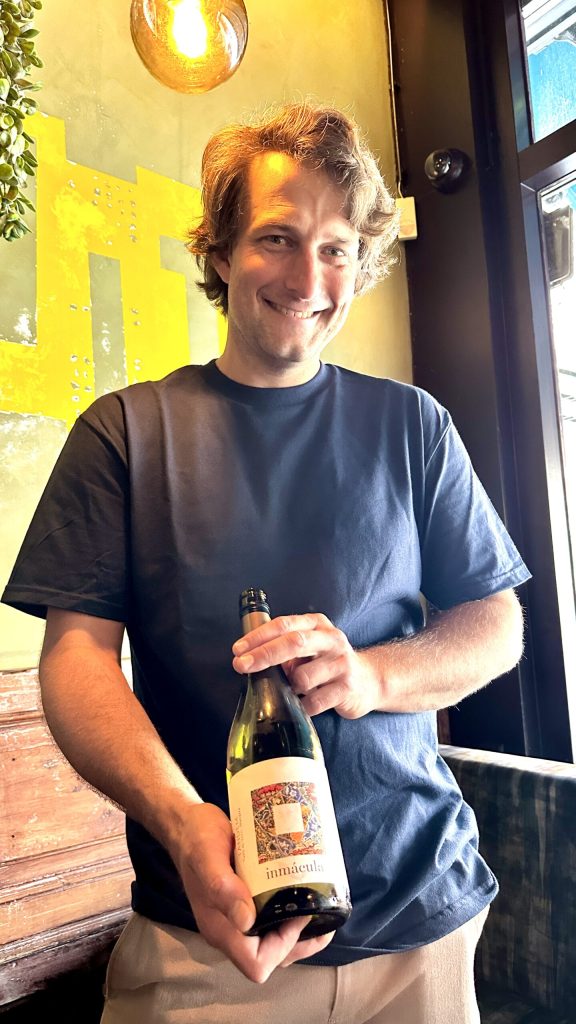
Thirty minutes early for the designated time, our Kazumi is standing in front of Wijnbar and Restaurant Clos in Amsterdam. The door opens, and out comes Rutger, making final preparations. “You must be here for lunch,” he says with a smile. “Come on in—I’ll pour you something while you wait.”
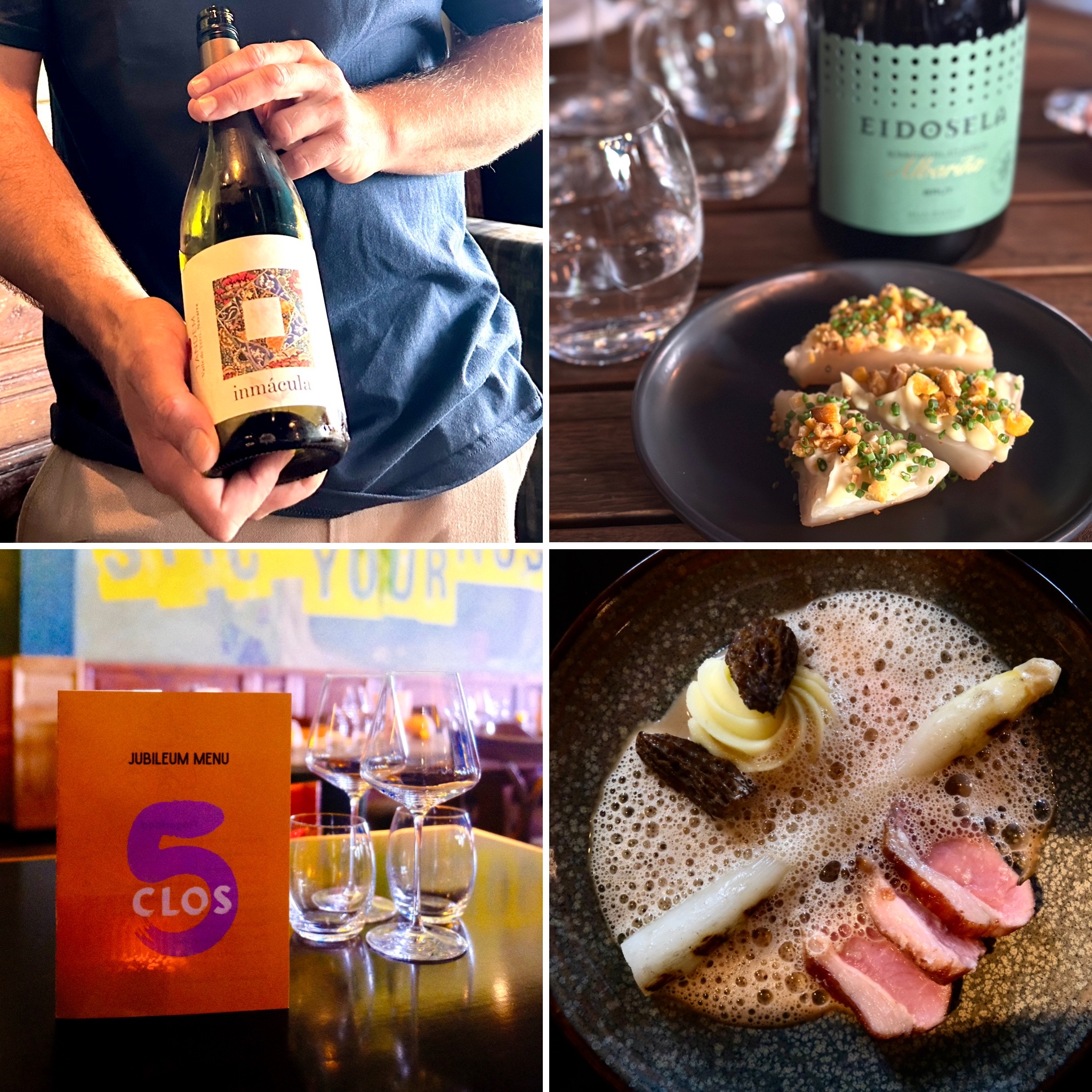
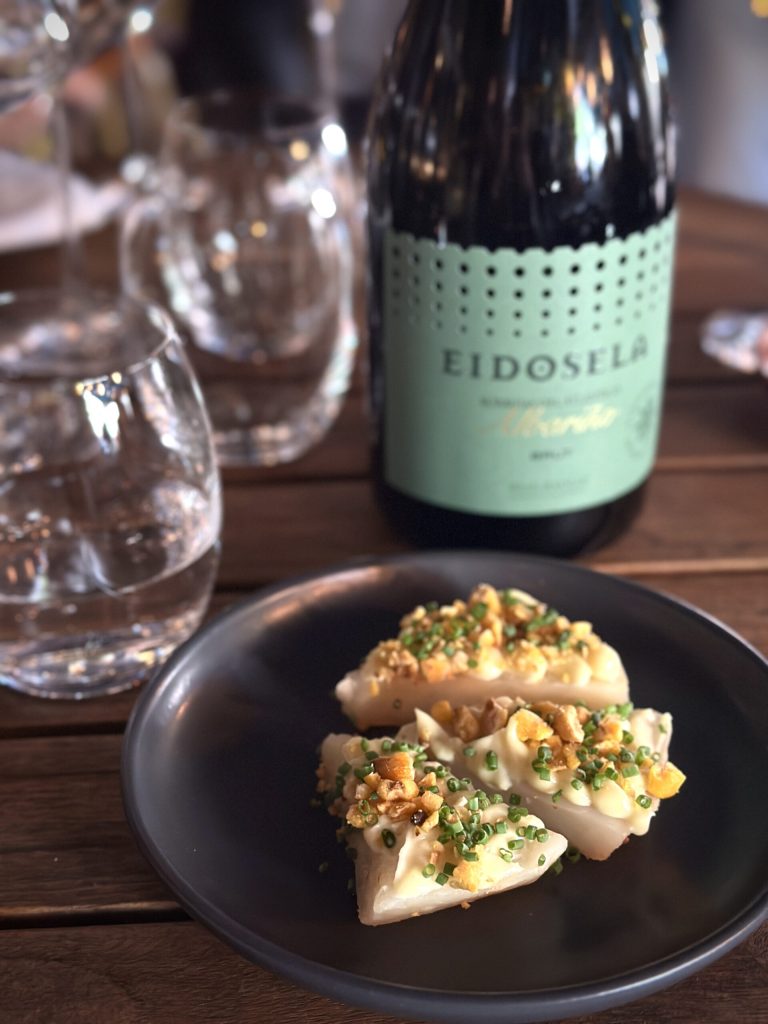
That first sip—Eidosela Brut, made entirely from Albariño—tells us everything we need to know about Clos. The bubbles are lively but never loud, easygoing yet quietly layered. It’s understated, precise, and welcoming. So is Rutger.
We were recently invited to Clos to celebrate their 5th anniversary in Amsterdam West. It wasn’t just an opportunity to witness their achievement—it reignited our curiosity and passion for exploring wine from fresh perspectives. In this post, we’ll bring you into the atmosphere of Clos, where wine and food come together in ways that go far beyond the ordinary.
A Place for the Wine-Weary
If you’ve grown tired of the Chardonnay-and-charcuterie routine—or if you’re eager to explore a new world of wine and food pairing— Clos is your next chapter. Their wine list doesn’t follow maps.
“We organize by style, not by country,” Rutger explains. “Because who cares where it’s from if you don’t know what it feels like?”
Clos serves wines that tell stories—from small, passionate producers, often working organically or with minimal intervention. And when those wines land on the table, they’re never alone. The pairings are thoughtful, creative, and sometimes even daring—but always guided by an intuitive logic that comes from a deep understanding of both structure and soul.
“We want wine and food to do something to each other,” Rutger says.
After we tour the cellar corridor—bottles quietly gleaming on either side—he begins to tell the story. “We opened just five days before the first COVID lockdown,” he recalls. “No party. No toast. Just… survival mode for the first year.”
But the spark never faded. Soon after, promising chef Jeroen joined the team, and together they began shaping the Clos vision: wine made personal, food made to match—regardless of grape or region.
Rutger de Witte, owner of Clos Amsterdam.
A Journey Through Pairing
The lunch unfolds like a novel: five chapters, five regions, five wines with their perfect partner on the plate—celebrating five years.
Eidosela Brut, Albariño, Rías Baixas × Amuse
Albariño is refreshing with aromas of fruit, fresh herbs, and citrus zest. Round yet crisp, with just a hint of hazelnut complexity, it kickstarts the chapter with an amuse featuring celery marinated in bergamot with garlic and red pepper, a fava bean mayonnaise, masala, and crispy maize on top.
Eidosela Brut, Albariño, Rías Baixas × Amuse.
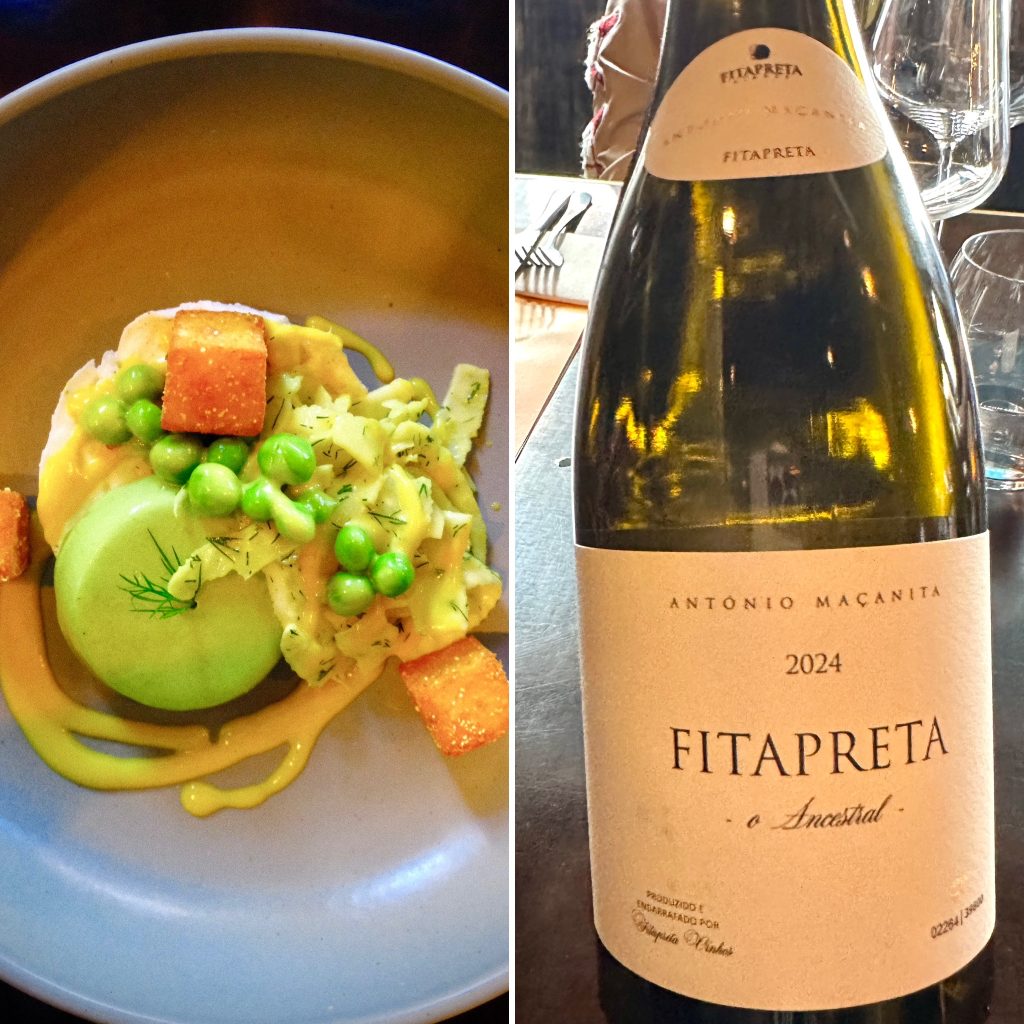
Fitapreta Branco Ancestral, Alentejo, Portugal × Pea Mousse with Polenta & Mozzarella
In Portugal—a land of rustic beauty, culinary simplicity, and profound flavor—there’s always a table set for discovery. Here, wine isn’t just poured; it’s woven into the soul of every meal. Just an hour and a half from Lisbon, the rolling plains of Alentejo stretch endlessly toward the horizon. Often called Portugal’s hidden gem, it’s a place where time slows down, and native grape varieties still thrive in old, unhurried vineyards. Wines are sometimes crafted in ancient amphorae, echoing traditions passed down since Roman times. The gifts of this land make it a dream destination for wine lovers in search of flavor trails and ancient traditions.
One such story begins with Fitapreta Branco, a field blend born from vines over 50 years old. Crafted by António Maçanita, a winemaker devoted to reviving forgotten methods, this wine is a tribute to Alentejo’s ancestral whites—reborn through minimal intervention, yet alive with modern clarity.
Made from Alicante Branco, Arinto, Rabo de Ovelha, Roupeiro, and Trincadeira das Pratas, Fitapreta Branco is a chorus of indigenous voices bottled in harmony. You may not recognize the grape names—but you don’t need to. With Clos as your wine compass, you’ll taste wines and pairings that transport you to places where time moves differently.
Pale citrus yellow in the glass, it opens with bright lemon zest and a whisper of mineral tension. There’s weight on the mid-palate—volume, richness—then a lift. A clean line of acidity and a touch of phenolic grip lead to a long, resonant finish. It’s a wine that invites texture to the table.
So the wine was paired with a dish that tells its own story: pea mousse with soft polenta, fried mozzarella, and a hint of garam masala. The gentle bitterness of the peas finds its echo in the wine’s structure. Marinated fennel reflects its herbal core. And the fried mozzarella? A golden, crisp accent at the heart of it all. As the flavors unfold, so does the conversation—until wine, food, and memory become inseparable.
Fitapreta Branco Ancestral, Alentejo, Portugal × Pea Mousse with Polenta & Mozzarella.
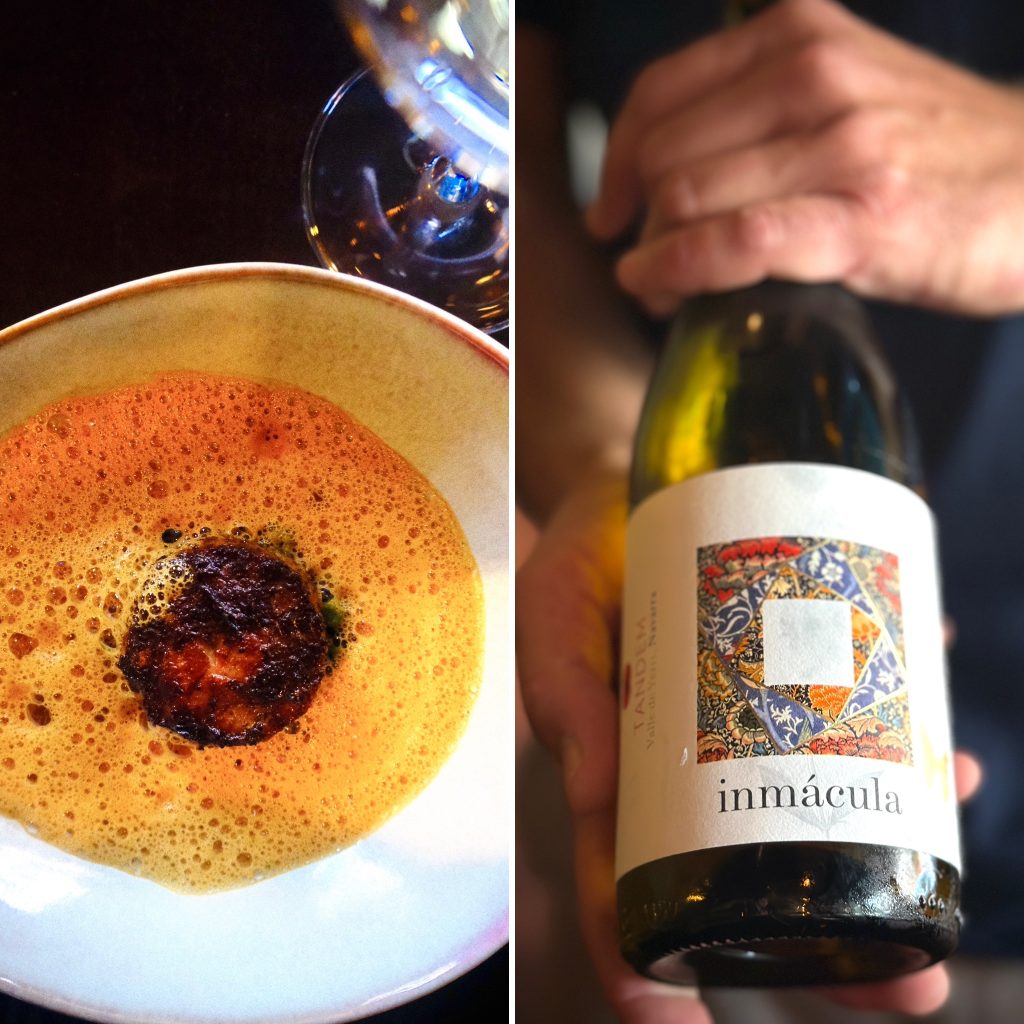
Tandem Inmacula × Pork & Prawn Sausage with Cimi di Rapa and Dutch Shrimp Sauce
After the sun-drenched intensity of the Mediterranean climate, we arrive in the cool, misty hills of northern Navarra, where patience and precision shape the wines. Not Rioja. Not Ribera. Just Navarra. Where the Atlantic breeze meets Mediterranean sun—between the Pyrenees and the plains of Rioja—this quietly captivating region offers a fresher, more restrained expression of Spain. Once known for its rosado, Navarra is now home to whites and reds of striking clarity, thanks to high-altitude vineyards, Atlantic winds, and clay-loam soils.
Inmacula is one such wine—crafted by Alicia Eyaralar, a thoughtful and trailblazing winemaker who lets gravity and time do the work. Anchored by Viura, the blend is slowly fermented with wild yeast and aged on lees in large oak vats, where gentle oxygen contact builds depth.
The result is a finely tuned wine, with defined aromas of apricot, pear, and white flowers. A creamy-textured mid-palate gives way to a mineral finish. The balance between oxidative and reductive characters is exquisite—a slow, subtle oxidation that creates harmony without heaviness.
It finds its match in a dish that’s both bold and refined: pork and prawn sausage scented with lemon and truffle, nestled among bitter cimi di rapa and a savory shrimp sauce. The wine’s creamy breadth embraces the sausage’s richness, while its vibrant acidity cuts clean through the fat. Together, they speak in harmony—elegant, expressive, and full of understated power. Savor the layers of Dutch shrimp sauce as they unfold beneath a veil of structure and silence.
Tandem Inmacula × Pork & Prawn Sausage with Cimi di Rapa and Dutch Shrimp Sauce
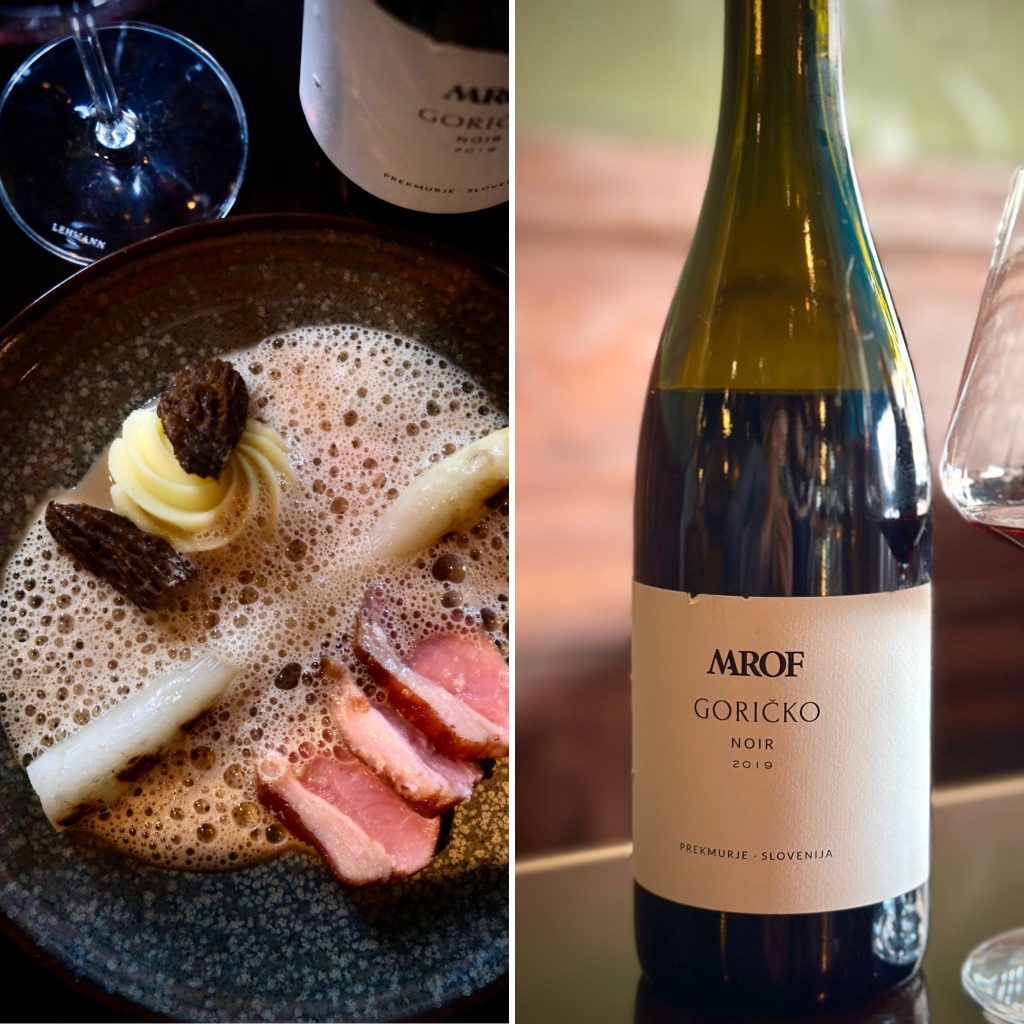
Marof Goričko Noir × Lamb Back Fillet with White Asparagus, Morels, and Roasted Garlic Sauce
Slovenia may be one of Europe’s best-kept wine secrets, but its story begins long before most of the continent knew the vine. Home to the world’s oldest living grapevine, Slovenia’s wine culture predates even the Romans’ influence in France, Germany, and Spain. Tucked between Italy, Austria, Hungary, and the Balkans, it is a borderland shaped by many, yet unmistakably its own. While most of its wines are still consumed locally, the world is beginning to take notice—especially of its ancient winemaking traditions, organic leadership, and world-class skin-contact whites.
At Clos, they keep a close eye on these quiet revolutions. Their compass points toward small, artisan producers who pursue not just quality, but gastronomic soul. Which brings us to Marof, an estate nestled in Goričko, a forested corner of Prekmurje, in northeastern Slovenia near the Hungarian border.
Under the thoughtful hand of Uroš Valcl, Marof crafts low-intervention, terroir-driven wines that let the land speak. Their Goričko Noir, a blend of Blaufränkisch, Zweigelt, and Merlot, is aged in large used barrels to preserve clarity and site expression. It opens with aromas of sour cherry, violet, and forest floor. On the palate, it’s bright and lifted—red fruit from the Zweigelt, spice and earth from Blaufränkisch, and quiet structure from Merlot. Delicate, soulful, and precise.
For this wine, we turned to the Dutch spring for inspiration: lamb back fillet, white asparagus, stuffed morels, and roasted garlic sauce are all from the Netherlands. The lamb, juicy and pink, mirrors the wine’s supple, red-fruited core—especially when the wine is served lightly chilled. Earthy morels reflect the wild spice of Blaufränkisch, while the roasted garlic cream ties it all together in a warm, savory veil under the garlic puff. The asparagus adds a fresh green line through it all—reminding us that this pairing is rooted in the season as much as in the soil. At Clos, food and wine don’t just match—they amplify one another. The result? A sum far greater than its parts.
Marof Goričko Noir × Lamb Back Fillet with White Asparagus, Morels, and Roasted Garlic Sauce.
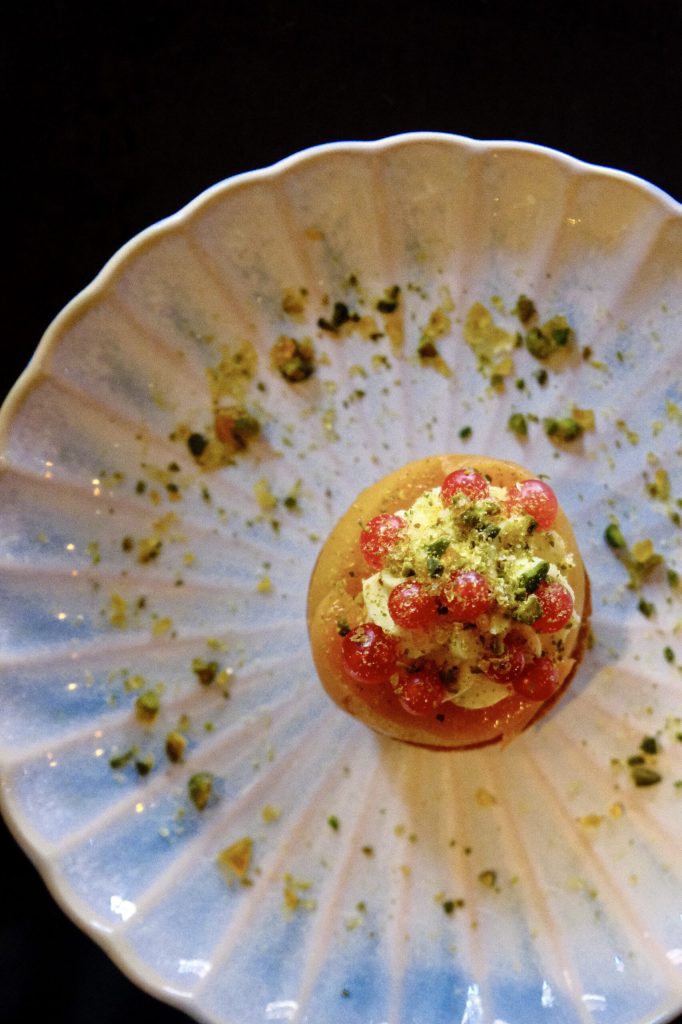
Quinta da Pedra Alta Witte Port (White Port) × Peach Slipper with White Chocolate, Pistachio, and Red Currants
Why do people love white Port? It’s bright and aromatic. It’s perfect as an aperitif and endlessly versatile in cocktails. But more than that, this friendly fortified wine brings Portugal’s winemaking heritage into an unexpectedly fresh and modern light.
Made from traditional white grape varieties grown in the Douro Valley, white Port is crafted by stopping fermentation early with grape spirit (aguardente), preserving natural sweetness while lifting the alcohol.
At Quinta da Pedra Alta, a family-owned estate with international spirit, tradition is given new voice. Led by Australian winemaker Matt Gant and Portuguese viticulturist João Pires, the team marries British precision with Portuguese soul—producing both Ports and still wines that speak clearly of place, but with global finesse.
Throughout the process, minimal handling and more attention to detail ensure that the delicate aromatics are not compromised. Aged briefly on the lees in stainless steel, the style remains vibrant and fruit-forward yet with depth, offering notes of apricot, pineapple, citrus zest, and gentle spice.
For this fresh, elegant White Port, we imagined a dessert that sings in harmony: a peach slipper—layered with white chocolate, pistachio crumble, and a touch of red currant. The wine’s acidity brightens the richness of the chocolate, while its stone fruit tones mirror the baked peach. The finish? A gentle crescendo of sweetness and spice—bringing the arc of our tasting to its final, satisfying note. Because at Clos, dessert doesn’t end the story. It completes the composition.
Quinta da Pedra Alta Witte Port (White Port) × Peach Slipper with White Chocolate, Pistachio, and Red Currants.
Conclusion: Where Wine Becomes a Conversation
What sets Clos apart isn’t just the list, or the food, or the sleek cellar. It’s the atmosphere. It’s speakeasy meets sommelier—relaxed but exacting, open-minded but quietly curated. Rutger never preaches. He invites. And once you accept, you’ll find yourself tasting things you’ve never heard of—but won’t forget. So if you’re halfway through wine study and craving inspiration—or simply done with drinking wines defined by variety or region every Friday—step into Clos. Let wine become a dialogue again. Let pairing be a form of play. Because here, one plus one doesn’t just equal two. It becomes a story you get to taste.
This article was written by our own Kazumi Uejo. Special thanks to Rutger de Witte, Chef Jeroen, and the entire team at Clos for their warm hospitality and for sharing such inspiring pairing ideas. Congraturations for 5 years!
To learn more about Clos and their anniversary celebration, visit their website.
Join our insiders’ list and get exclusive early access to new articles, expert tips, and fresh reviews delivered straight to your inbox. Subscribe now and be the first to discover!