Join Our Wine Journey – Sign Up for the Newsletter 🍷
An Architect Among the Vines: The Reinvention of Weingut Rappenhof
Share
Deel op X (twitter)
LinkedIn
WhatsApp
An Architect Among the Vines: The Reinvention of Weingut Rappenhof.
On a warm, early Monday morning, we set out to uncover the greatness of Rheinhessen’s own black stallion, Weingut Rappenhof. After a five-hour drive, we were warmly welcomed into the home of the Hirsch-Muth family by Elisabeth Muth, 13th generation and now owner of the estate that can trace its history back to 1604, when Hieronymous Hirsch established the winery.
We followed Elisabeth into the family library; a tiny room filled with two large armchairs, a wooden saloon table, large wooden bookshelves and a comfortable leather sofa, upon which we took our seats. We could not help but to notice their trophy wines, which held a prime spot between the books, on a shelf directly above the entrance to the dining room. Among them were a couple of our personal favorites, and Elisabeth mentioned her family is a great fan of Champagne – an interest we so dearly share and which immediately made us feel at home. And just as we thought our day could not get any better with great company, captivating stories and delicious wines, Hugo and Gaia, the family canines, entered the room to bless us with their presence.
From Ashes to Accolades: The Story of Rappenhof’s Enduring Legacy
According to official documents, Weingut Rappenhof was established in 1604. Such documents, beside family names and lineage and other relevant information, were often stored in one’s local church. During the Thirty Years’ War, the local church near Weingut Rappenhof burnt to the ground, making any mention of Weingut Rappenhof and the Hirsch family nearly impossible to trace back to before that time. Fast forward three centuries, and the Hirsch family find themselves saved by that burnt-down church, as Nazis could not provide any substantial proof of their Jewish lineage, even though their family name would suggest otherwise.
Rappenhof’s modern history commences at the 10th generation, where Elisabeth’s great-grandfather, Karl Hirsch, would start cultivating his lands biodynamically after Rudolph Steiner’s philosophy. The next generation saw Karl’s son in law, Reinhard Muth at the helm of the family, who truly put Weingut Rappenhof on the map nationally. His vision led him to join the prestigious VDP in 1971 and be the first to plant chardonnay vines in Rheinhessen in 1984. Then, after the reign of Reinhard, Klaus Muth took over and expanded Rappenhof’s fame overseas, with particular attention paid to the Asian market.
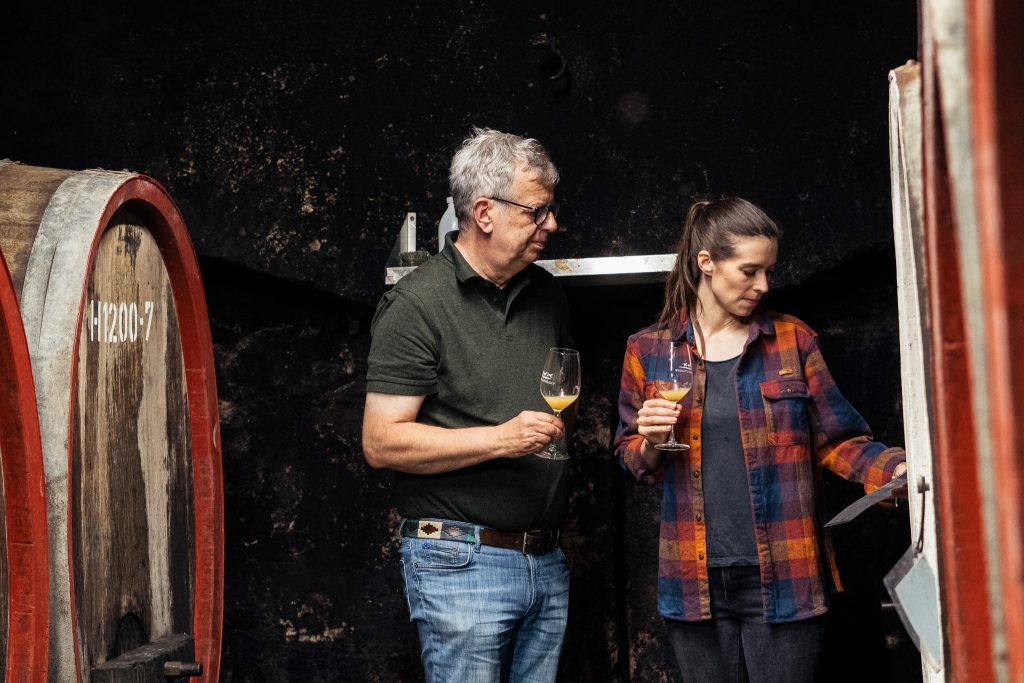
Klaus and Elisabeth in the Cellar of Weingut Rappenhof.
A New Chapter: How Elisabeth Muth Is Redefining Rappenhof
Initially, Elisabeth took a somewhat unorthodox path to become the next generation of a well-established winery: after graduating Architecture from the Technical University of Darmstadt, Elisabeth worked as an architect in München from 2015 until 2018. During the vintage of 2018, Elisabeth followed her roots back to the family estate and started officially working for her parents at Weingut Rappenhof. Without any technical background in oenology or viticulture, Elisabeth learnt the ropes from her parents, Rappenhof’s employees, and members of the VDP. In that same year, Elisabeth ran into Johannes, who previously worked for the famous Kühling-Gillot and Battenfeld-Spanier estates. They fell in love with each other, and Johannes later on joined the team of Rappenhof.
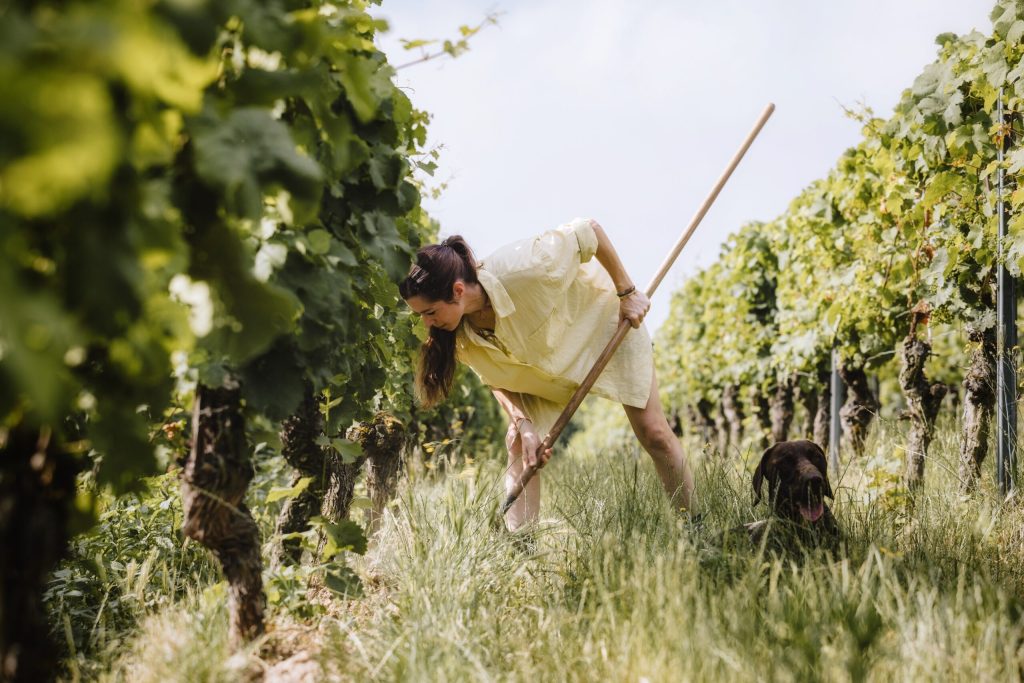
Elisabeth knew she wanted to do things differently from her father, particularly pertaining to the manner in which the estate cultivated its 50 hectares in Rheinhessen. Paving the way towards organically farming the vineyards, Elisabeth gradually cut out herbicides and artificial fertilizers, quit plowing in between rows and persevered until no conventional viticultural methods were left at Rappenhof in 2023. Slowly but surely, rewards are reaped, as the vineyards seem greener than ever before and biodiversity is at an all time peak. Only time will tell how beneficial the organic practices will ultimately be to the wine, but, based on tasting the young 2023 wines, we dare say Rappenhof has nothing to fear for any compromised quality: the wines show superbly.
Elisabeth Paving the Road to Organic Farming.
Besides changing viticultural practices, Weingut Rappenhof also changed their original labels from the 2020 vintage onwards. The contemporary label forgoes the prominent placement of the family shield and now subtly shows its coat of arms in unicolor against a white background.
An Overview of the Wines
We tasted through only a fraction of Weingut Rappenhof’s impeccable portfolio, including their Blanc de Blancs and Alsheim Chardonnay. For the sake of brevity, we will only include their Erste & Grosse Lagen wines, although we highly recommend tasting the aforementioned wines as well.
Riesling in all its forms and shapes stands at the center of the Rappenhof portfolio.
2023 Oppenheim Riesling Aus Ersten Lagen
Made from grapes enjoying a south to south-east exposition in the Grosse Lagen Herrenberg & Sackträger, fully sheltered from the wind and atop a soil of limestone and loess. After harvest, the wine is vinified with its native yeasts and aged on its gross lees for 70% in stainless steel tanks. The other 30% sees large wooden barrels ranging from 600 to 1200 liters.
A lovely spring opener with its non-intense, pale yellow color and aromatic profile. Green apple, lime, honey, petrol, elderflower and orange zest shine through on the nose. Highly acidic, structured and laser-like precision on the palate.
We reward this wine with a 90-point DWA score (MC)
2023 Alsheim Riesling Wurzelecht Aus Ersten Lagen
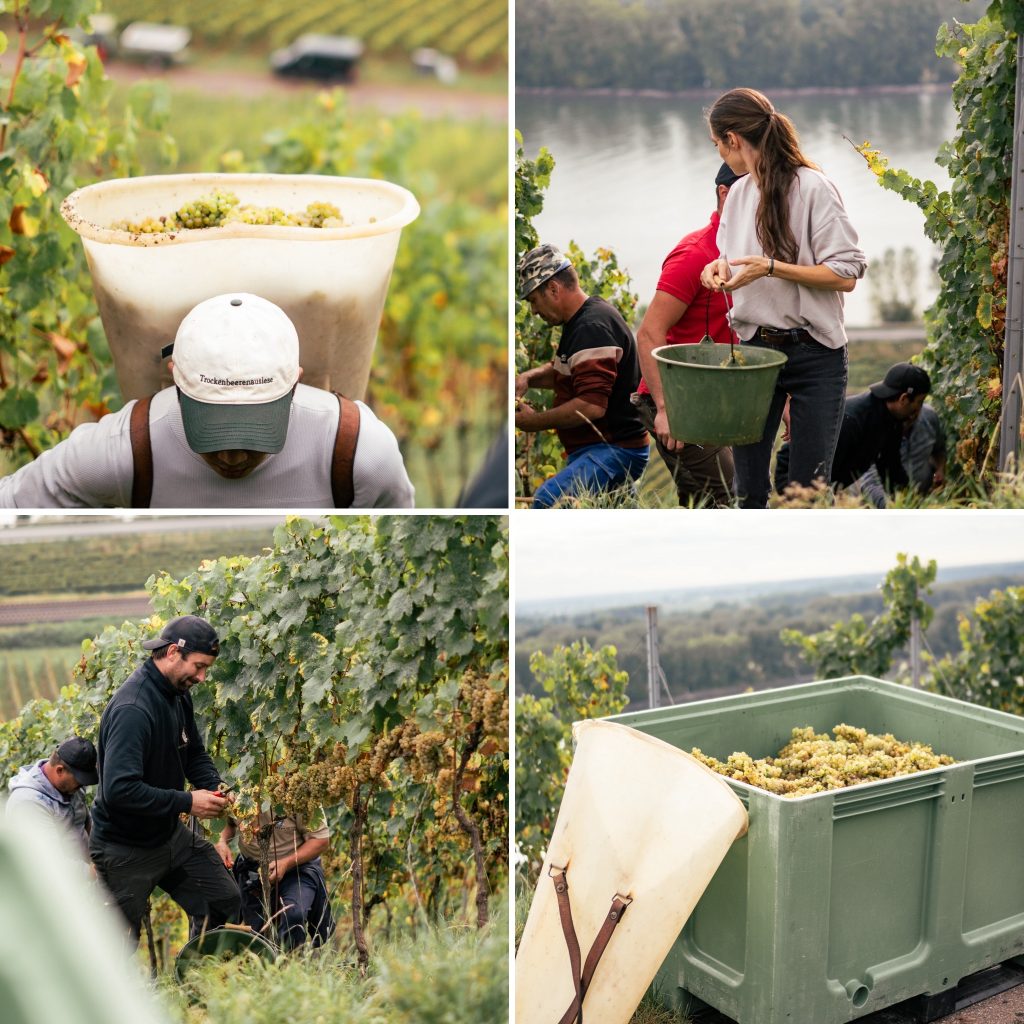
This wine truly showcases the razor-sharp focus Elisabeth & Johannes apply in the vineyards and cellar, as the grapes, from ungrafted (!) vines on soils with loess at the top and a chalky subsoil, are picked at two separate occasions: one batch is harvested earlier to add complexity and acidity to the wine, as the other gets picked a while later for ripeness. The least ripe batch is vinified, after a few hours of skin contact, and aged in stainless steel tanks, whereas the ripest batch is aged in large wooden casks. No bâtonnage is applied to the wines aging on their lees.
This wine shows more reductive notes as opposed to the bright and opulent Oppenheim Riesling, with aromas of green apple peel, lime, smoke, white peach, herbs and a certain leesy character. Slightly less structured than the former wine and definitely filmier.
We reward this wine with a 90-point DWA score (MC)
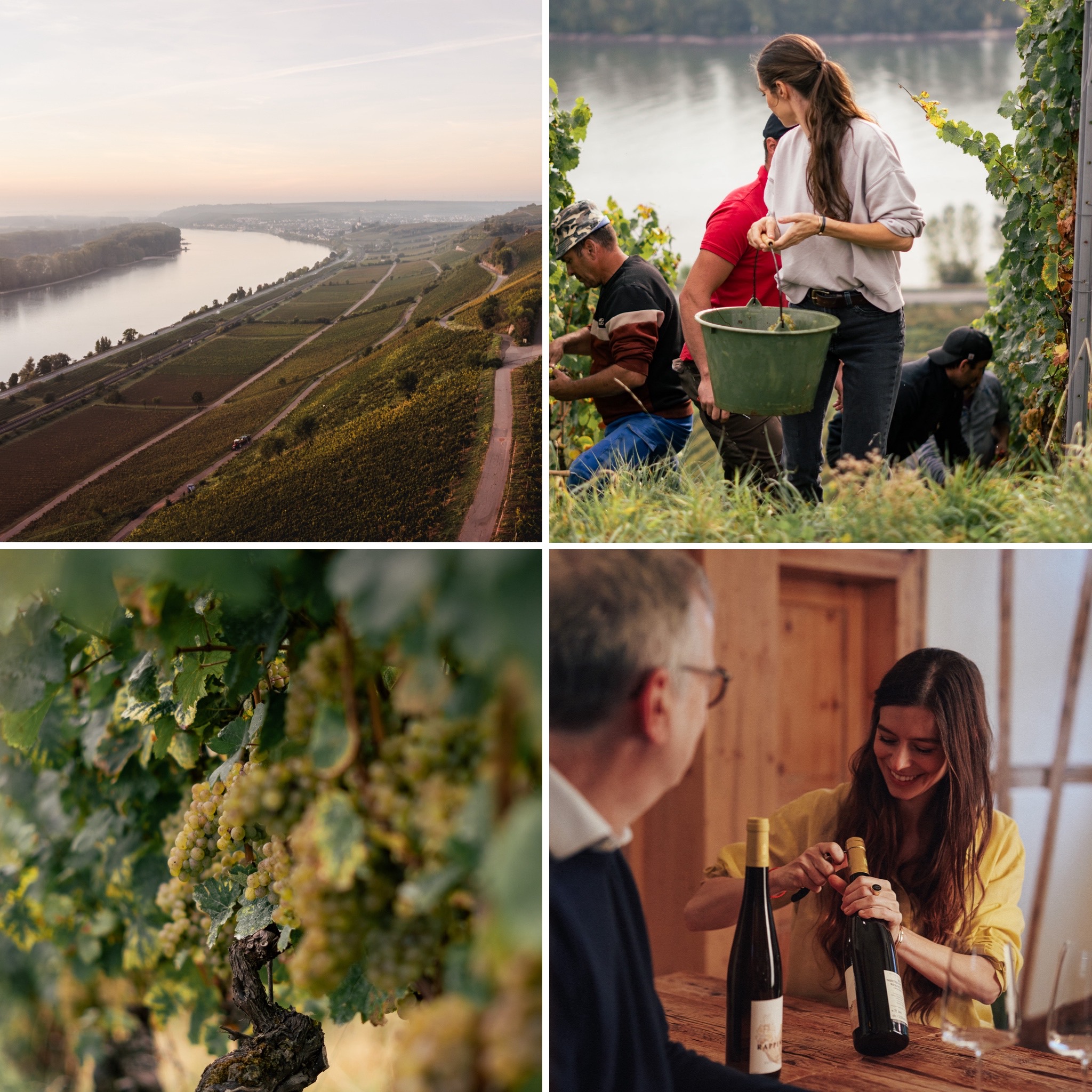
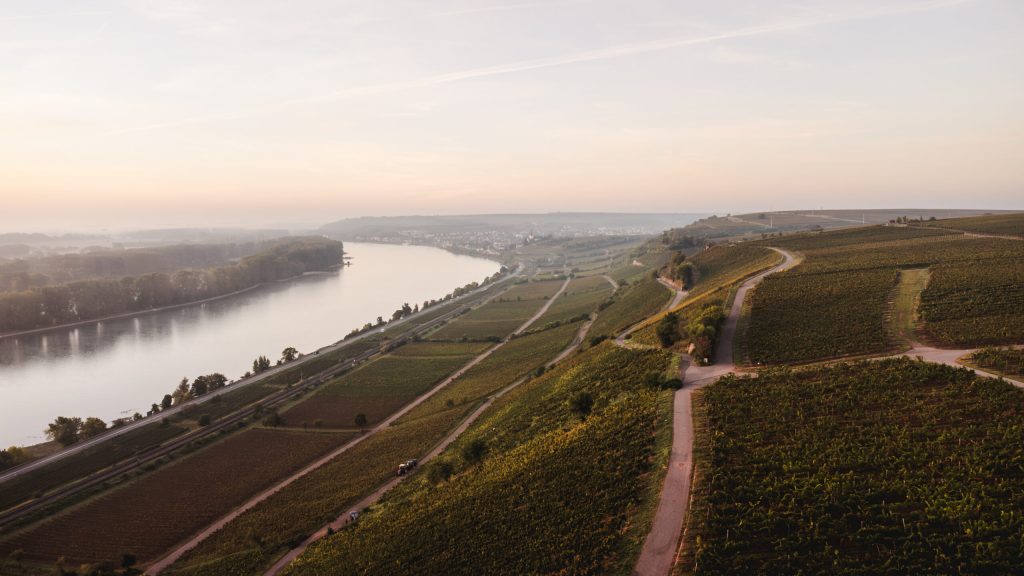
Nierstein and its Famous Roter Hang along the River.
2023 Nierstein Riesling Aus Ersten Lagen
Both harvest and vinification for the Nierstein Riesling are identical to the Alsheim Riesling Wurzelecht. The vines are located in the Pettenthal and Ölberg Grand Cru sites.
An opulent and floral nose with notes of beeswax, white peach, elderflower, petrol, yellow apple and a hint of mint. Racing, grippy acidity with lots of structure.
We reward this wine with a 92-point DWA score (MC)
2023 Ölberg Riesling GG
One of the five most famous vineyards in the legendary Roter Hang of Rheinhessen, with its complex soils of iron rich chalk and eroded schist. A warmer site, with exposition to the southeast. The vines that belong to Rappenhof were acquired in the 1980’s, along with the vines that yield the grapes for the Nierstein Riesling. This GG contains only grapes from the steepest part of Ölberg.
Slightly reductive with a smoky aroma, after which the nose gives way to honey, elderflower, green apple, lime and bergamot. Slightly filmy with lots of acidity and great balance.
We reward this wine with a 93-point DWA score (MC)
2023 Pettenthal Riesling GG
Perhaps the most famous vineyard in the Roter Hang, with most of its plots fully exposed to the east. This wine contains fruit from five distinct plots within Roter Hang on the steeper side with vine age differing from plot to plot, the oldest being planted in the 70’s of the past century.
The wine with the most potential in the entire line-up, with its smoky character that hints towards struck match, green apple, lemon, petrol and leesy notes. Length that carries on and on, carried by the tartness and structure on the palate.
We reward this wine with a 94-point DWA score (MC)
Roots and Renewal: The Next Chapter for Weingut Rappenhof
Leadership of Weingut Rappenhof will be fully assumed by Elisabeth in the near future. She already moved into her parental home in 2024, for her and Johannes’ close proximity to the team, cellar and equipment is essential to maintaining stability in the cellar, vineyards and day-to-day tasks at the winery. After moving in, the couple immediately initiated renovations in and around the house, as well as in the tasting room for guests.
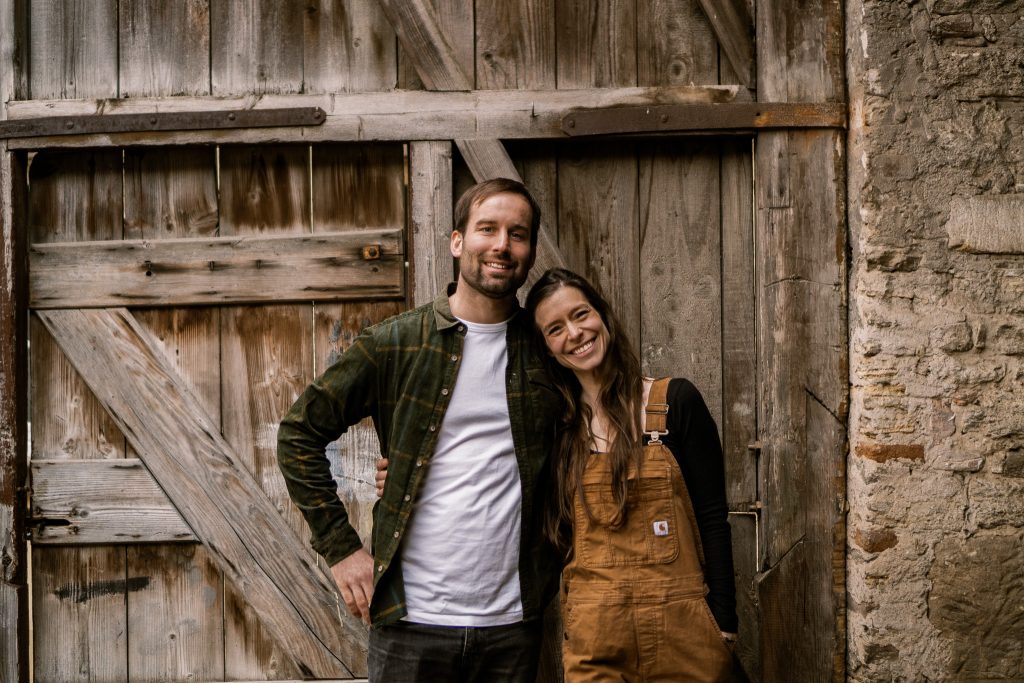
Elisabeth and Johannes, the Future Generation of Weingut Rappenhof.
The renewing of the cellar might one day follow, as Elisabeth mentioned it is not meant for commercial purposes – yet. The renovation of the house, the rebranding of the label and the transition into organic viticultural practices, mark a new dawn for Weingut Rappenhof. One we are deeply excited to witness in the coming years.
This article is written by our own Miquel Claase following a visit to the winery. We would like to thank Elisabeth and her family for their time and the tasting. The wines of Rappenhof can be bought in the Netherlands at Time to Wine. Picture credits: Weingut Rappenhof.
Join our insiders’ list and get exclusive early access to new articles, expert tips, and fresh reviews delivered straight to your inbox. Subscribe now and be the first to discover!